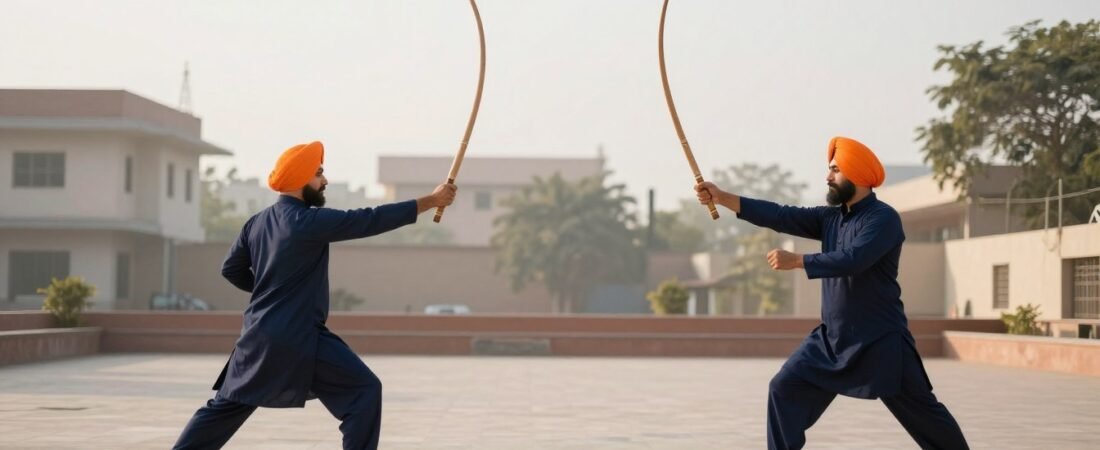
Historical Roots and Evolution from Shastar Vidya
The origins of Gatka trace back to the broader science of classical Indian battlefield arts known as Shastar Vidya, which encompassed armed tactics, cavalry movements, and hand-to-hand combat systems. Over centuries of regional turmoil and conflict across Punjab, Sikh martial practitioners refined these sprawling wartime doctrines into a focused, pedagogically accessible curriculum. This structured adaptation allowed community defense units to develop coordination, tactical reflexes, and weapon familiarity through manageable drills.
Training spaces known as akharas served as regional centers where masters preserved technical knowledge and conditioned students through rigorous daily calisthenics. Within these rural training grounds, the foundational stick-and-shield framework developed into an accessible method for passing down armed defense principles across generations.
During the nineteenth century, British colonial administrators viewed native armed traditions with deep suspicion following repeated regional rebellions and the Anglo-Sikh wars. The colonial government instituted severe disarmament acts that banned the public carrying of swords, spears, and traditional armor, while forcibly closing numerous martial schools. Despite aggressive suppression, masters kept the art alive in rural Punjabi villages by disguising combative blade techniques as ceremonial wooden stick games during agrarian festivals.
The preservation of Gatka through colonial bans succeeded because practitioners adapted lethal blade footwork into rhythmic stick routines that could be practiced openly without alerting foreign authorities.
As restrictions loosened in the late nineteenth and early twentieth centuries, educational institutions like Khalsa College in Amritsar incorporated standardized stick drills into physical education programs. This formalization established modern Gatka as an enduring, disciplined expression of historical battlefield survival.
Spiritual Philosophy and the Saint-Soldier Doctrine
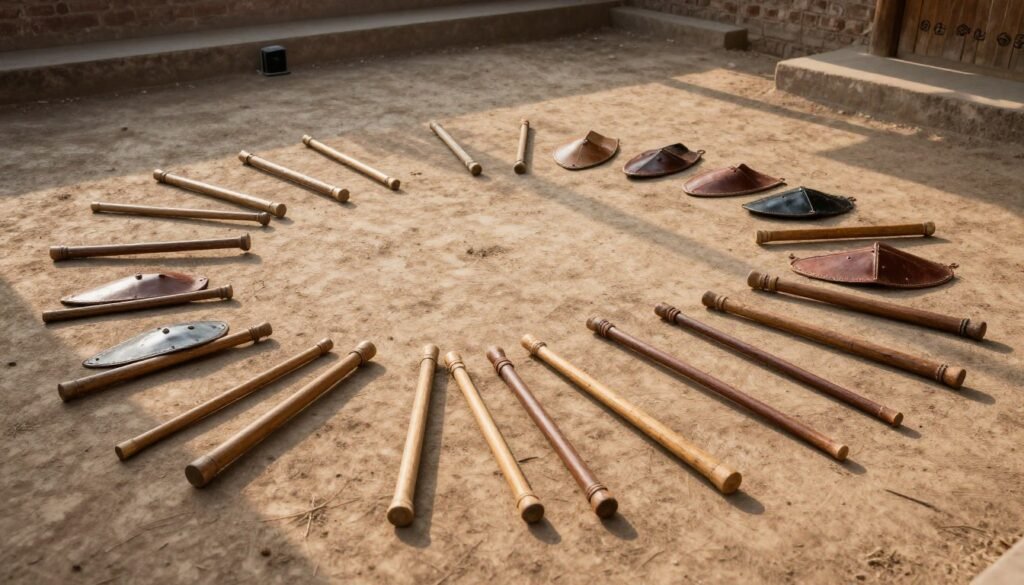
Gatka functions as a physical manifestation of Sikh spiritual doctrine rather than a disconnected combat sport. The philosophical foundation rests upon the ideal of the Saint-Soldier, an individual who integrates moral purity, meditation, and compassion with martial readiness. Martial skill without spiritual restraint invites reckless aggression, whereas spiritual contemplation without defensive capability leaves innocence unprotected against tyrannical power.
The doctrine achieved institutional clarity under the leadership of the sixth Sikh Guru, Guru Hargobind Ji, who introduced systematic arms training to the community following the state execution of his predecessor. Guru Hargobind Ji wore two swords representing Miri, denoting temporal sovereignty and civic duty, and Piri, representing spiritual authority and devotion.
Temporal Responsibility (Miri)
Miri directs physical strength toward the active defense of civil liberties, community sovereignty, and the protection of the innocent against oppression.
Spiritual Restraint (Piri)
Piri anchors the martial practitioner in constant remembrance of the divine, fostering humility, inner stillness, and strict ethical accountability.
In the late seventeenth century, the tenth Sikh Guru, Guru Gobind Singh Ji, formalized this synthesis by establishing the Khalsa warrior order. Initiated Khalsa warriors pledged to adhere to high moral codes while carrying personal defensive blades as perpetual reminders of their duty to resist oppression. The tradition explicitly prohibits the aggressive or predatory deployment of martial force, teaching that weapons must serve purely as a final resort when all peaceful negotiations have completely failed.
Foundational Footwork and Geometric Stepping Patterns
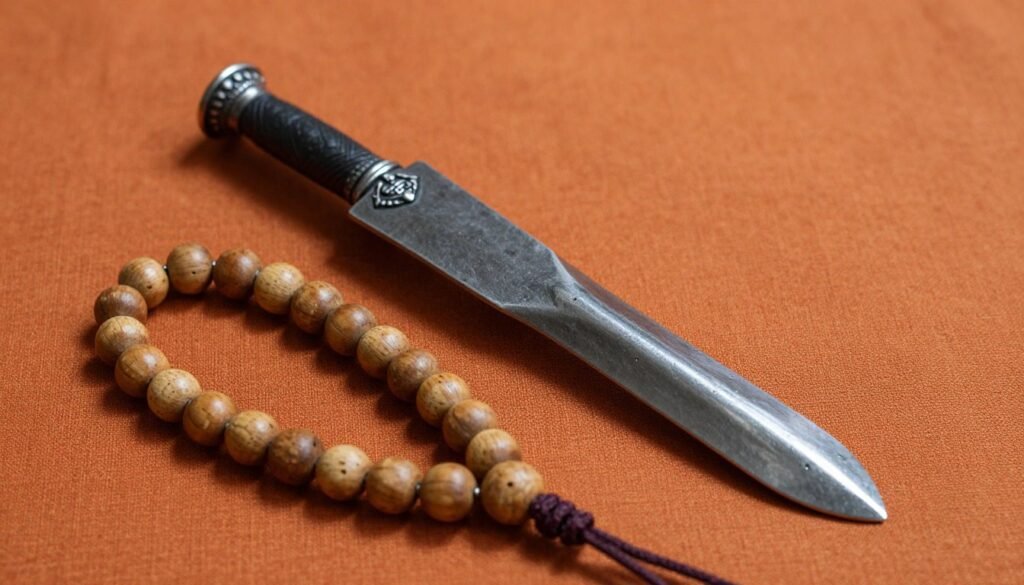
Mastery in Gatka begins from the ground upward through strict geometric footwork drills known as paitara or pentra. A practitioner cannot effectively defend against incoming strikes or generate proportional leverage without an unbroken foundation of balanced posture. The patterns train the body to shift center of gravity fluidly across circular and diagonal axes, preventing an opponent from trapping the practitioner against obstacles.
The core building block of all advanced movement is the four-step foundational pattern known as Mul paitara. Practitioners repeat this fundamental foot pattern thousands of times to internalize timing, defensive evasion, and explosive forward counter-stepping.
- Establish a grounded stance with knees slightly bent, weight distributed evenly across the balls of both feet, and torso angled to present a narrow physical profile.
- Step the lead foot diagonally outward along an imaginary diamond path, clearing the primary line of attack while keeping the hands raised defensively.
- Drive the rear foot forward along a crossing arc, pivoting the hips to generate rotational power for an evasive shield deflection or counter-stroke.
- Recover balance into the opposing diagonal anchor point, completing the four-count cycle and realigning the center of gravity toward the adversary.
Practitioners expand the four-step sequence into complex figure-eight and circular trajectories that facilitate continuous repositioning during multiple-opponent scenarios. Stepping patterns mirror sacred geometric shapes that train peripheral field perception, allowing the warrior to react to environmental threats without turning their back on active danger lines.
Progressive Weapon Mastery and Sparring Mechanics
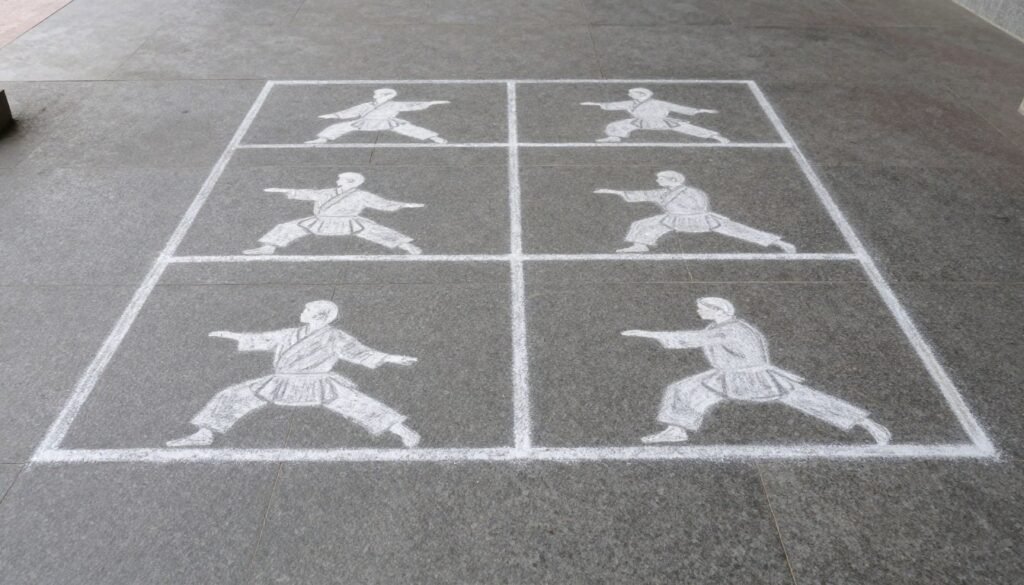
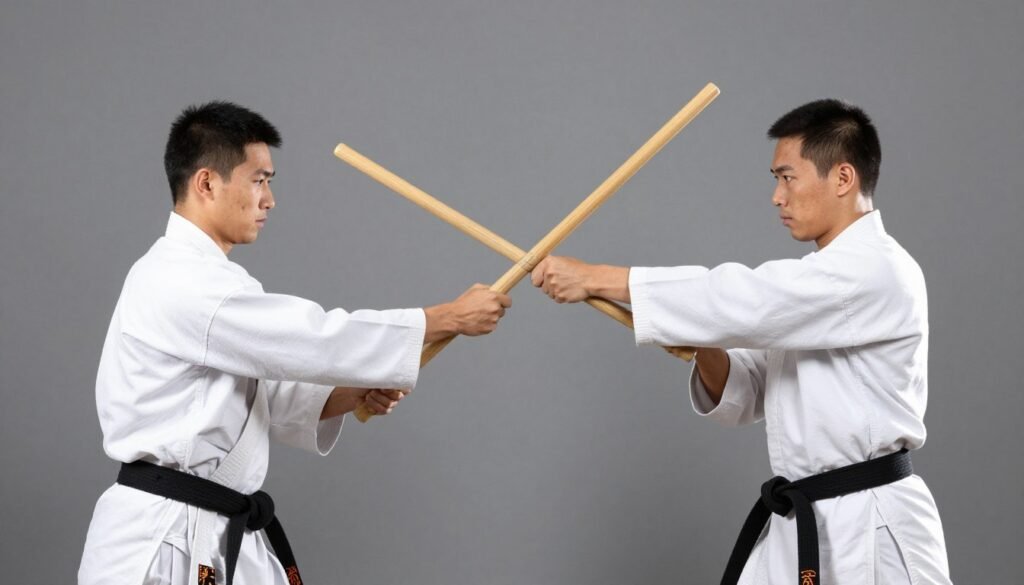
Training in Gatka adheres to a rigorous pedagogical progression designed to instill reflexive precision while reducing the risk of catastrophic accidental injury. Students begin with open-handed evasion, falls, rolls, and joint manipulation to condition the physical frame before handling training implements. Once body mechanics and distance calculation reach proficiency, students transition to single wooden practice sticks known as soti or marahati.
The progression subsequently introduces double-stick engagements, known as Doh Lathi, which compel practitioners to synchronize bilateral motor control and eliminate dominant-side bias. Only after a student demonstrates emotional maturity, flawless footwork, and technical restraint do teachers permit progression to unsharpened steel blades and, ultimately, live cutting weapons.
Prior to every sparring bout, practitioners perform the fatehnama, a ceremonial salutation involving weapon contact that signifies mutual honor, emotional calmness, and divine awareness before combat.
Advanced combat mechanics within classical Shastar Vidya and higher-level Gatka sparring focus on fluid deflection rather than rigid force-on-force collisions. Practitioners redirect an opponent’s momentum through parabolic parrying lines, slipping incoming strokes while stepping off the primary line of attack. Close-quarter contact utilizes circular wrist locks, shoulder levers, and pommel checks to pry training weapons from an opponent’s grasp without requiring destructive trauma.
Traditional sparring emphasizes dynamic adaptability across uneven terrain, whereas modern competitive bouts restrict physical engagement to standardized linear rings with strict point boundaries. This distinction preserves the combative depth of ancestral survival systems while facilitating fair, observable athletic contests in modern arenas.
Traditional Weaponry and Sikligar Metallurgy
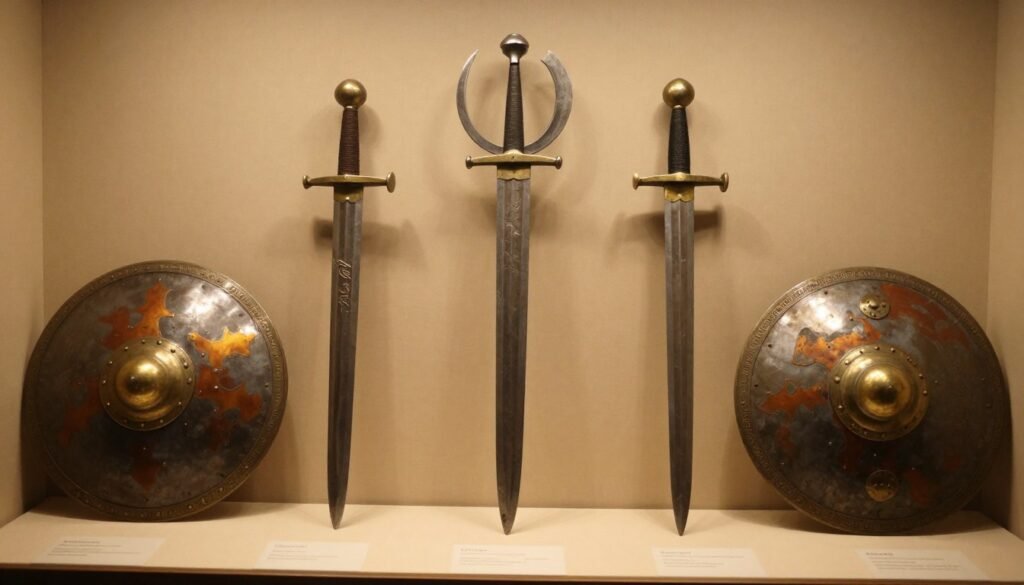
The traditional armory associated with Gatka and historical Sikh warfare spans an expansive inventory of impact weapons, edged sidearms, flexible instruments, and projectile equipment. Each tool demands specialized posture, timing, and footwork adaptations rooted in the core paitara movements. Training teaches the practitioner to view the weapon as a natural extension of the arm rather than an isolated external implement.
| Weapon Class | Traditional Name | Primary Function | Tactical Characteristics |
|---|---|---|---|
| Blunt Impact | Soti | Training Stick | Lightweight bamboo or cane stick used for technical drilling and sparring. |
| Blunt Impact | Gurj | Heavy Mace | Flanged or spherical iron club designed to shatter defensive armor plates. |
| Edged Sidearm | Kirpan | Curved Dagger | Sacred defensive blade worn constantly as a commitment to protect justice. |
| Edged Blade | Khanda | Broadsword | Heavy double-edged straight sword built for powerful downward cutting strokes. |
| Edged Blade | Talwar | Curved Sword | Single-edged saber engineered for rapid draw-cuts and draw-slashes from horseback. |
| Thrusting Blade | Katar | Punch Dagger | H-shaped grip dagger allowing direct thrusts driven by full body momentum. |
| Defensive Shield | Phari / Dhal | Buckler Shield | Reinforced hide or steel hand shield used to parry and redirect incoming strikes. |
| Flexible Weapon | Chakar | Spinning Wheel | Wagon-wheel frame fitted with weighted cords or blades spun to break lines. |
| Polearm | Barchha | Combat Spear | Long spear head mounted on bamboo shafts to repel cavalry charges. |
| Impact Axe | Tabar | Battle Axe | Crescent-headed heavy axe engineered to penetrate reinforced wooden shields. |
| Projectile | Teer | War Arrow | High-velocity steel-tipped arrows shot from composite reflex combat bows. |
The exceptional performance of historical Sikh weaponry derived largely from superior metallurgical craftsmanship, particularly the utilization of Wootz steel. This high-carbon crucible steel, renowned internationally as Damascus steel, featured complex microscopic carbide bands that yielded distinct undulating surface patterns. The resulting blades combined razor-sharp edge retention with remarkable tensile elasticity, preventing swords like the Khanda and Tegh from fracturing under intense blunt impacts.
The production and maintenance of these armaments belonged historically to the Sikligar artisan clans. Guru Gobind Singh Ji formally honored these metalsmiths with the title Sikligar, signifying burnishers and polishers of clean steel. Operating mobile forges across battle encampments, Sikligar armory masters preserved sophisticated crucible smelting, pattern-welding, and heat-treatment formulas that supplied Khalsa defense forces through extensive military campaigns.
Modern Sport Standardization and Tournament Rules
Over recent decades, organizations like the Gatka Federation of India (GFI) and the National Gatka Association of India (NGAI) have transitioned Gatka into a regulated amateur athletic sport. Standardization creates objective competition frameworks that protect athlete safety while showcasing technical agility on national and international stages. These administrative bodies publish codified rulebooks, certify referees, and organize competitive brackets across youth, collegiate, and senior age divisions.
Tournament bouts take place inside marked circular rings under the observation of certified mat judges, corner referees, and timekeepers. Match formats, scoring structures, and penalty parameters reflect a structured balance between aggressive initiative and controlled defensive execution.
Match Timing and Ring Structure
Official matches run for standard durations between 3 to 5 minutes of active combat time. Competitors maneuver within a defined circular boundary that penalizes boundary step-outs and stalling tactics.
Gatka Scoring System
Referees award 3 points for clean, controlled strikes delivered to certified legal target zones with proper weapon mechanics. Executing a clean, stable block against an offensive attempt yields 2 points.
Tactical Rules and Penalties
Matches enforce the Roko Aur Thoko tactical philosophy, requiring fighters to parry before striking. Judges deduct 3 points for passive evasion and 2 points for illegal strikes delivered to prohibited areas.
Inclusion within premier sports initiatives, such as the Khelo India Youth Games and the National Games of India, has accelerated athletic professionalization. Rulebooks continue to evolve as administrative federations collaborate to harmonize subtle regional scoring differences into a single unified global framework.
Standardized Safety Equipment and Protective Systems
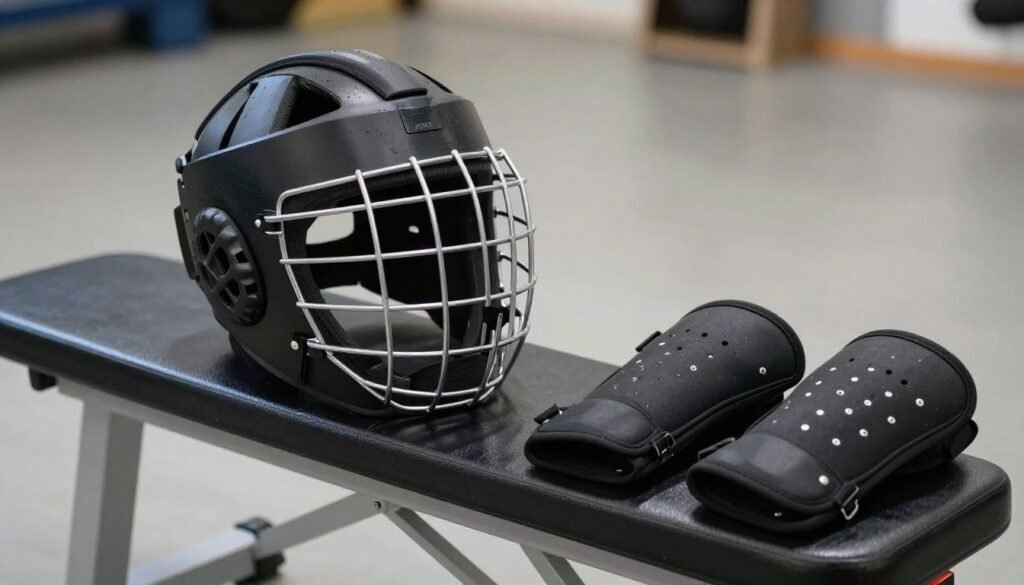
Modern tournament Gatka mandates rigorous personal protective gear to prevent concussive trauma, bone fractures, and soft-tissue damage during dynamic weapon exchanges. Prior to entering the tournament mat, marshals inspect each athlete’s gear to verify compliance with federation standards. Weapons used in competitive divisions consist of standardized leather-sheathed cane sotis equipped with padded leather handguards and flexible safety tips.
Fighters must verify that all protective headgear harnesses, chest straps, and forearm guards fit securely before entering the competition mat, as loose equipment increases the risk of disqualification and impact injury.
Athletes wear reinforced headguards equipped with rigid steel face cages that deflect strikes away from the eyes, nose, and teeth while preserving peripheral vision. High-density foam chest protectors shield the torso, sternum, and ribs from crushing force during close-range counter-attacks. Segmented forearm guards, padded groin protectors, and reinforced shin protectors complete the protective array, enabling competitors to strike with full athletic commitment without endangering their opponents.
Kaur Warriors and the Heritage of Sikh Women
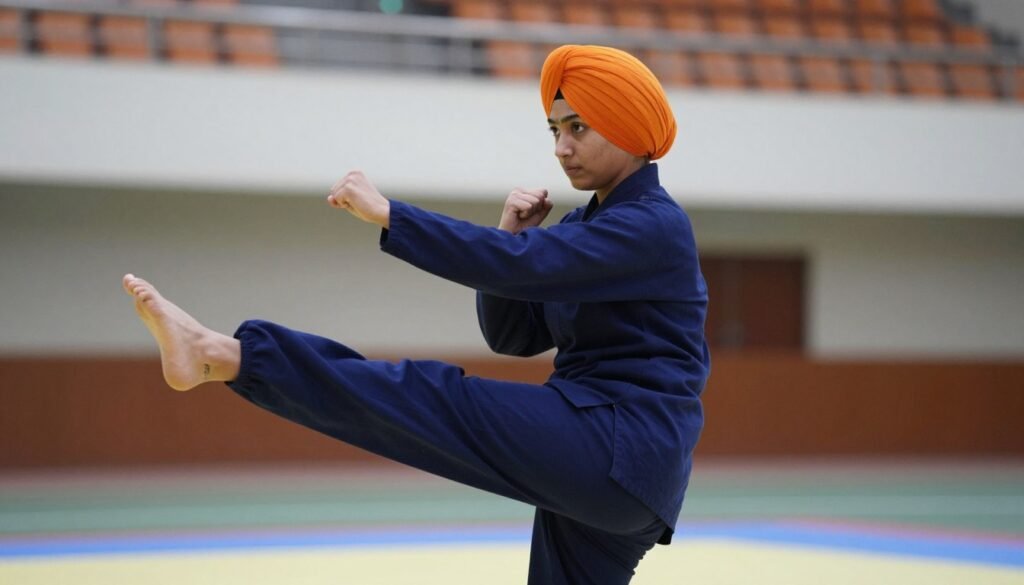
Women have occupied a prominent, respected position within Sikh martial tradition since its inception, training alongside men without gender-based segregation in classical akharas. Modern female practitioners, proudly bearing the name Kaur, represent some of the most dynamic competitors in contemporary state, national, and international tournaments. Their expanding visibility in events like the Khelo India Youth Games reflects a vibrant revitalization of ancestral egalitarian ideals.
Historical Martial Lineage
- Mai Bhago rallied retreating troops and led soldiers into combat during historical defense campaigns.
- Women historically learned weapon defense within rural akharas to safeguard villages during wartime instability.
- Classical Sikh doctrine explicitly rejected female seclusion, fostering martial and spiritual self-reliance.
Modern Athletic Achievement
- Female competitors achieve top podium placements in high-profile national games and school championships.
- Certified female instructors establish independent martial academies training youth in self-defense.
- Athletes utilize modern sports conditioning, biomechanics, and tactical analysis to advance tournament standards.
The participation of women in Gatka serves as both an athletic pursuit and a practical platform for personal empowerment and community safety. Training cultivates heightened situational awareness, emotional poise under stress, and decisive physical capability, equipping modern Kaurs to honor their heritage through modern athletic excellence.
Cultural Celebrations and Martial Demonstrations
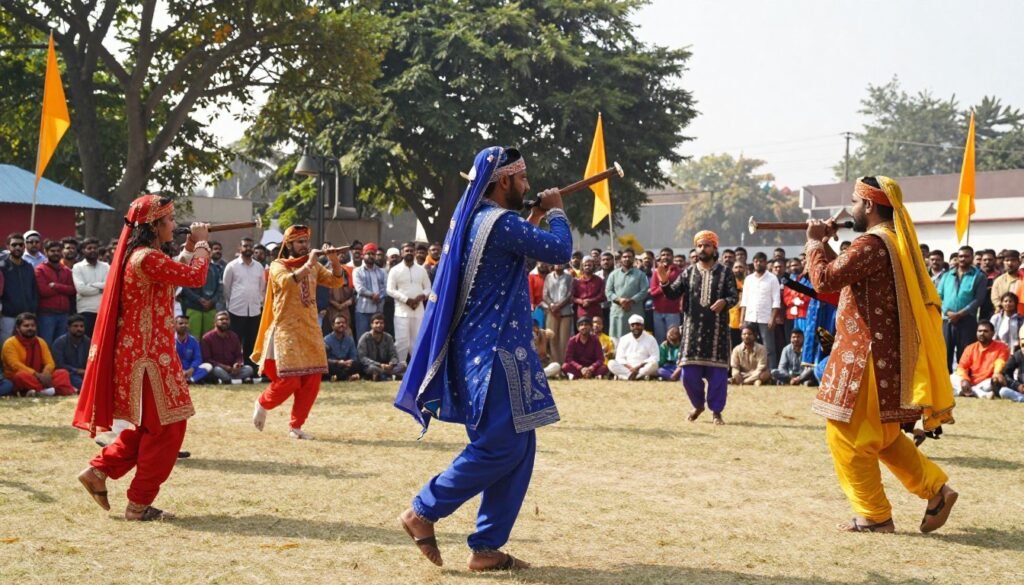
Beyond competitive sports arenas, Gatka maintains a central presence within traditional Sikh religious and community celebrations around the world. During major observances like Hola Mohalla, Baisakhi, and Gurpurab, skilled practitioners assemble to demonstrate ancestral forms before thousands of spectators. These gatherings serve as living archives where elder masters and emerging students showcase the agility, grace, and martial heritage of the Khalsa.
- Rhythmic Nagara and Dhol Cadences: Heavy ceremonial kettle drums provide driving, resonant tempos that synchronize footwork drills and energize demonstration teams.
- Sacred War Cries (Jaikare): Demonstrations ring with vocal declarations such as “Sat Siri Akal,” cultivating communal unity, focus, and unyielding courage among practitioners.
- Shastra Puja and Shastra Namaskar: Formal ceremonial invocations and weapon salutations honor the protective instruments and affirm the divine moral obligation to wield them righteously.
- Acrobatic Weapon Demonstrations: Skilled martial artists execute spinning maneuvers with massive chakars, dual swords, and extended staves to illustrate balance, stamina, and rotational control.
- Intergenerational Mentorship: Senior ustads guide young children through public stepping drills, transferring cultural memory and technical lineage across community generations.
These vibrant public exhibitions celebrate identity, collective historical memory, and moral values rather than aggression. Gatka functions simultaneously as combative training, spiritual practice, artistic movement, and community service, reflecting the multifaceted heritage of the Sikh tradition.
Frequently Asked Questions About Gatka
What is Gatka?
Gatka is a traditional Sikh martial art that originated in northern India, characterized by rhythmic stepping patterns and stick-fighting drills. It serves both as an ancestral defensive discipline rooted in spiritual ethics and as a modern competitive combat sport.
How does Gatka differ from Shastar Vidya?
Shastar Vidya represents the ancient, expansive science of battlefield warfare, encompassing lethal tactics, multiple weapons, and unrestricted combat strategies. Gatka evolved as a formalized, safer pedagogical system derived from Shastar Vidya, focusing on structured footwork, stick drills, and regulated sparring.
What weapons are used in Gatka?
Training begins with wooden practice sticks called sotis and leather buckler shields called pharis before advancing to curved swords, straight double-edged broadswords, punch daggers, and spears. Practitioners also train with ceremonial flexible weapons like the spinning chakar wheel and archery equipment.
How are Gatka competitions scored?
Official tournament bouts award 3 points for clean, controlled strikes delivered to designated target zones and 2 points for successful defensive blocks. Judges penalize passive evasion with a 3-point deduction and assess 2-point penalties for strikes to illegal target areas.
What safety gear is required for Gatka sparring?
Competitors wear padded headguards fitted with protective steel face cages, dense foam chest protectors, and reinforced forearm guards. Matches utilize leather-covered cane sotis equipped with handguards and rubber safety tips to reduce injury risk.
Where is Gatka practiced today?
Gatka is practiced globally within traditional community akharas, gurdwaras, university clubs, and dedicated sports academies across India, North America, the United Kingdom, and Australia. It is also featured as a recognized medal sport in prestigious national athletic leagues such as the Khelo India Youth Games.
What traditional bladed and long-range weapons are used in Gatka?
Gatka includes a diverse range of bladed, impact, and projectile weaponry originally developed for war and self-defense. To learn about traditional swords (Tegha, Talwar), maces (Gurj), axes, and ranged equipment, read our detailed guide:
👉 Gatka Weapons: Swords, Maces, Axes and Ranged Weapons
What instruments are used for training, close-range defense and modern sparring?
Training in Gatka emphasizes footwork, defense, and hand-to-eye coordination using defensive gear and blunt instruments. Discover the role of shields (Dhal), sticks, staffs, and specialized close-combat gear in our overview:
👉 Gatka Weapons: Sticks, Staffs, Shields and Close-Combat Weapons
What is the primary wooden training stick used in Gatka and how is it used?
The wooden stick—traditionally made of bamboo or hard wood—is the core training tool for practitioner footwork and strikes before transitioning to metal blades. Read more about its history, dimensions, and techniques:
The Living Legacy of Sikh Martial Heritage
From its roots in the ancient battlefields of northern India and preservation through colonial bans, Gatka has evolved into an inspiring global discipline that unites physical conditioning with ethical responsibility. The art continues to thrive across historic cultural festivals and standardized modern tournament arenas, demonstrating how an ancient martial heritage can adapt to contemporary sports without compromising its core spiritual principles. As new generations take up the soti and study the fundamental paitara, they preserve an enduring legacy of courage, humility, and principled defense.