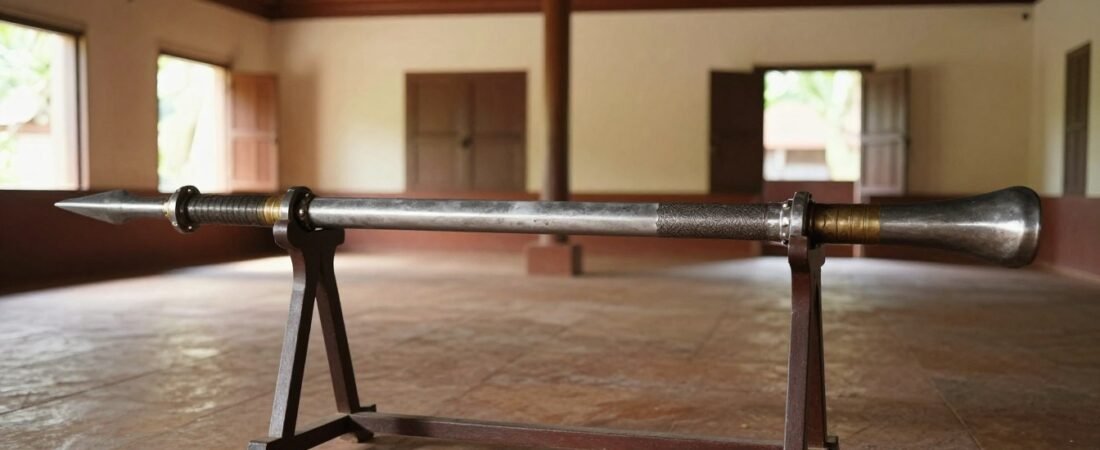
The weapon has a strong visual appeal, but its value is not limited to appearance. It reflects a complete martial art system built on timing, balance, footwork, and discipline.
What Is the Urumi Weapon?
The Urumi is a flexible sword from Southern India. Its name is often associated with a long, narrow blade that bends and rolls rather than staying rigid. Some examples use one ribbon-like blade. Others are described as having several thin blades fixed to a shared handle.
Unlike a standard sword, this weapon does not depend on a hard edge moving along a fixed line. Its flexibility allows the blade to curve around the body and extend into changing angles. That feature gives the Urumi its famous reputation as a whip sword.
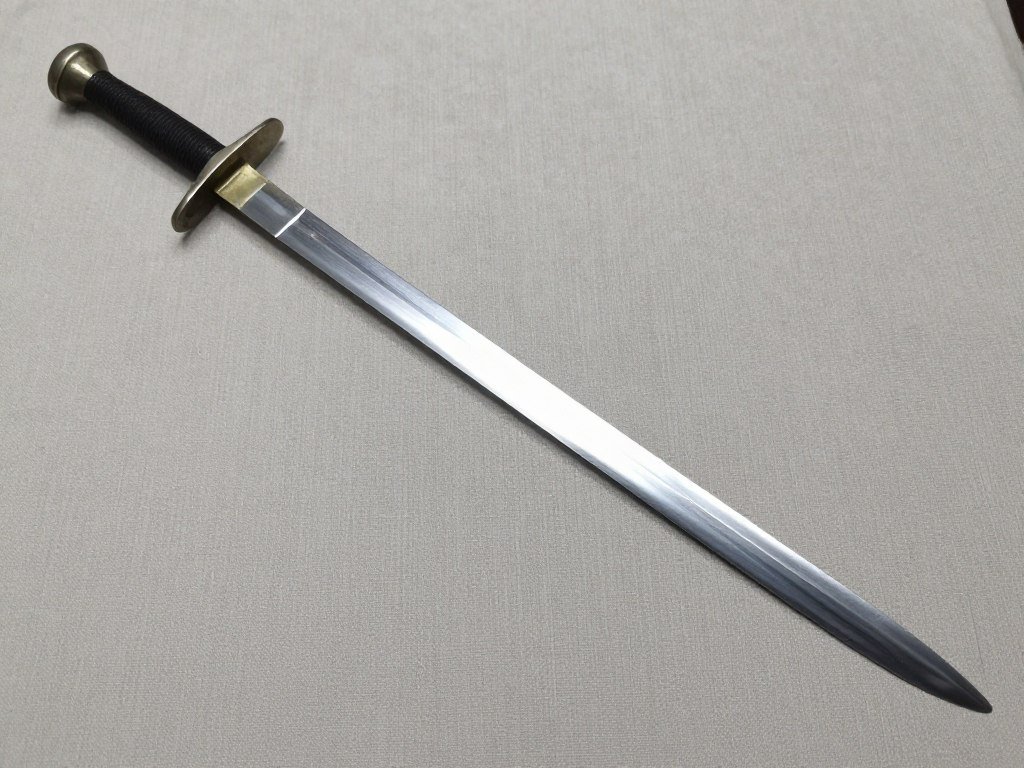
The handle must provide a stable point of control. The blade must remain flexible without losing its cutting edge. That balance between steel strength and flexibility is central to the weapon’s design.
How the Belt Form Works
When not in use, the blade can be coiled around the waist like a belt. This compact form helps explain why the Urumi is so different from other swords. A rigid weapon needs a sheath or a fixed carrying position. The Urumi can remain close to the user’s body in a controlled coil.
Historical descriptions vary by region, period, and source. Accounts from Kerala, Tamil Nadu, and wider Indian martial traditions may not describe one identical design. For that reason, a careful article should avoid claiming that every Urumi has the same length, number of blades, or handle form.
Design, History, and Cultural Significance
The Urumi sits within a long history of Indian martial arts. Kalaripayattu developed in Kerala, while related weapon traditions and training cultures also connect with Tamil Nadu and other parts of Southern India. Its origins are discussed through oral history, regional practice, and modern research rather than one universally accepted record.
In traditional training, weapons are not isolated objects. They are part of an art that joins physical conditioning with mental focus. A student learns to read distance, protect the body, and move with purpose. The sword is therefore a test of the user, not simply a tool for causing damage.
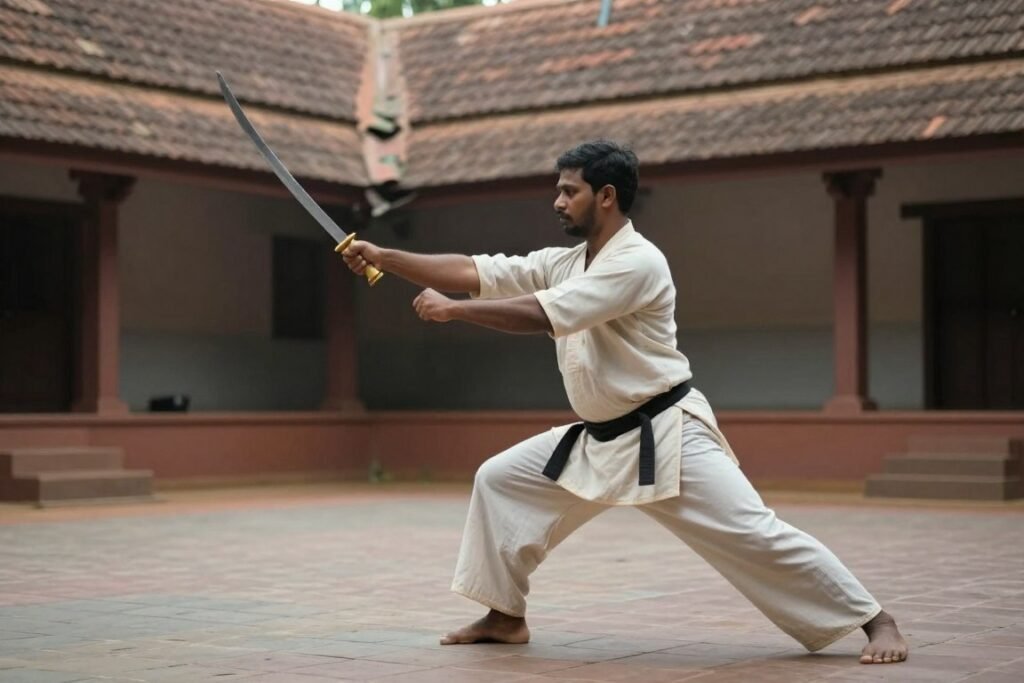
The significance of the Urumi comes from this relationship between object and art. Its unusual shape represents advanced knowledge, while its danger reinforces the need for a teacher and a structured school.
Ankathari Stage Weapons
Ankathari is commonly described as the third stage of Kalaripayattu training. It follows earlier work with body conditioning and wooden weapons. At this stage, students encounter metal weapons, including swords and shields in appropriate training settings.
The exact order can differ between schools. Still, the principle remains clear: metal weapons are introduced after a student develops posture, agility, strength, and reliable movement. The Urumi is not a shortcut through that system. It is a demanding result of it.
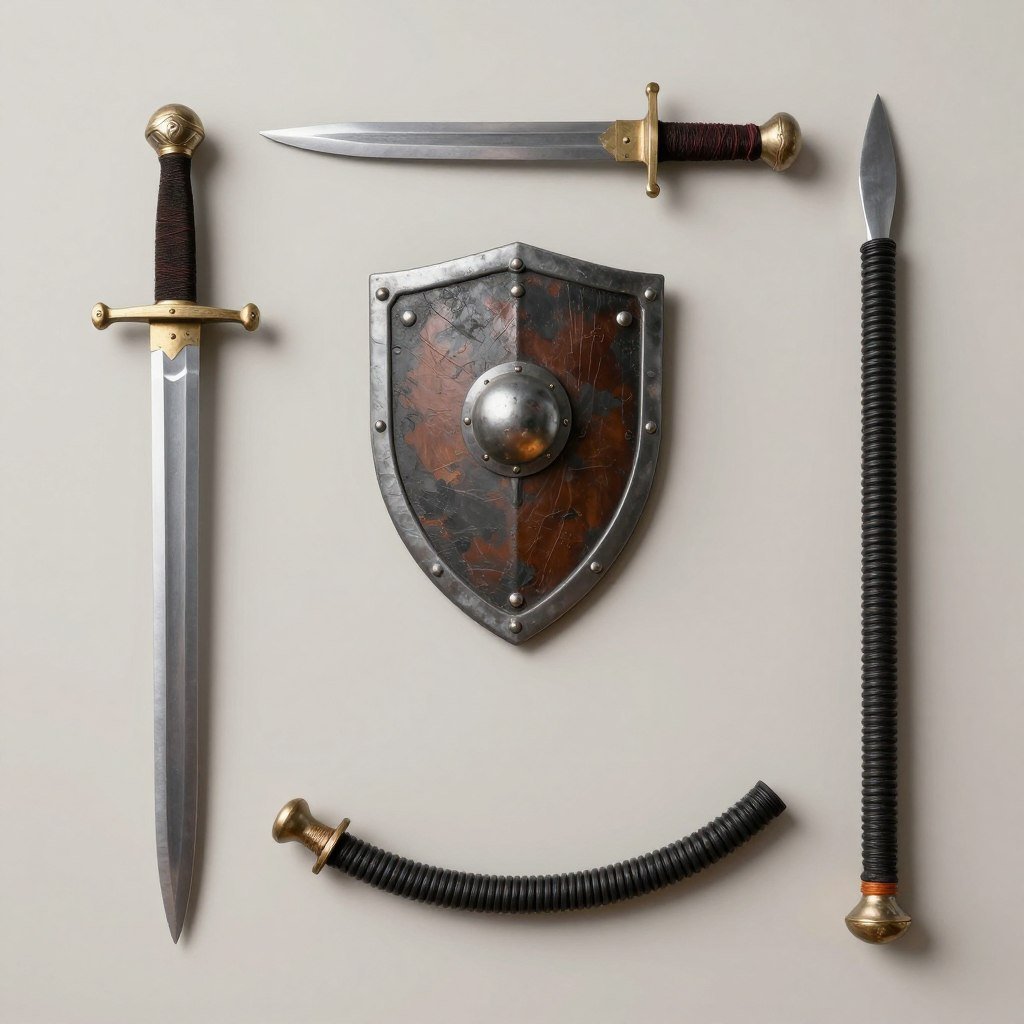
This context also matters for modern readers. A decorative replica may resemble an historical sword, but appearance alone does not prove age, origin, or training value.
Combat Mechanics and Unpredictable Movement
A rigid sword travels through a predictable arc. The Urumi behaves more like a whip. Its blade can bend, loop, and return as the user changes direction. That motion creates a wide and shifting radius around the user.
This radius is one reason the weapon is often described as difficult to block. A person who expects a straight attack may misread the path of a flexible blade. A small error in timing can place the user or an opponent inside the wrong part of the arc.
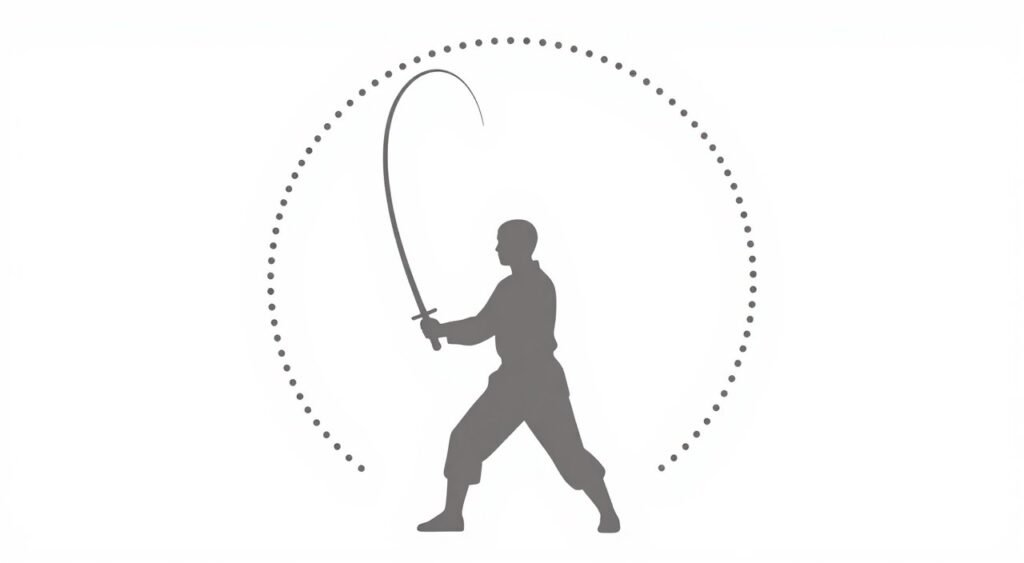
This image should be understood as a concept diagram, not an instruction. Safe practice requires an expert to control the environment, distance, equipment, and pace.
Why Standard Blocks Can Fail
A conventional block is designed around the line of a rigid sword. Flexible steel changes that problem. The blade may pass around a guard or continue moving after its direction appears to change. The unpredictability comes from the combination of length, speed, and flexibility.
That does not make the Urumi magical or automatically superior. It makes the weapon difficult to manage. A trained practitioner must understand where the blade is at every moment. The same motion that challenges an opponent can also threaten the user.
Movement demands
- Consistent balance and posture
- Accurate foot placement
- Awareness of the full space around the body
- Control of changing blade angles
Common misunderstandings
- It is not a beginner’s whip
- It is not safe to test alone
- A replica is not automatically harmless
- Fast movement does not replace skill
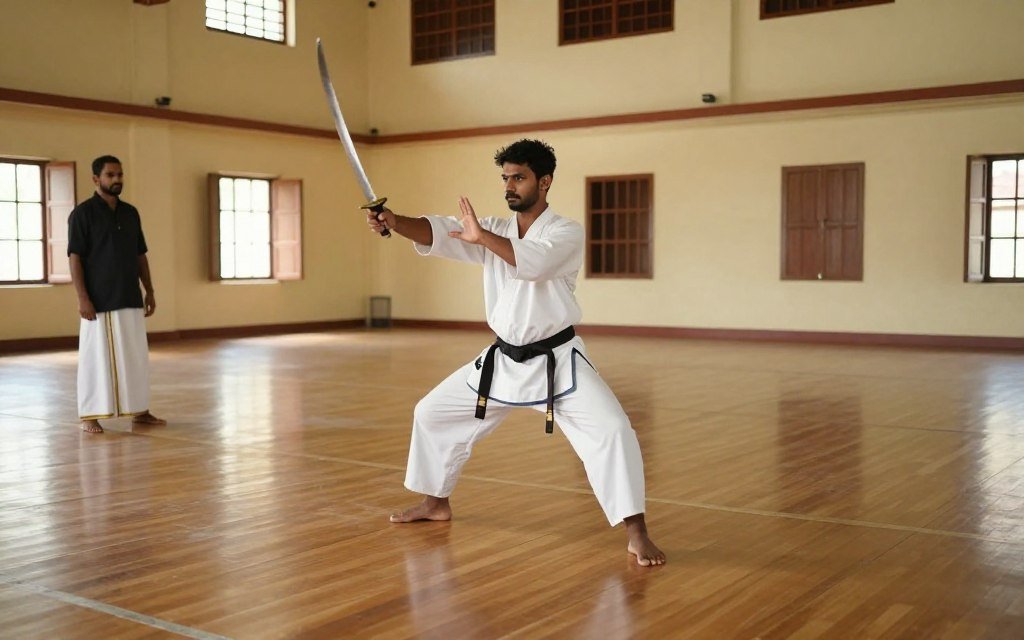
Many schools build these abilities through empty-hand drills, footwork, and safer training weapons before a student approaches a live blade.
The Pinnacle of Mastery and Danger
Urumi requires more than arm strength. It requires coordination between the wrist, shoulders, hips, legs, eyes, and breath. The user must track a blade that may occupy several positions around the body in a short time.
A miscalculation can cause immediate damage. A poorly controlled blade may strike the user, a training partner, or an object nearby. Even experienced martial artists should not assume that skill with a rigid sword transfers directly to this weapon.
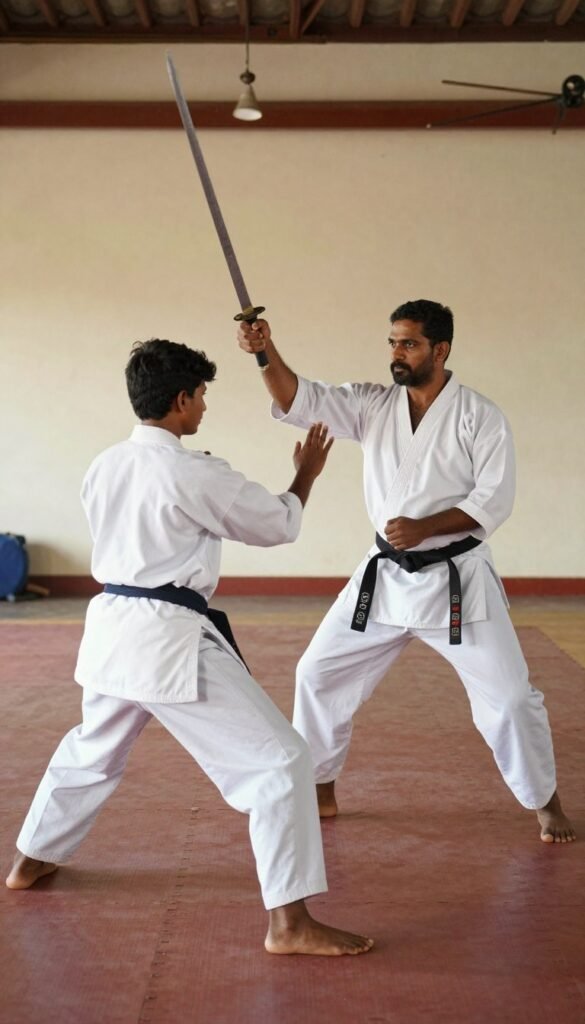
Expert supervision is essential. A responsible instructor can stop practice, correct posture, and identify unsafe habits before a student handles a live weapon.
Years of Preparation
Training may begin with body conditioning and basic movement. Students develop agility, strength, and spatial awareness through repeated practice. Wooden weapons can introduce timing and distance with lower risk than sharpened steel.
Only after a teacher judges the student ready should advanced metal weapons enter the discussion. The timeline depends on the school, the student, and the quality of instruction. There is no reliable shortcut based on age, confidence, or online video viewing.
Why practitioners value it
- It expresses advanced flexibility and control
- It connects weapon work with a living art
- It develops awareness of distance and movement
- It carries strong cultural significance
Why caution is necessary
- The blade can injure the user
- Its movement is difficult to predict
- Unsupervised practice creates serious risk
- Online demonstrations cannot replace teaching
Studying the Urumi Safely Today
Modern readers may encounter the Urumi in museums, martial arts schools, historical articles, films, or online stores. Each setting has a different purpose. A museum supports research. A school supports guided practice. A retailer may offer a decorative or functional object, but product photos cannot establish safe use.
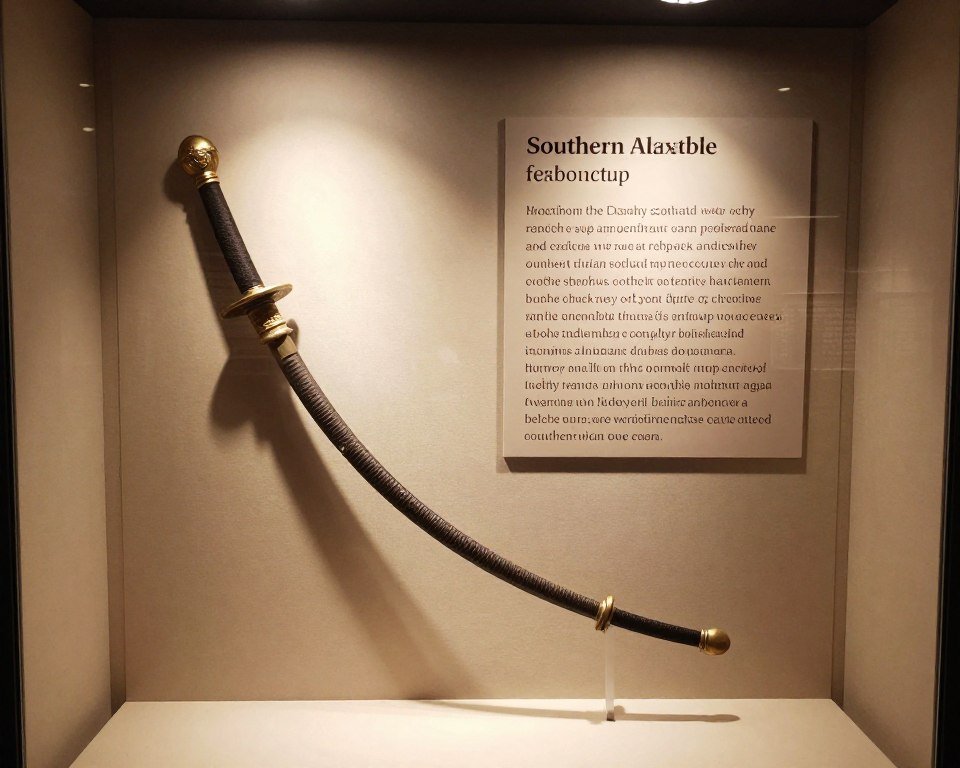
Collectors should confirm local laws, storage requirements, material details, and the seller’s claims. Students should focus first on the school and teacher rather than the object.
Questions for a Qualified School
- Which Kalaripayattu tradition does the school teach?
- How are students prepared before metal weapons?
- What protective measures and practice rules are used?
- Who supervises advanced weapon sessions?
- Can the school explain its lineage and experience?
These questions help separate serious instruction from casual demonstrations. They also align the reader’s next action with the real nature of the weapon: disciplined learning over impulse.
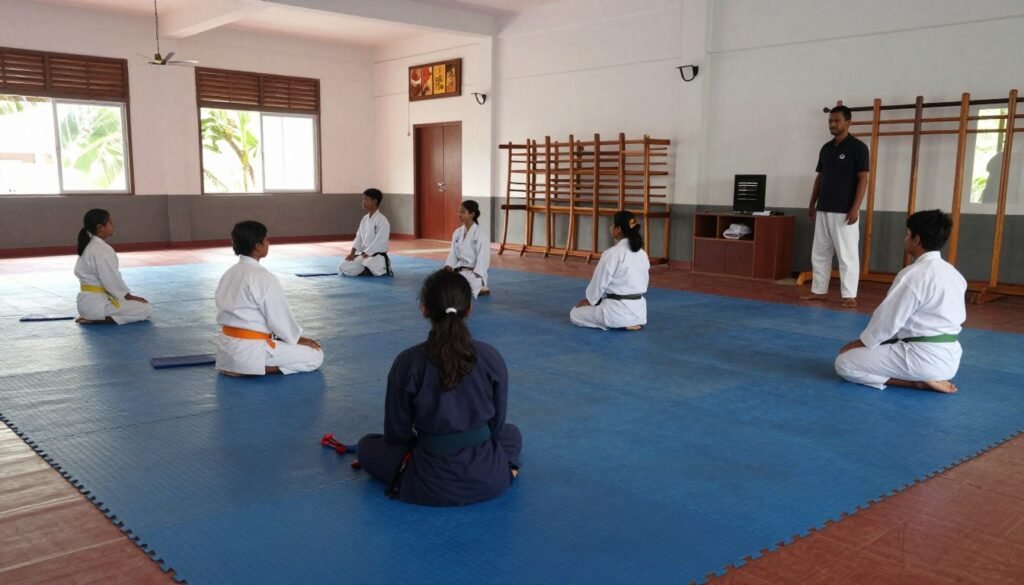
For general research, continue with the main guide to Kalaripayattu and its training stages. For practical study, use the contact path only after confirming that the instructor follows a structured safety program.
Is the Urumi a normal sword?
No. It is a flexible sword or whip sword whose blade does not hold the rigid form of a conventional sword. Its movement and training needs are very different.
Is the Urumi suitable for beginners?
No. It is an advanced weapon associated with Ankathari training. Beginners should learn under qualified instruction and use safer foundations first.
Where does the tradition come from?
The weapon is strongly associated with Kalaripayattu in Kerala and with wider martial traditions of Southern India. Regional details and historical claims can vary.
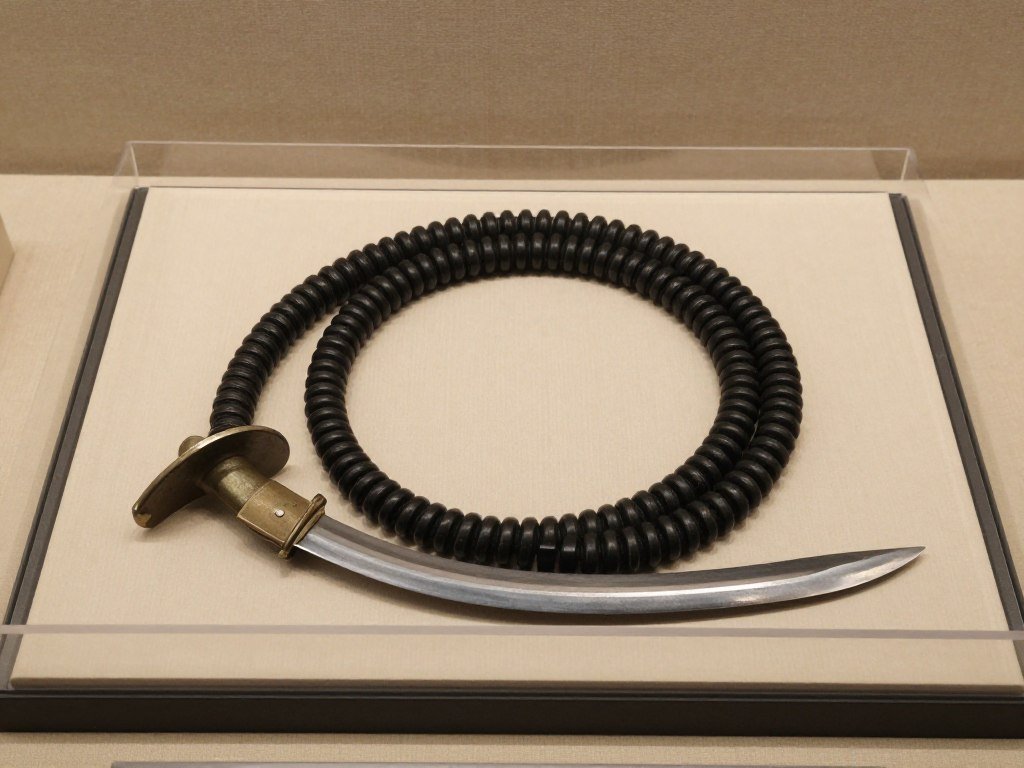
The coiled form is visually striking, but it should never encourage imitation. The safest route is careful research followed by supervised instruction.
The Urumi remains a powerful symbol of Kalaripayattu’s depth. Its thin steel blade, flexible design, and wide movement make it memorable, but its true significance lies in the years of practice behind it. Respect for the weapon begins with respect for the art, the teacher, the training space, and the limits of the user.