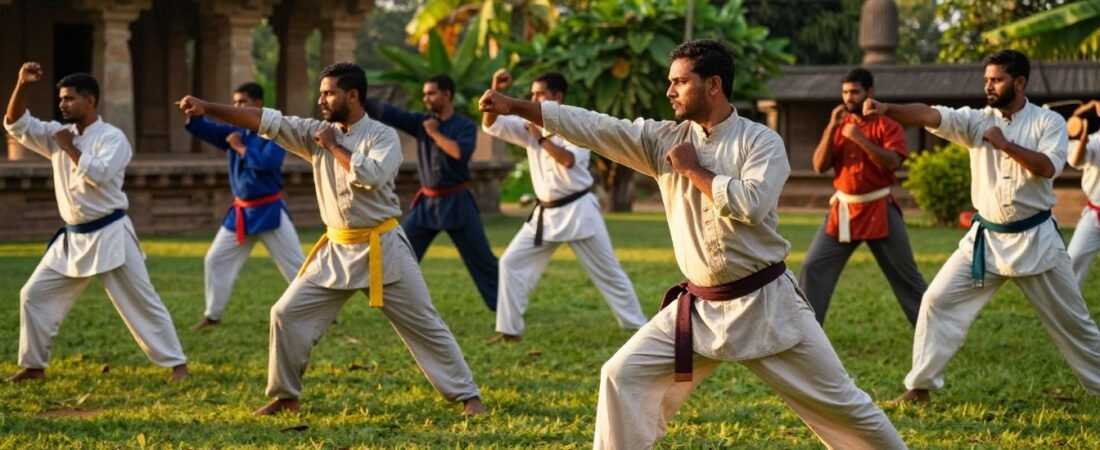
This unarmed Indian martial art is linked to Varanasi, also called Benares, in northern India. Its name literally translates as “fist combat.” The practice belongs to the long history of martial arts in India and reflects a distinct local culture.
Its strikes use fists, elbows, knees, and feet, though punches often take the lead over kicks. Some accounts connect the style with Southeast Asian arts such as Muay Thai and Pradal Serey. These comparisons can offer context, but they do not prove a shared origin.
Some sources place its roots in the 5th or 6th century BC, yet theories about its influences remain uncertain. This article explores a practical session framework, not a fixed historical class schedule. A typical sequence may include warm-ups, dand and baithak exercises, partner drills, hand conditioning, gada or mudgar work, pranayama, and mental preparation.
Key Takeaways
- The art is associated with Varanasi in northern India.
- Its name means “fist combat.”
- Punches often play a central role in its striking methods.
- Historical origin claims remain uncertain.
- A sample session can blend conditioning, partner work, and mental focus.
Musti Yuddha Training: Historical Roots and Core Principles
Accounts linked to the Vedas, Ramayana, and Mahabharata place this practice within the long history of martial arts in India. These references offer cultural context, but they do not confirm every detail of its origin. Its name literally translates as “fist combat,” though the methods extend beyond hand strikes.
The Mallapurana describes Rangasrama among its categories of physical practice, combining wrestling and striking. The surviving text dates to the 1700s, while scholars believe its original form may be centuries older. An 18th-century Sikh text, the Gurbilas Shemi, also refers to the art.
Fist Combat and the Art of Eight Limbs
The “eight limbs” refers to paired fists, elbows, knees, and feet. Practitioners use these natural weapons for punches, kicks, and other strikes. Sources also compare the style with Southeast Asian arts, including Muay Thai, Muay Lao, and Pradal Serey. Such links show shared features, not proven origins.
Physical skill sits alongside focus and spiritual discipline. One account says Varanasi held boxing festivals for more than three centuries. In the early 19th century, French General Allard noted fistfighting in Maharaja Ranjit Singh’s Lahore army. Together, these records show how combat practice fit into wider culture and history.
What a Typical Musti Yuddha Training Session Includes
No standard historical timetable survives, so treat this outline as a practical framework, not a fixed class plan. It connects movement, breath, and attention in a way beginners can scale.
Warm-Up, Mobility, and Pranayama
Begin with easy movement, joint circles, and gentle stretches. Then use pranayama, or controlled breathing, to settle your pace before practice. A report on Burmese lethwei champion Lone Chaw offers a conditioning comparison, not a routine for this martial art. He reportedly ran about 5 km, then completed five 100-meter duck-walk rounds, five all-out 100-meter sprints, and stretching. His coach described one hour of morning work and two hours in late afternoon. Those demands reflect his own schedule, not a rule for other martial arts.
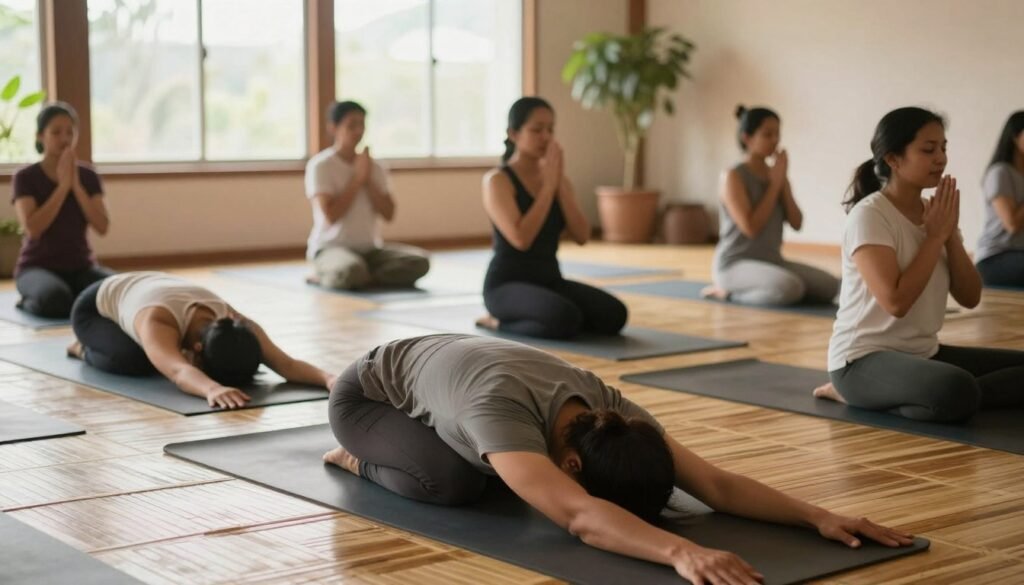
Mental Preparation for Practice
After warming up, take a brief pause to set a calm, clear goal. Traditional practice has physical, mental, and spiritual dimensions. Focused breathing can support attention, while a simple plan helps beginners build skills without rushing. Keep the pace comfortable and adjust effort to your needs.
| Session stage | Practical focus | Purpose |
|---|---|---|
| Warm-up | Easy movement and mobility | Prepare joints and muscles |
| Breathing | Steady pranayama | Settle attention |
| Preparation | Choose one clear goal | Practice with intent |
Dand and Baithak Variations for Strength and Stamina
Historical Musti Yuddha preparation placed bodyweight work before more demanding equipment. One source says prospective fighters focused on dands and baithaks until about ages 10 to 12. That detail describes a past practice, not an age rule for people today. The Mallapurana groups equipment-free calisthenics under Kundakavartana, including push-ups, squats, and tumbling.

Dand Variations for Upper-Body Control
Dands build pushing strength and help develop control through the shoulders and arms. Sources name dands but do not give a set list of variations. Today, a coach might adjust hand position, depth, or pace to suit a student. Keep each rep smooth, with a steady body line.
Baithak Variations for Leg Strength and Conditioning
Baithaks use repeated squatting motions to develop leg strength and stamina. A careful shift in stance or pace can make the work easier or harder. This simple base fits the art’s calisthenic roots and offers a measured path into martial arts practice. In time, students may explore pole work on a Sthamba, an upright pole commonly described as 8 to 10 inches wide. Progress should stay controlled; complex work belongs after basic movement feels steady. These methods reflect wider arts traditions, while current training should match each person’s ability.
Partner Drills for Timing, Striking, and Grappling
Partner drills help students test distance, timing, and control. The Mallapurana’s Rangasrama combines wrestling methods with striking, so each drill can focus on one clear goal.
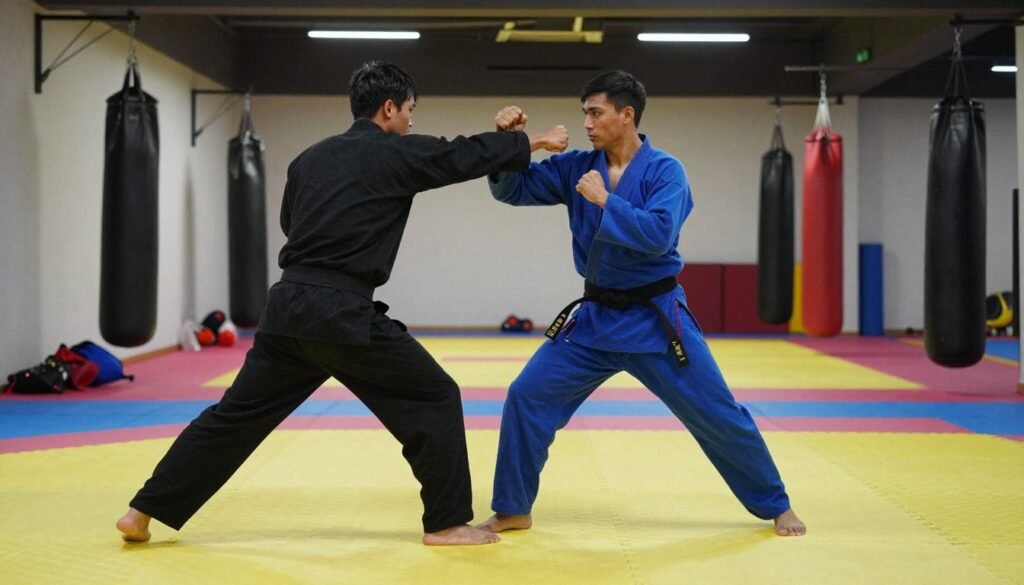
Practicing Punches, Kicks, Knees, and Elbows
Sources describe punches, kicks, knees, and elbows as tools of this martial art. Start with slow boxing or kickboxing patterns, then add light contact under a qualified coach. Compare the style’s broad striking range with southeast asian styles such as muay thai, but do not treat them as the same art. Descriptions also name headbutts; keep these as historical context, not a beginner drill.
Grappling, Clinching, and Locking Practice
For musti yuddha grappling, practice safe entries, takedowns, top control, bottom-position responses, and basic locking concepts. These arts require supervision and careful partner communication. Historical fights could involve one person or groups, with wins by knockout, ringout, or submission—not points. That combat context helps explain the range of skills, but does not define safe modern practice.
| Drill focus | Practice goal | Safety cue |
|---|---|---|
| Strikes | Time punches and kicks | Keep contact controlled |
| Grappling | Practice entries and takedowns | Stop on a partner’s signal |
Hand and Wrist Conditioning for Safer Striking
Historical accounts describe fighters toughening their hands by striking stone, wood, and coconuts. These records show how past combatants prepared, but they are not a safe plan for modern practice. Repeated hard contact can injure bones and joints.
Reports say competitors fought barefisted until 1960. The revival of musti yuddha is described differently, with light MMA-style gloves and headgear. Protective gear can lower risk, though it cannot prevent every injury.
Today, build wrist and hand control with a qualified coach. Keep the fist aligned with the forearm, begin with light contact, and increase impact slowly. In boxing and martial arts, sound form matters more than breaking objects. It helps make strikes more controlled and protects the fists.
“Control comes before force.”
Stop if pain or swelling develops, and seek medical advice when needed. Safer preparation relies on good technique, suitable protection, and steady progress. This approach respects the art without copying risky methods from the past.
| Practice | Safer choice | Why it helps |
|---|---|---|
| Historical contact | Do not copy hard object strikes | Reduces exposure to injury |
| Modern drills | Use light contact, gloves, and coaching | Builds control with protection |
| Progression | Increase impact slowly; stop for pain | Limits avoidable strain |
Gada and Mudgar Training for Whole-Body Power
A weighted club turns a simple swing into a test of balance from feet to shoulders. Gada and mudgar work can add coordinated, whole-body effort to bodyweight drills. The goal is steady control, not speed or heavy loads.
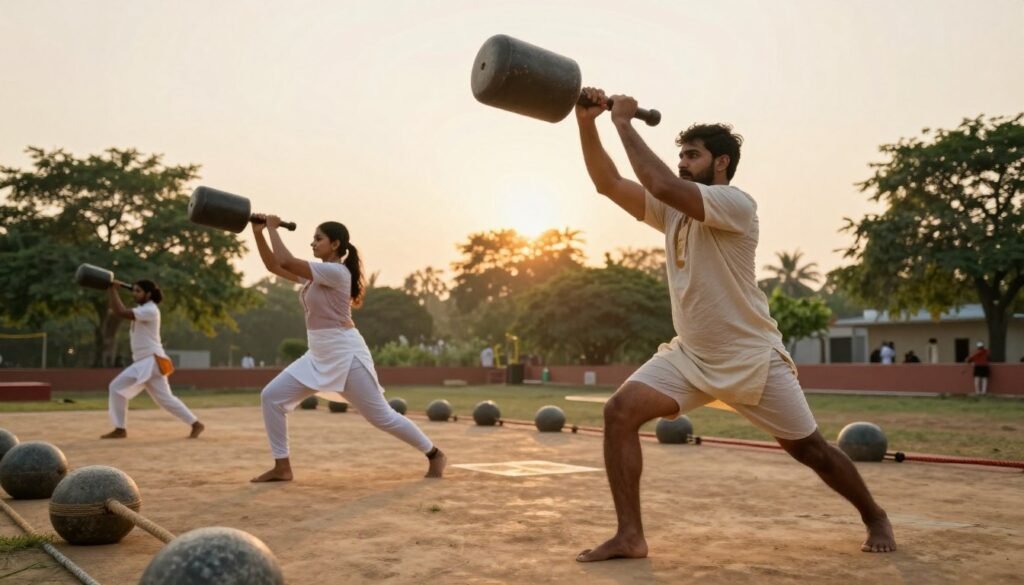
Building Strength and Coordination with Traditional Equipment
The Mallapurana calls exercises with Indian clubs, or gada, Pramada. Many Indian wrestling akhadas still use these clubs. This history offers context, but it does not set a fixed mudgar routine for musti yuddha. A light club and a slow pace can help new students learn the movement with care.
Other equipment appears in the text as well. Sthambhasrama used an upright pole, while Gonitaka involved lifting and swinging a large stone ring. These methods show the range of physical arts in the tradition, including this Indian martial art and its place among martial arts practices.
Learn each movement under qualified instruction. Add load or complexity only when your control stays steady. This gradual approach helps build strength and coordination while reducing the risk of strain.
How Musti Yuddha Training Progresses from Beginner to Advanced
Progress in a combat tradition depends on readiness, not a rush toward harder contact. This martial art builds capacity in stages, letting control grow before intensity rises.
Developing Fundamentals Before Increasing Intensity
Historical accounts say prospective fighters focused on dands and baithaks until about ages 10 to 12. This detail reflects one tradition, not a modern entry-age rule. Once trainees grew strong enough, the reported sequence added wrestler’s-pole work, then weight work.
The Mallapurana describes a broad range of practice, from calisthenics and pole work to Indian clubs, grappling, and striking. This Indian martial arts context shows how physical skills could develop over time. Styles and methods may vary, so the account does not set a single path for every student.
For Musti Yuddha today, begin with steady movement and bodyweight basics. Then refine punches, defense, and form through cooperative partner drills. Add equipment and harder practice only with qualified supervision. A coach should adjust the workload to each person’s age, experience, and recovery, and review progress each year. The art rewards patience: build skills first, then raise the challenge.
Conclusion
Rooted in Varanasi, musti yuddha is a combat art shaped by physical skill and steady focus. The Mallapurana offers historical context for dands, baithaks, pole work, Indian clubs, wrestling, and striking, reflecting a wider family of physical arts.
A present-day session may include warm-ups, mobility, partner drills, hand and wrist care, equipment work, pranayama, and mental preparation. Beginners should build control and sound basics before adding contact, complex moves, or intensity.
Past accounts describe harsh conditioning and barefisted bouts. Modern practice should instead use a qualified coach and suitable protection. This matters in every style, whether a student studies boxing or other martial arts. This article offers a framework, not a fixed rulebook. With patience and care, students can explore the tradition while respecting its history and their safety.