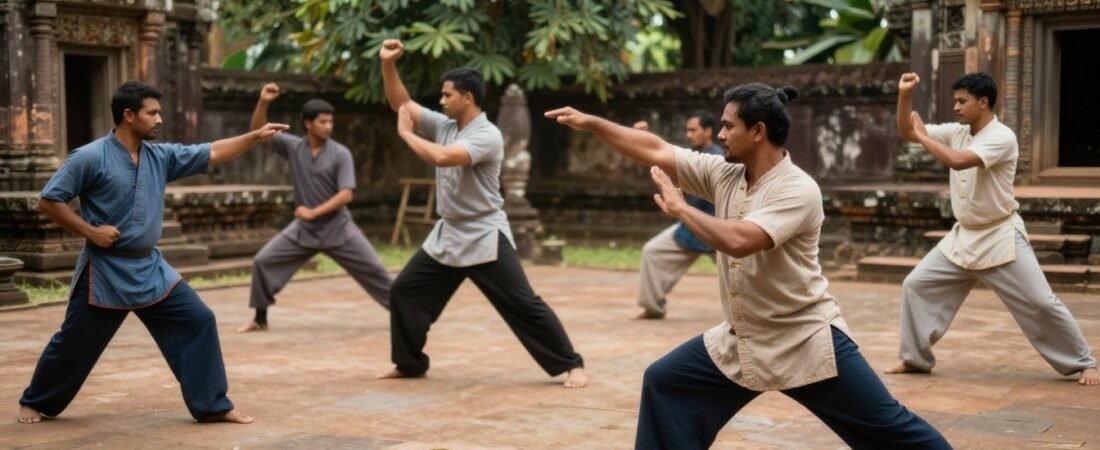
The Musti Yuddha combat system represents a fascinating pillar of traditional Indian martial arts. This ancient discipline focuses on a holistic approach to self-defense that integrates the entire body as a weapon.
Practitioners utilize a diverse range of movements, including powerful punches, open-hand strikes, and sharp elbow blows. The system also incorporates kicks, knees, and headbutts to ensure comprehensive coverage during a physical confrontation.
Beyond striking, these methods extend to intricate finger attacks, clinching, and various throws. You will also discover how joint locks and defensive maneuvers create a fluid, interconnected flow of motion. This article explores how these elements function together rather than viewing them as isolated actions.
Key Takeaways
- The system utilizes the entire body, including elbows, knees, and headbutts.
- It emphasizes a seamless connection between striking and grappling movements.
- Practitioners learn to integrate joint locks and throws into their defensive strategy.
- The training focuses on practical application rather than individual, disconnected moves.
- This martial art remains a vital part of the rich history of Indian combat traditions.
What Musti Yuddha Techniques Are Designed to Do
The effectiveness of this ancient system lies in its ability to blend striking and grappling into one fluid motion. Practitioners learn to view combat not as a series of isolated moves, but as a continuous flow of energy. This holistic approach ensures that every action serves a specific purpose in a high-pressure environment.
Musti Yuddha as a Close-Range Combat System
Musti Yuddha is fundamentally built for close-range combat. It prioritizes the ability to operate effectively when an opponent is within arm’s reach. By focusing on this proximity, the system allows fighters to neutralize threats before they can gain momentum.
The system emphasizes practical transitions between different phases of a fight. Rather than relying on long-range maneuvers, it utilizes the space immediately in front of the body. This creates a compact and highly efficient defensive shell.
How Striking, Grappling, and Defense Work Together
A core principle of these musti yuddha techniques is the integration of offensive and defensive actions. Striking is rarely performed in isolation; it is almost always paired with a defensive movement or a setup for a grapple. This synergy prevents the fighter from becoming vulnerable after an attack.
Grappling serves as a bridge between striking exchanges. When an opponent closes the distance, the system shifts naturally into locks or takedowns. This seamless transition ensures that the fighter maintains control regardless of the range.
The Role of Timing, Distance, and Body Position
Success in this martial art depends heavily on combat timing. A well-timed strike can disrupt an opponent’s rhythm, creating an opening for a follow-up technique. Without proper timing, even the most powerful strikes may fail to connect effectively.
Distance management and body position are equally vital to the overall strategy. By maintaining the correct distance, a practitioner can dictate the pace of the fight. Proper body positioning ensures that the fighter remains balanced while maximizing the force generated by their movements.
Mastering these elements allows a fighter to remain calm under pressure. By focusing on combat timing and spatial awareness, one can effectively navigate the complexities of close-range combat. These foundational skills are essential for executing advanced musti yuddha techniques with precision.
Hand-Fist Punches in Musti Yuddha
Closed-fist punches serve as the primary striking tool for practitioners of Musti Yuddha. These strikes are not merely about raw power; they are integrated components of a larger tactical framework. Every movement is designed to flow seamlessly into defensive maneuvers or grappling transitions.
Closed-Fist Punches and Their Targeting Principles
The effectiveness of these fist techniques relies heavily on where the strike lands. Practitioners are trained to identify vulnerable areas on the opponent’s body to maximize the impact of each blow. Targeting is precise, focusing on areas that can disrupt an opponent’s ability to continue the fight.
- Focusing on soft tissue areas to cause immediate discomfort.
- Aiming for structural points to break an opponent’s posture.
- Utilizing the knuckles to concentrate force on small, sensitive targets.
Straight, Hooking, and Short-Range Punching Actions
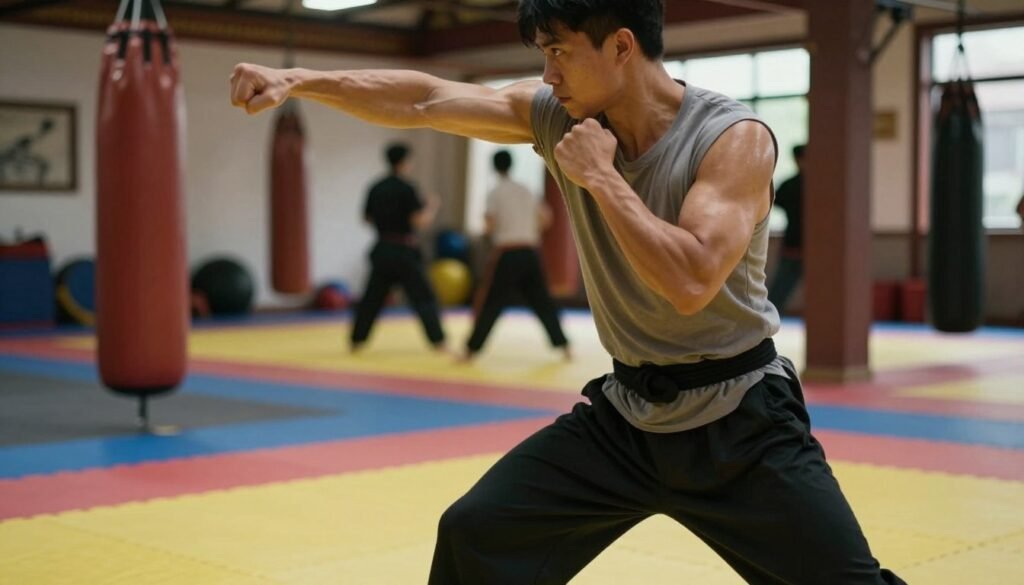
Musti Yuddha utilizes a variety of punching actions to adapt to different combat distances. Straight strikes are often used to bridge the gap or keep an opponent at bay. Hooking motions are employed when the distance closes, allowing for strikes that bypass an opponent’s guard.
Short-range strikes are perhaps the most critical aspect of this system. These compact movements allow a fighter to generate significant force even when they have very little room to maneuver. By keeping the elbows tucked and the movement tight, the practitioner maintains a high level of control.
Generating Force Without Sacrificing Balance
Generating power in Musti Yuddha punches requires the entire body to work in unison. Force is not generated by the arm alone, but by the rotation of the hips and the connection to the ground. This ensures that the fighter remains stable throughout the execution of the strike.
Maintaining balance is essential for both offense and defense. If a fighter overextends, they become vulnerable to counter-attacks or takedowns. Therefore, every strike is performed with a focus on keeping the center of gravity low and secure.
Guard Recovery and Hand Position After a Punch
Recovering the guard is a mandatory habit in this discipline. After delivering a strike, the hand must return immediately to a protective position near the face or chest. This ensures that the fighter is never left exposed to incoming attacks.
Consistent practice of these closed-fist punches emphasizes that the strike is only complete once the guard is restored. By prioritizing this recovery, practitioners ensure that their offensive output does not compromise their overall safety.
Open-Hand Strikes and Finger or Hand Attacks
The versatility of Musti Yuddha is best seen in its reliance on open-hand strikes and precise finger attacks. These methods allow a practitioner to engage an opponent while minimizing the risk of self-injury that often comes with striking hard surfaces using a closed fist. By utilizing the palm, the edge of the hand, or the fingers, a fighter can target vulnerable areas with high efficiency.
Open-Palm Strikes to the Face and Upper Body
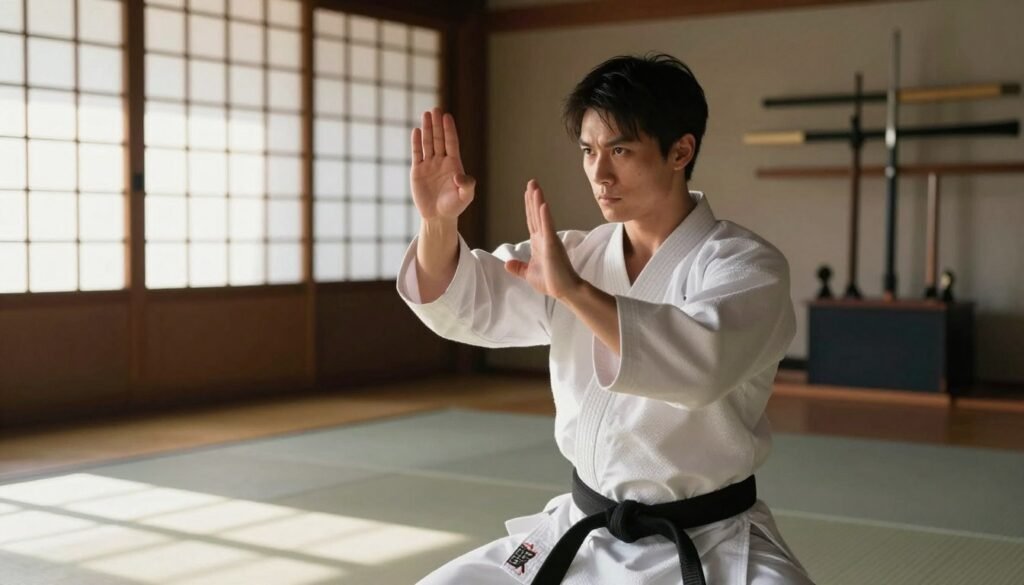
Open-palm strikes are highly effective for controlling an opponent’s head or upper torso. By using the heel of the palm, a practitioner can deliver significant force to the chin or nose, which often causes a disorienting effect. These strikes are safer for the attacker because the palm is naturally reinforced by the forearm bones.
Edge-of-Hand and Back-of-Hand Strikes
Beyond the palm, the system employs the edge of the hand to strike soft tissue areas like the neck or ribs. These hand attacks rely on the structural integrity of the hand’s outer edge to deliver sharp, snapping impacts. Back-of-hand strikes are also used to catch an opponent off guard, often targeting the eyes or the bridge of the nose during close-range exchanges.
Finger Attacks and Their Traditional Combat Applications
Traditional finger attacks serve as specialized tools for targeting sensitive pressure points or small anatomical structures. These techniques are rarely used for raw power, but rather for distraction or to create an opening for a follow-up move. In a self-defense context, they are intended to stop an aggressor by focusing on eyes, throat, or nerve clusters.
Why Precision and Control Matter in Finger Techniques
Because these techniques target fragile areas, precision is non-negotiable. A lack of control can lead to unintended permanent damage, which contradicts the defensive nature of the art. Practitioners must spend years developing the necessary accuracy to ensure that every strike lands exactly where intended without excessive force.
Safety and Training Limits for Hand and Finger Attacks
Safety remains the highest priority during training sessions. Instructors emphasize that these techniques should only be practiced with light contact or through shadow boxing to prevent injury to training partners. Protective gear is often used when practicing full-speed drills to ensure that both the attacker and the defender remain safe.
| Technique Type | Primary Target | Risk Level |
|---|---|---|
| Open-palm strikes | Chin and Jaw | Low |
| Edge-of-hand | Neck and Ribs | Moderate |
| Finger attacks | Eyes and Throat | High |
| Back-of-hand | Nose and Face | Moderate |
Ultimately, the goal of these hand attacks is to provide a range of options that do not rely on brute strength. By mastering these varied striking surfaces, a student gains the ability to adapt to any combat situation while maintaining a high level of personal safety and ethical responsibility.
Elbow Strikes for Close-Quarter Fighting
When an opponent crowds the distance, the elbow becomes the most effective tool in the Musti Yuddha arsenal. These strikes are essential for maintaining control when traditional punching range is no longer viable. By utilizing the hard point of the elbow, a practitioner can deliver devastating force with minimal movement.
Horizontal, Rising, and Descending Elbow Strikes
Musti Yuddha elbows are categorized by their trajectory to maximize impact against different targets. Horizontal strikes typically target the jaw or temple, moving in a lateral arc. Rising elbows are used to strike upward under the chin, while descending strikes drive downward onto the collarbone or top of the head.
Using Elbows When an Opponent Crowds the Distance
In close-quarter fighting, space is a luxury that rarely exists. When an adversary attempts to grapple or clinch, these strikes provide a necessary barrier. They allow the defender to create space or neutralize the attacker before they can secure a dominant position.
Combining Elbows With Hand Strikes and Clinches
Effective elbow combinations often start with a hand strike to distract the opponent. Once the guard is compromised, the elbow follows to finish the sequence. Integrating these strikes into a clinch allows for constant pressure, making it difficult for the opponent to recover their balance.
Protecting the Head and Maintaining Structural Alignment
Safety remains a priority during training because these strikes can cause serious injury. Practitioners must keep their non-striking hand glued to their head to ensure constant protection. Maintaining proper structural alignment is vital to prevent self-injury and ensure that the force of the strike is directed entirely into the target.
“The elbow is the sharpest blade in the body’s arsenal, requiring only a fraction of the space needed for a punch to reach its full potential.”
Kicks Used to Control Range and Stability
While often associated with hand strikes, Musti Yuddha utilizes strategic kicks to manage range and stability. These movements allow a fighter to dictate the pace of an engagement while keeping an opponent at bay. By integrating Musti Yuddha kicks, a practitioner gains a versatile toolkit for both offensive pressure and defensive positioning.
Low Kicks Against the Legs and Lower Body
Targeting the lower body is a fundamental aspect of this combat system. Practitioners use low kicks to disrupt an opponent’s stance and limit their mobility. These strikes often target the thigh or calf, making it difficult for the adversary to advance or retreat effectively.
Front and Side Kicks for Distance Management
Front kicks serve as a primary tool for maintaining a safe distance. By extending the leg toward the opponent’s midsection, a fighter can prevent them from closing the gap. Similarly, side kicks provide a powerful barrier that forces the opponent to respect the reach of the practitioner.
- Front kicks stop forward momentum.
- Side kicks create a defensive wall.
- Low kicks compromise the opponent’s base.
Balancing Power, Mobility, and Recovery
Executing a strike requires a delicate balance between force and stability. A practitioner must ensure that their weight remains centered throughout the motion. Rapid recovery is equally important, as the leg must return to a grounded position quickly to avoid being caught or countered.
When Kicks Become Riskier in Close Range
Kicking becomes significantly more dangerous when the distance between fighters shrinks. In close quarters, the space required to chamber and extend the leg is often unavailable. Furthermore, lifting a leg off the ground reduces stability, which can lead to a loss of balance if the opponent decides to rush forward.
Knees, Headbutts, and Other Short-Range Strikes
The integration of knees and headbutts defines the aggressive nature of close-contact techniques in this system. When an opponent closes the distance, traditional striking methods often become ineffective. Practitioners must rely on these specialized tools to maintain dominance in tight spaces.
Knee Strikes From Standing Positions
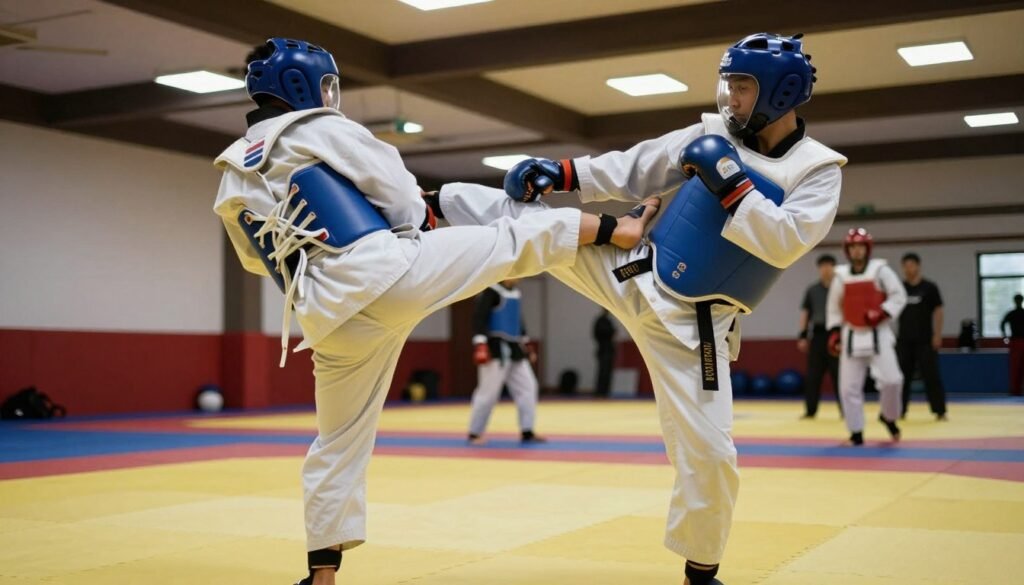
Knee strikes are powerful weapons that utilize the strength of the legs and hips. From a standing position, these strikes allow a fighter to generate significant force without needing much room to wind up. They are essential for maintaining pressure when the opponent is within arm’s reach.
Using Knees Against the Midsection and Legs
Targeting the midsection with knees can effectively wind an opponent and disrupt their breathing. Additionally, targeting the legs helps to compromise an opponent’s balance and mobility. These knee strikes are often delivered with a sharp, driving motion to maximize impact.
“Precision in the application of force is the hallmark of a true master, ensuring that every movement serves a clear tactical purpose.”
Headbutts as a Close-Contact Technique
Headbutts represent some of the most dangerous short-range strikes in the arsenal. They are typically reserved for moments when the combatants are locked in a clinch. Because the skull is a dense and hard surface, it can cause immediate damage to an opponent’s facial area.
Why Headbutts Require Exceptional Control and Caution
The risk of injury to both the attacker and the defender is extremely high when using headbutts. Practitioners must exercise extreme caution to avoid self-inflicted trauma or accidental damage. Proper training focuses on the exact point of contact to ensure safety and effectiveness.
Transitions Between Knees, Headbutts, and Elbows
Fluidity is key when combining these short-range strikes into a cohesive sequence. A fighter might transition from a knee strike to an elbow, or use a headbutt to create space for further attacks. These close-contact techniques are designed to flow naturally from one to the next based on the opponent’s reaction.
| Technique | Primary Target | Risk Level |
|---|---|---|
| Knee Strike | Midsection/Legs | Moderate |
| Headbutt | Facial Area | Very High |
| Elbow Strike | Head/Neck | High |
Clinching and Controlling an Opponent’s Movement
The Musti Yuddha clinch serves as a sophisticated framework for neutralizing an attacker’s mobility during close-quarters combat. By utilizing specific clinching methods, a practitioner can effectively dictate the pace of an engagement while minimizing the risk of incoming strikes.
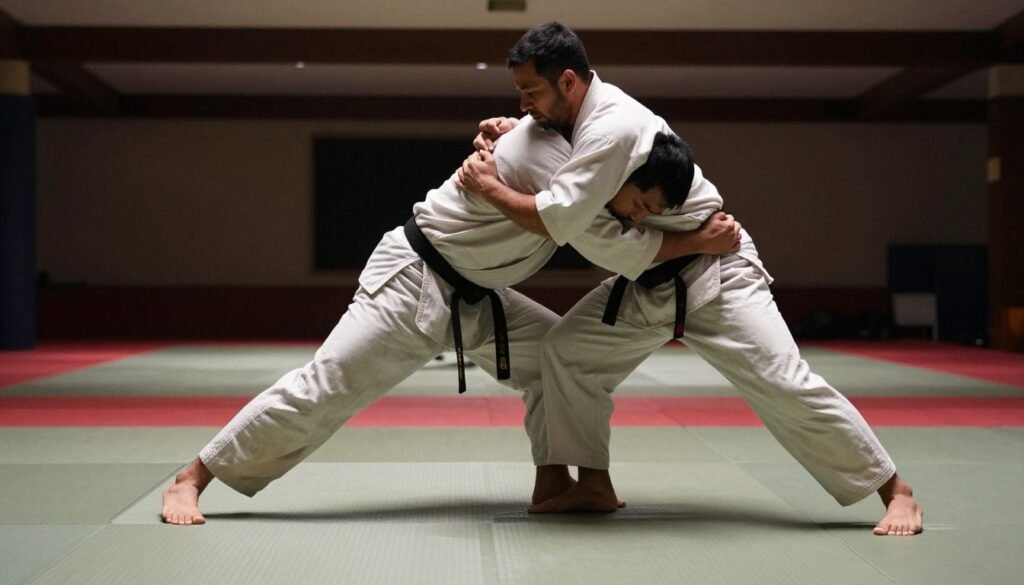
Entering the Clinch Without Losing Balance
Successful entry into a clinch requires precise timing and a stable base. Practitioners must close the distance while keeping their center of gravity low to avoid being caught off-balance by an opponent’s counter-attack.
The goal is to bridge the gap safely, often using a parry or a subtle redirection of the opponent’s lead hand. Once the distance is closed, the fighter must immediately establish a firm connection to prevent the opponent from creating space.
Controlling the Head, Arms, and Upper Body
Effective upper-body control is the cornerstone of this system. By securing the head and arms, a fighter can restrict the opponent’s ability to generate power for punches or kicks.
These clinch techniques focus on leverage rather than brute force. By applying pressure to the collarbone or the back of the neck, a practitioner can force the opponent into a compromised posture, making them vulnerable to follow-up actions.
Striking and Off-Balancing From the Clinch
Once control is established, the clinch becomes a platform for offensive maneuvers. Practitioners often integrate short-range strikes, such as knees or elbows, while simultaneously manipulating the opponent’s weight to break their balance.
Off-balancing is achieved by shifting the opponent’s center of gravity toward their weakest point. This creates a momentary opening that allows for a more decisive strike or a transition into a takedown.
Maintaining Position Against Resistance
Maintaining a dominant position requires constant adjustment to the opponent’s movements. If the opponent attempts to push away or pull back, the practitioner must adapt their grip to stay attached without relying on excessive or unsafe neck pressure.
| Control Point | Primary Function | Tactical Benefit |
|---|---|---|
| Head/Neck | Posture breaking | Limits vision and movement |
| Bicep/Arm | Neutralizing strikes | Prevents punching power |
| Upper Back | Forward pressure | Forces opponent off-balance |
By mastering these clinch techniques, a fighter ensures that upper-body control remains consistent throughout the struggle. This disciplined approach to clinching allows for a methodical and safe execution of combat strategies.
Throws and Takedowns From Close Contact
Mastering the art of close-contact combat requires a deep understanding of how to manipulate an opponent’s center of gravity. In this system, Musti Yuddha throws are not about raw power, but rather about precision and timing. By utilizing the opponent’s own momentum, a practitioner can neutralize a threat effectively.
Off-Balancing Before a Throw
The success of any takedown depends heavily on the concept of off-balancing. Before attempting a projection, you must disrupt the opponent’s stability by shifting their weight onto their heels or toes. This initial off-balancing creates a momentary window where the opponent cannot defend against a follow-up move.
Once the opponent is unstable, their ability to generate force is significantly diminished. This makes it much easier to execute a clean technique without meeting heavy resistance. Proper setup is the secret to making these movements look effortless.
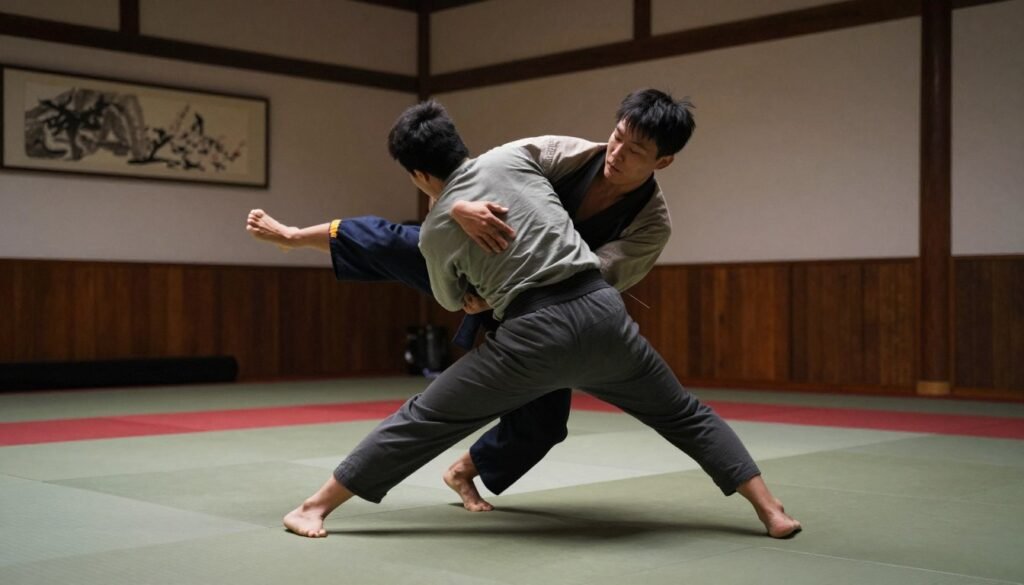
Using Trips, Sweeps, and Body Position
Once the opponent is off-balance, you can integrate various trips and sweeps to complete the takedown. These movements rely on precise foot placement and the strategic use of your own body weight. By blocking or hooking the opponent’s leg, you force them to lose their footing entirely.
Your body position must remain upright and strong throughout the process. Leaning too far forward or backward can compromise your own balance, leaving you vulnerable to a counter-attack. Maintaining a solid center of gravity ensures that you remain in command of the engagement.
Completing Throws Without Giving Up Control
Many beginners make the mistake of releasing their grip as soon as the opponent begins to fall. In reality, you must maintain a firm hold on the opponent’s limbs or clothing until they are fully grounded. This continuous control prevents the opponent from scrambling back to their feet or launching a surprise strike.
Effective takedowns are characterized by a smooth transition from the standing position to the ground. By keeping your connection, you ensure that you land in a dominant position. This allows you to dictate the pace of the fight even after the throw is finished.
Safe Falling and Training-Surface Considerations
Safety is the most critical aspect of practicing these techniques. Because these movements involve high-impact landings, you must always train on appropriate surfaces like thick mats or soft grass. Never attempt these maneuvers on concrete or hard flooring without professional supervision.
Learning how to fall correctly is a fundamental skill that every student must master before attempting advanced throws. Qualified instructors will emphasize the importance of tucking the chin and dispersing impact energy. Proper training habits ensure that you can practice these powerful skills for years to come.
Locks and Joint Attacks in Musti Yuddha
Beyond striking, Musti Yuddha incorporates sophisticated joint manipulation to neutralize opponents effectively. These techniques allow a practitioner to control an adversary’s movement without relying solely on impact force. By targeting the body’s natural pivot points, a fighter can turn an opponent’s aggression against them.
Wrist and Arm Locks
The foundation of close-range control often begins with wrist locks. These maneuvers focus on twisting or hyper-extending the small joints of the hand and forearm to force a submission or a change in position. When applied correctly, they disrupt the opponent’s balance and mental focus.
Similarly, arm locks are utilized to isolate the limb against the body. By pinning the arm, a practitioner can prevent the opponent from striking back while setting up a takedown. These movements require precise hand placement to ensure the joint is trapped securely.
Elbow and Shoulder Joint Attacks
When the distance closes further, the focus shifts to the larger joints. Joint attacks targeting the elbow involve applying pressure against the natural hinge of the arm. This forces the opponent to move in a specific direction to avoid injury.
Shoulder manipulation is equally vital in this system. By rotating the shoulder beyond its comfortable range, a fighter can easily guide an opponent to the ground. These techniques are highly effective when the opponent is already off-balance from a previous strike.
Applying Leverage Rather Than Brute Strength
Success in these techniques depends on physics rather than raw power. A practitioner must use their entire body weight to create a fulcrum, allowing for maximum control with minimal effort.
“True mastery is found not in the strength of the arm, but in the wisdom of the lever. When you align your body correctly, the opponent’s resistance becomes their own undoing.”
Relying on brute strength often leads to fatigue and missed opportunities. Instead, focus on the following principles to improve your efficiency:
- Maintain a stable base to support your leverage.
- Use your core muscles to drive the movement.
- Apply pressure gradually to find the point of maximum control.
Recognizing Tapping Signals and Releasing Safely
Safety is the most important aspect of training these techniques. Because joint locks can cause permanent damage if applied too quickly, partners must communicate clearly. The “tap” is a universal signal that the technique has been successful and must be released immediately.
Always practice with a controlled, steady pace. Never jerk or snap a joint during training sessions, as this risks injury to your partner. By respecting these boundaries, you ensure that your training remains productive and sustainable for years to come.
Defensive Techniques Against Strikes and Grappling
Mastering the art of survival in Musti Yuddha requires a deep understanding of defensive techniques. Success in combat is not just about landing blows, but about ensuring you remain untouched while managing the distance. By prioritizing your safety, you create the necessary space to analyze your opponent’s next move.
Covering, Parrying, and Redirecting Incoming Strikes
Effective strike defense relies on your ability to intercept force without meeting it head-on. Covering involves using your arms and shoulders to shield vital areas of the body from incoming strikes. This creates a protective barrier that absorbs impact while keeping your vision clear.
Parrying and redirecting are equally vital for managing an opponent’s momentum. Instead of blocking a punch with brute force, you gently deflect the limb to the side. This simple shift in trajectory causes the attacker to miss their target, leaving them vulnerable to your follow-up actions.
Footwork and Angling to Avoid Direct Attacks
The foundation of any solid defense is defensive footwork. By moving laterally or at an angle, you remove yourself from the direct line of an attack. This movement forces your opponent to constantly adjust their position, which disrupts their rhythm and power.
Angling is particularly useful when facing an aggressive fighter who prefers to charge forward. By stepping off the center line, you gain a superior position that allows you to flank your opponent. This tactical advantage makes it difficult for them to maintain their offensive pressure.
Escaping Clinches, Locks, and Unfavorable Positions
When an opponent manages to close the distance, your grappling defense becomes the primary focus. Escaping a clinch requires you to maintain a strong, upright posture while creating small gaps between your bodies. You can then use your arms to frame against their chest or shoulders to push them away.
If you find yourself caught in a joint lock, the goal is to rotate your limb in the direction of the pressure to relieve the tension. Never fight a lock with pure strength, as this often leads to injury. Instead, focus on shifting your body weight to neutralize the leverage being applied against you.
Counterattacking Only After Regaining Stability
It is a common mistake to rush into a counterattack while you are still off-balance. You must prioritize regaining your center of gravity and solid footing before launching any offensive maneuver. Once your posture is secure, you can effectively transition from defense to a controlled strike or takedown.
Conclusion
True combat effectiveness emerges when you harmonize every aspect of your movement into a unified whole. Musti Yuddha techniques represent a complete system that bridges the gap between striking and grappling. By blending punches, open-hand strikes, elbows, kicks, knees, and headbutts, practitioners create a versatile offensive framework.
The system extends far beyond simple impact. It incorporates clinching, throws, locks, and joint attacks to control an opponent at every range. These Musti Yuddha techniques rely on precise timing, superior balance, and spatial awareness to remain effective under pressure.
Safety remains a vital component of your training journey. You should seek out qualified instructors who emphasize proper form and controlled application of these skills. Consistent practice allows you to refine your defensive techniques while building the physical conditioning necessary for real-world scenarios. Dedication to these principles ensures that your martial arts practice remains both functional and sustainable for years to come.