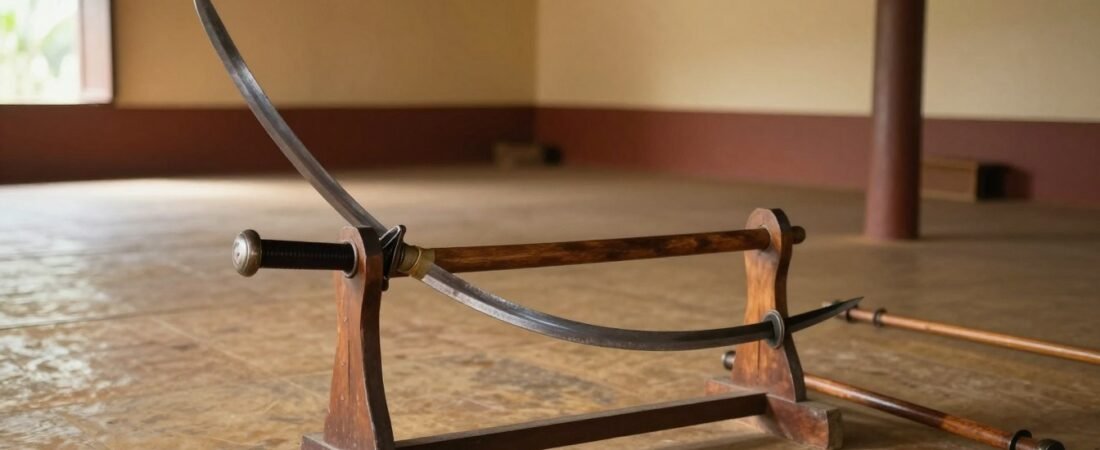
This martial arts guide places the weapon within the wider development of Indian martial arts weapons. It explains how wooden drills prepare the body for metal, how a spring steel blade stores and releases energy, and why safe practice depends on disciplined progression to improve skill over time. The aim is technical understanding rather than theatrical claims about a deadly weapon.
Ankathari: The Weapon Stage of Traditional Kalari System
Ankathari is commonly used for the metal weapon stage of Kalaripayattu, although terminology and progression vary by lineage. It follows earlier conditioning and wooden weapon work rather than replacing them. The student learns to manage a sword, spear, dagger, or coiled steel only after developing balance, footwork, and control.
The progression has a practical logic. A rigid sword gives clearer feedback about angle and alignment, while the urumi whip adds delayed blade response and a wider danger zone. A Gurukkal may therefore modify the order, pace, and equipment according to age, skill, school practice, and the student’s ability to train responsibly.
Biomechanical Prerequisites: Why Movement Must Precede Metal
Combat biomechanics begins with the feet, pelvis, trunk, and shoulder line. A stable base lets the practitioner redirect force without locking the knees or overloading the wrist. Mobility drills also help the body change range while preserving a safe relationship between the handle and the blade path.
Skill is not the same as speed. A student must sense where the weapon is even when it is outside direct vision, which requires proprioception and repeated low-risk practice. This foundation matters in Kerala and Tamil Nadu because regional schools may preserve different methods while sharing the principle that control must precede intensity.
To understand how weapon training fits into the broader historical development and Bodhidharma legends, read our detailed breakdown of Kalaripayattu history.
2. Foundational Wooden Weapons (Kolthari Foundation)
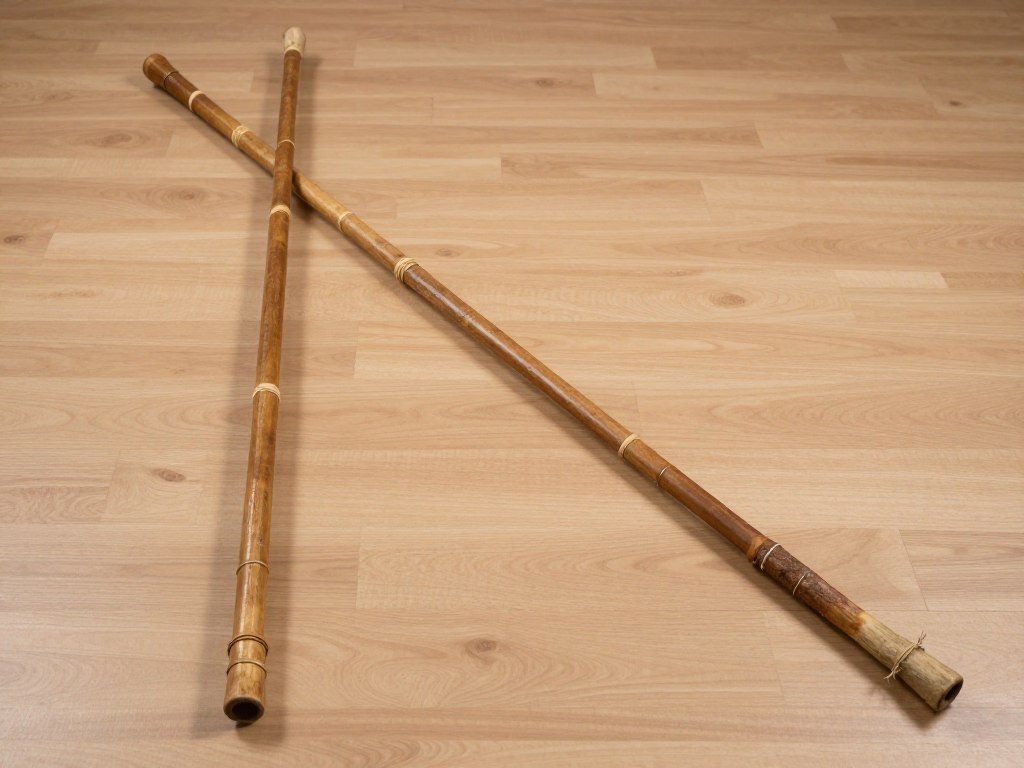
Cheruvadi (Short Stick) vs. Kettukari (Long Staff): Speed and Leverage
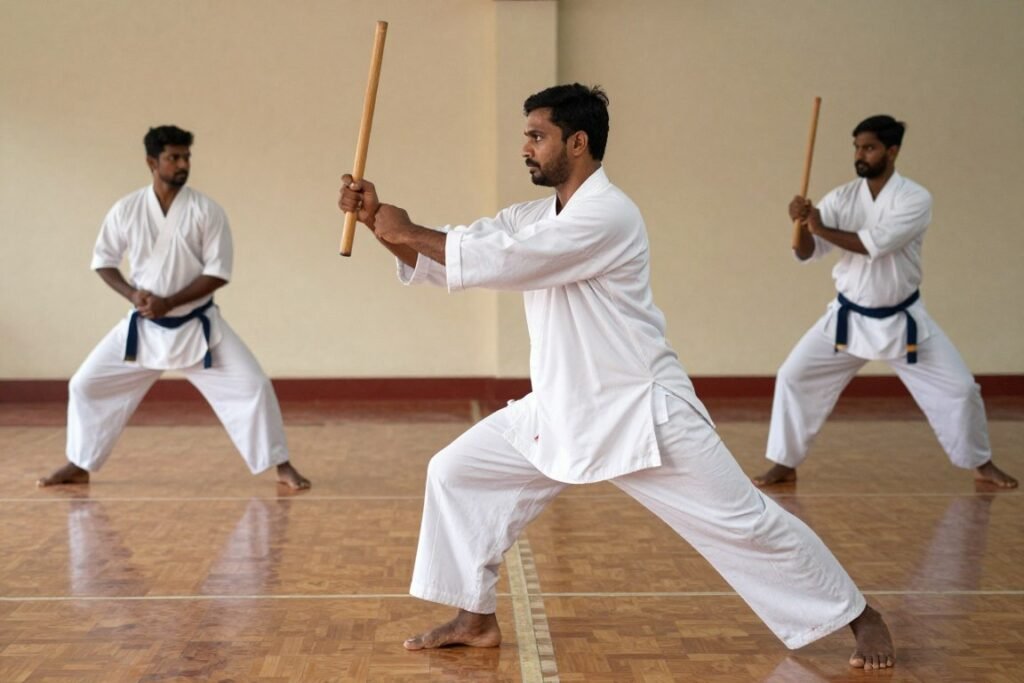
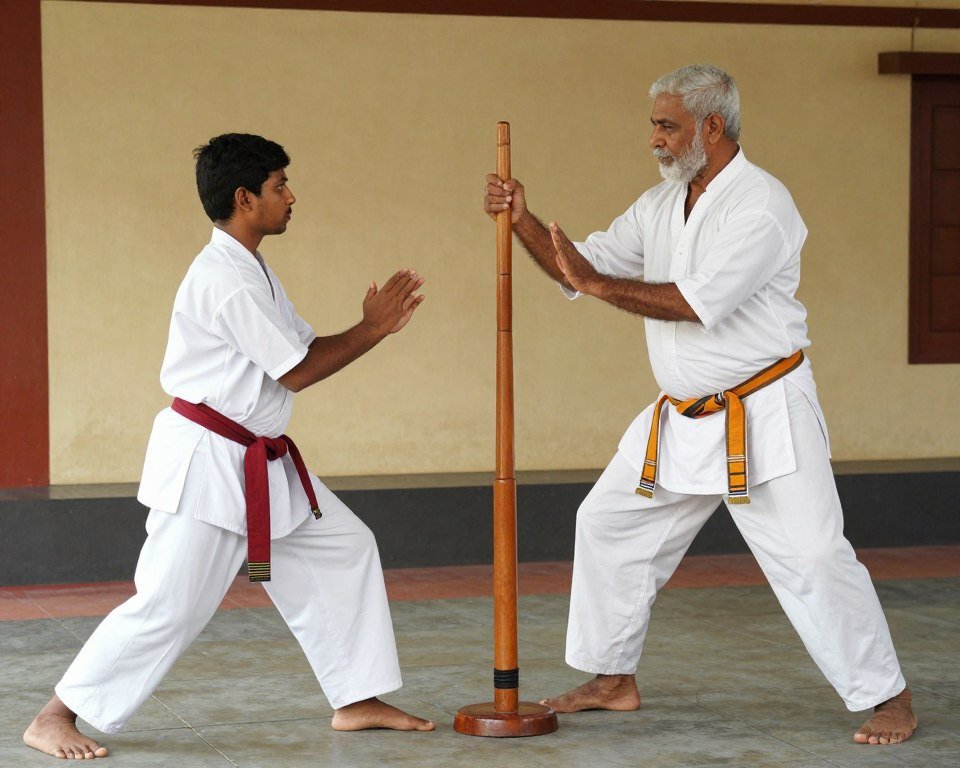
Kolthari uses wooden weapons to develop distance judgment before the student handles metal. The Cheruvadi is compact, quick to reposition, and useful for learning hand changes and short defensive lines. The Kettukari creates greater reach and leverage, so its movement teaches the practitioner to coordinate the whole body rather than rely on the forearm.
Length changes the tactical problem. A short stick can work inside an opponent’s reach, but it offers less control at long range. A staff can intercept earlier, yet its larger arc demands more space and better recovery after each action.
These drills also reveal why traditional Indian weapons cannot be understood by appearance alone. The same design can feel fast or slow depending on grip position, body angle, floor surface, and the timing of the opponent. Modern demonstrations may emphasize speed, while historical training likely depended on a wider mix of conditioning, ritual, teaching, and practical adaptation.
The Otta: Curved Wooden S-Stick and Marma Point Target Dynamics
The Otta stick is a curved wooden training weapon associated with controlled targeting and unusual angles. Its shape encourages the practitioner to work around a guard rather than drive directly through it. In some teaching contexts, the weapon is linked with Marma points, but target terminology and training emphasis differ among schools.
Marma points should not be treated as a license for uncontrolled attacks. They are part of a traditional body map and healing culture, while modern anatomy and emergency care provide the appropriate framework for injury assessment. A responsible lesson uses protective equipment, controlled contact, and a clear stop signal.
3. Bladed and Metal Weaponry (Ankathari)
Metal weapon training introduces edge alignment, mass distribution, rebound, and the consequences of poor maintenance. A sword is not merely a heavier wooden stick because its edge, balance, and stiffness change the timing of every action. Ankathari therefore demands slower technical practice before faster martial arts demonstrations.
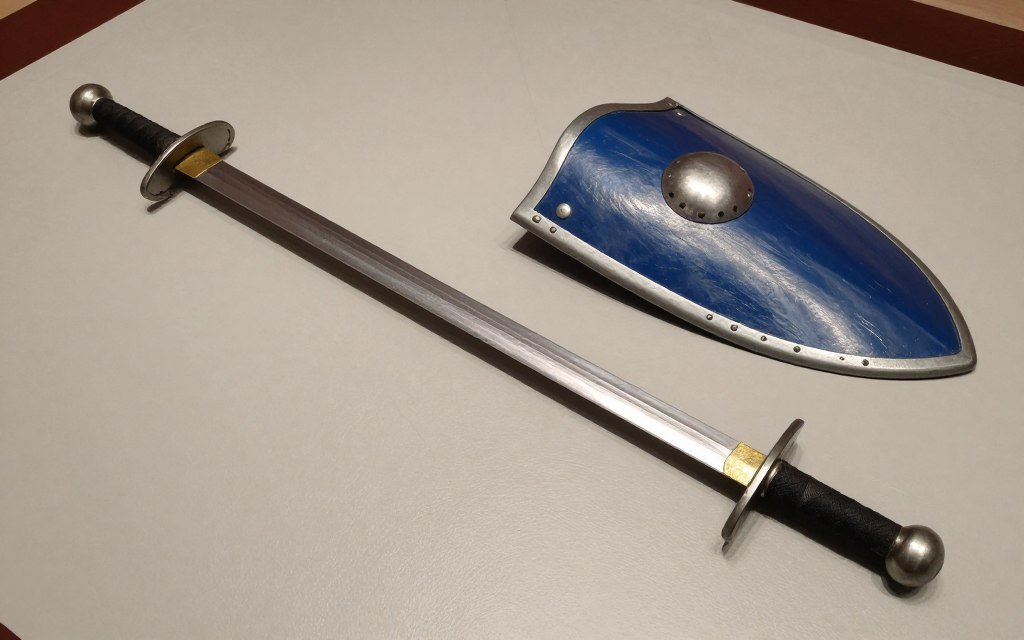
Sword and Shield (Vaal and Paricha): Footwork, Deflection, and Angle Control
Vaal Paricha pairs a sword with a shield, often called a paricha or related regional term. The shield does more than absorb an attack; it can hide the hand, close a line, and create a changing visual barrier. The sword hand then works from angles created by foot placement and the shield’s position.
Efficient combat uses deflection rather than a contest of strength. The practitioner changes the angle of contact, keeps the elbow organized, and steps away from the line of force. Training partners must control speed because even a light sword can cause severe injury when edge alignment, distance, and timing combine.
Dagger (Kadthara) and Spear (Kuntham): Close-Range Interception
The Kadthara is associated with close-range work, where small changes in wrist angle and torso position matter greatly. The Kuntham creates a different problem because its length extends the interception range and can restrict the user’s movement in confined space. Both weapons require clear boundaries, partner trust, and a training surface free of obstacles.
Historical labels do not guarantee identical dimensions. A school may use a blunt trainer, a shortened replica, or a modern material for practice. The correct comparison is therefore functional: the dagger emphasizes compact control, while the spear emphasizes line management, reach, and recovery.
Kalaripayattu Weapon Progression: Stage, Weight/Length, Tactical Range, and Primary Biomechanical Focus
| Stage | Weight/Length | Tactical Range | Primary Biomechanical Focus |
| Kolthari: Cheruvadi | Short and light; school-specific | Close to middle | Hand speed, balance, redirection |
| Kolthari: Kettukari | Long staff; variable length | Middle to long | Leverage, stepping, whole-body rotation |
| Ankathari: Vaal Paricha | Rigid sword and shield; variable mass | Middle | Edge alignment, deflection, angle control |
| Ankathari: Kuntham | Long rigid shaft; variable length | Middle to long | Line control, reach, recovery |
| Advanced flexible blade | Thin spring steel blade; variable length | Moving perimeter | Timing, proprioception, elastic recovery |
4. The Urumi: Physics, Biomechanics, and Metallurgy of the Urumi Flexible Sword Kalaripayattu
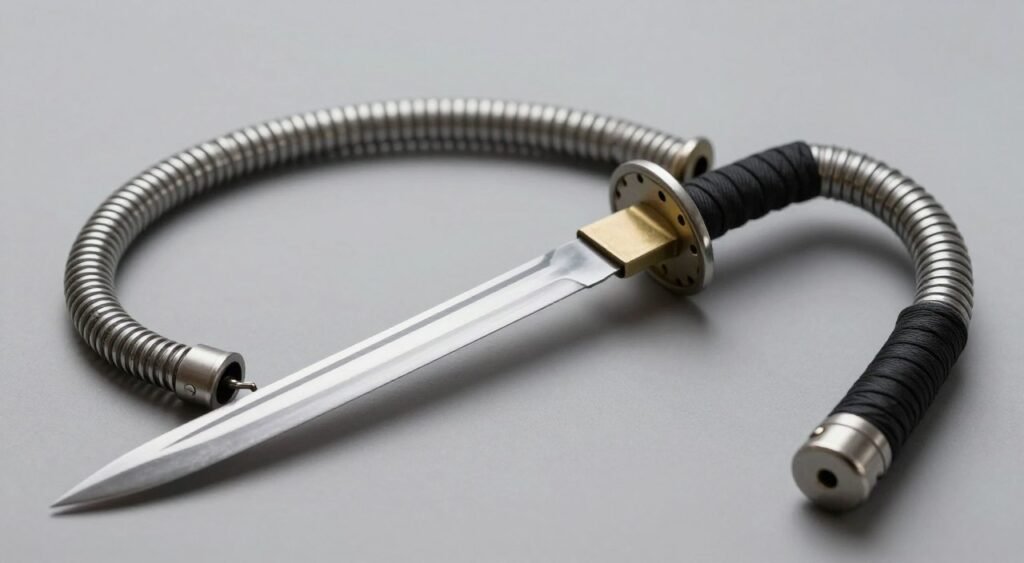
What Is the Urumi? Construction, Spring Steel Dynamics, and Multi-Blade Formats
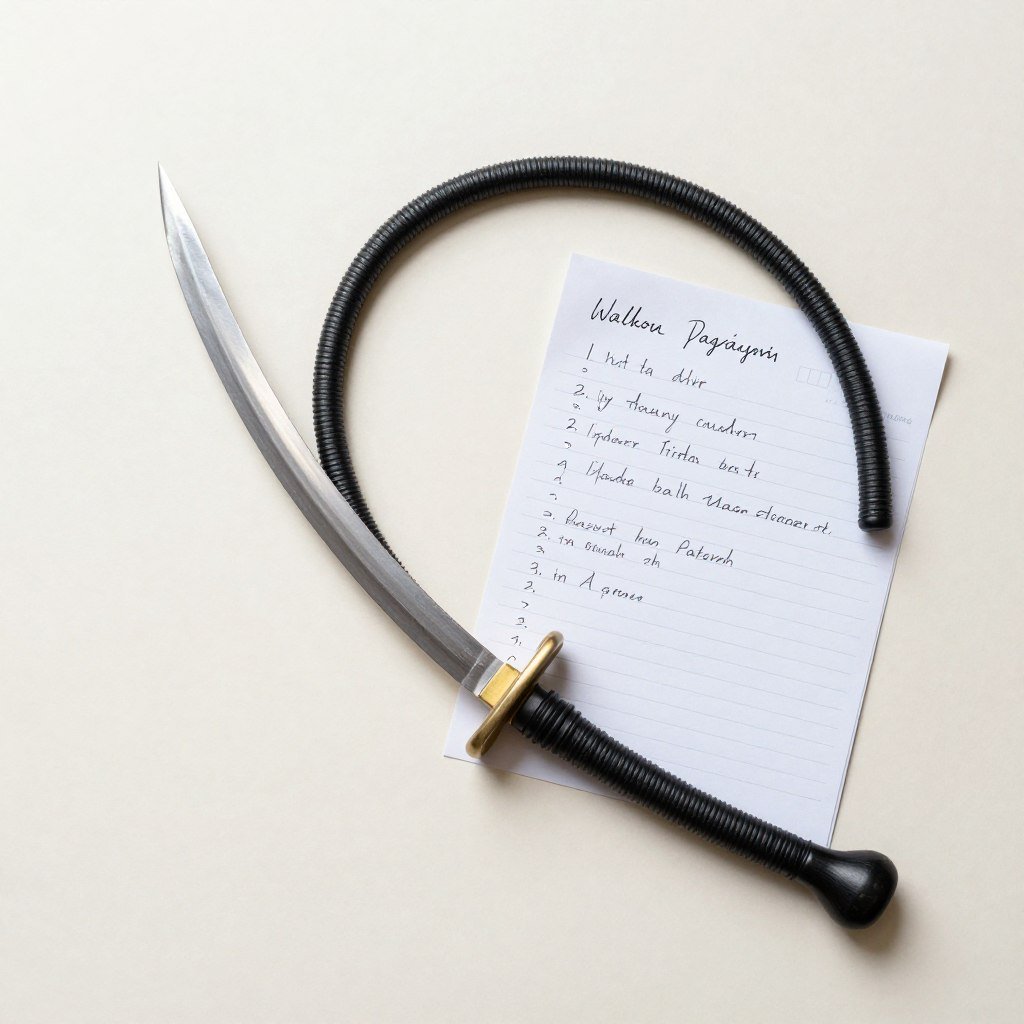
The urumi is a flexible sword or whip sword associated with southern India, especially Kerala traditions, though historical evidence and modern presentation vary. Its blade is thin enough to bend and long enough to create a moving perimeter around the practitioner. Some examples are described as having multiple blades attached to one handle, but dimensions, construction, and terminology are not uniform.
A spring steel blade stores elastic energy when it bends and releases that energy as it returns toward its original line. This is different from a soft strip that simply folds, because a well-made whip blade has controlled recovery and a predictable degree of resilience. Heat treatment, thickness, width, edge geometry, and surface condition all affect flexibility and fatigue life.
Metal history must be stated carefully. Claims about Indian steel should not be applied to every surviving or modern urumi weapon. A contemporary replica may use commercial spring steel, stainless steel, or an alloy selected for cost and durability rather than historical accuracy.
The Danger Factor: Continuous Rotational Momentum and the Risk to the Practitioner
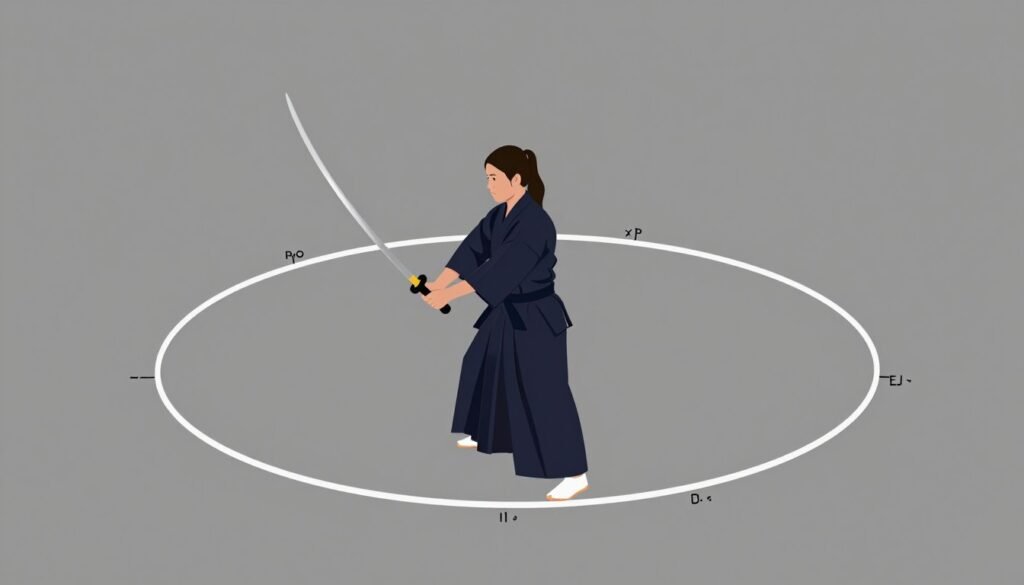
The urumi whip produces risk through movement, not mystical force. Once the blade travels in a circular path, rotational momentum helps maintain its motion, while the practitioner must manage the handle, shoulder line, footwork, and changing radius. A small timing error can shorten the path and bring the whip blade toward the user.
Proprioception is central because the blade can move outside the practitioner’s direct focus. The body must recognize where the handle is, where the blade is likely to be, and how a change in speed will alter its return. This is why learning urumi should begin with non-metal simulations, slow patterns, and qualified supervision. A flexible blade is not automatically safer than a rigid sword. Its ability to wrap, rebound, or change line creates a different injury profile. No reader should test a live urumi weapon alone, against multiple opponents, or in a crowded space.
Tactical Application: Defensive Perimeter Creation vs. Offensive Slashing
Modern descriptions often portray the urumi as a weapon for controlling several opponents, but historical claims about battlefield use require source-specific evidence. Biomechanically, a rotating blade can create a defensive perimeter that discourages entry. That perimeter is useful only when the practitioner has space, timing, and a reliable method of stopping the blade.
Offensive slashing is harder to describe responsibly because the blade path is continuous and the target’s movement changes the geometry. The most important variables are distance, angle, timing, and recovery rather than dramatic speed. A skilled practitioner must preserve an exit route and stop before the blade becomes uncontrolled.
5. Healing, Injury Prevention, and Weapon Maintenance
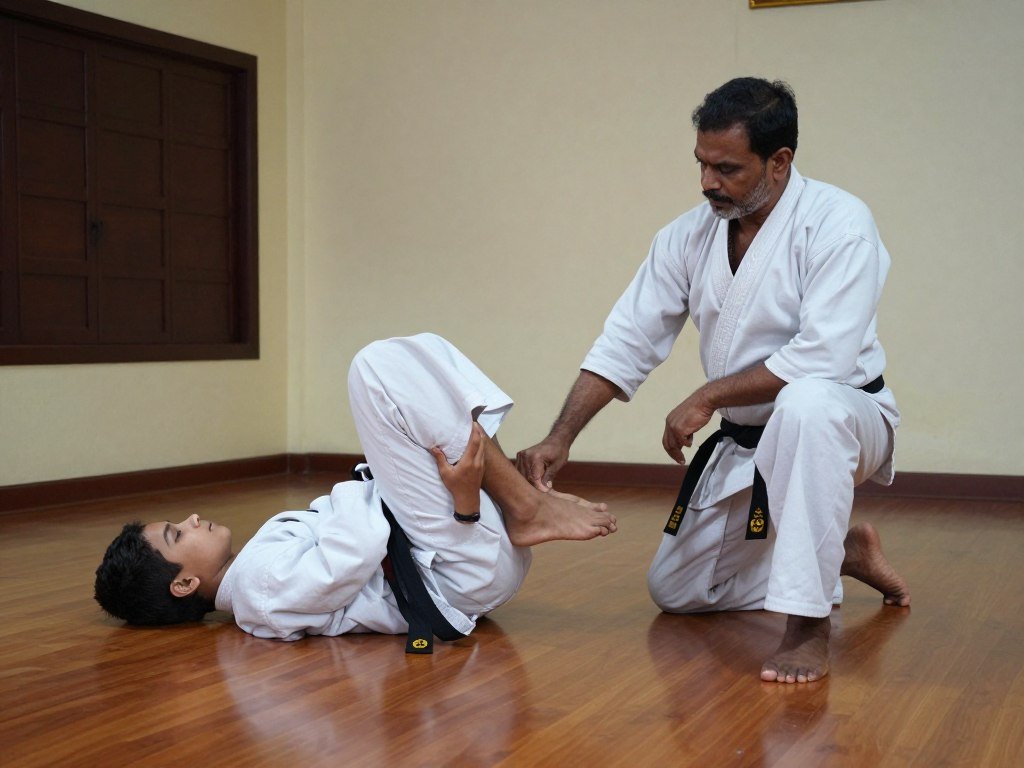
Marma Treatment and Post-Weapon Conditioning
A Gurukkal may teach massage, mobility, breath work, and traditional approaches connected with Marma points. These practices have cultural significance and may support a school’s training identity, but they should not replace diagnosis or treatment from a licensed medical professional. Severe pain, swelling, numbness, loss of motion, head injury, or bleeding requires modern medical assessment.
Post-weapon conditioning should restore range rather than chase exhaustion. Light mobility for the wrists, shoulders, hips, ankles, and spine can help the student notice stiffness after practice. Strength work should be gradual and should address the trunk and legs because flexible blade control depends on more than the hand.
Injury prevention begins before the first repetition. Inspect the training space, define a safe radius, use a blunt trainer where appropriate, and agree on a stop command. The teacher should control intensity and avoid moving a student to a live weapon because of enthusiasm alone.
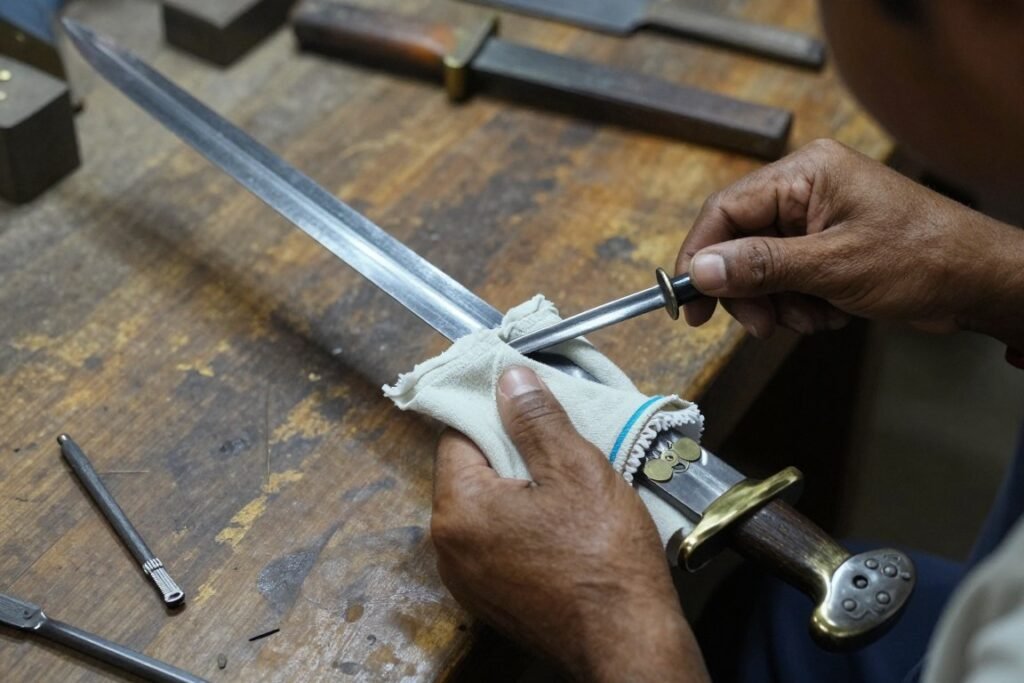
Traditional Maintenance of Ancient Indian Steel Weapons
Steel weapons require inspection for cracks, deep corrosion, loose handles, damaged guards, and irregular edges. A flexible blade deserves special attention because repeated bending can create fatigue that is not obvious from a quick glance. If the blade shows a new kink, rough edge, or change in recovery, remove it from practice.
Maintenance methods vary, but the practical goals are consistent: keep the metal clean, limit moisture, protect the edge, and store the weapon so it cannot be struck or bent accidentally. Oils may help control corrosion, while sharpening should be performed by someone who understands the intended geometry. An overly sharp or poorly finished blade increases risk without improving technical learning. As a unique weapon in ancient Indian martial arts, the urumi whip requires incredible agility and timing to control on the battlefield. Historical origins trace its development across southern regions like Kerala Tamil Nadu, where martial art masters utilized spring steel blade dynamics against multiple opponents. Today, martial arts demonstrations showcase how these flexible swords create an unpredictable defensive perimeter, making the whip sword one of the most complex bladed weapons to master over time.
6. Frequently Asked Questions (FAQs)
Is the Urumi the most dangerous weapon in martial arts history?
There is no reliable universal ranking that makes the urumi the most dangerous weapon in martial arts history. Its coiled steel can create serious risk because its path is continuous, its recovery is difficult, and mistakes can injure the practitioner or a nearby person. Danger depends on design, training, environment, user behavior, and the presence of supervision.
What is the difference between Kolthari and Ankathari?
Kolthari generally refers to wooden weapon training, including tools such as the Cheruvadi, Kettukari, and Otta stick. Ankathari generally refers to metal weapons, including the Vaal Paricha, dagger, spear, and in some lineages the urumi. The exact order and terminology can differ by region, school, and teacher, so these terms should not be treated as a single fixed curriculum.
How long does a student train before handling real metal blades in Kalaripayattu?
There is no standard number of months or years. A Gurukkal may consider posture, footwork, discipline, partner control, age, attendance, and the student’s ability to follow safety commands before allowing metal practice. Many schools begin with wooden or blunt trainers and introduce real blades only when the teacher believes the student can manage distance and recovery responsibly.
7. Conclusion: The Master’s Mastery Over Metal
The study of Kalaripayattu weapons begins with movement and ends with responsibility. Kolthari develops distance, leverage, and timing, while Ankathari adds edge control, mass, and material consequences. The urumi flexible sword kalaripayattu tradition extends these demands through spring steel behavior, rotational momentum, changing blade paths, and strict spatial control. Metallurgy explains what the weapon can do, but it does not create mastery. Mastery depends on conditioning, proprioception, calm footwork, careful maintenance, and instruction suited to the lineage and student. Historical claims should remain separate from modern demonstrations, replicas, and commercial descriptions.
Ready to explore the full system from physical conditioning to combat mastery? Visit our complete guide to Kalaripayattu.