1. Introduction: The Legend of the World’s Oldest Martial Art
Defining the Claim: Is Kalaripayattu Really the “Mother of All Martial Arts”?
The expression “mother of all martial arts” is best understood as a cultural claim, not a settled historical conclusion. It may refer to Kalaripayattu’s age, its broad curriculum, or Kerala’s belief that the art preserves an ancient Indian martial heritage. It does not prove that every later system descended from one Kerala system.
Many combat systems developed in different regions at different times. Their techniques, teaching systems, and institutions changed in response to local warfare, religion, law, trade, and social organization. Similar movements can appear without direct contact because human bodies solve combat problems in comparable ways.
Kalaripayattu is still important as an ancient Indian art and as one of the best-known Indian martial arts traditions. Its influence on Kerala’s cultural identity is more secure than claims of universal descent. The most responsible answer is therefore balanced: This ancient martial art may preserve old practices, but its direct transmission to all Asian martial arts has not been demonstrated.
For a complete breakdown of training stages, weaponry, and modern practice, explore our complete guide to Kalaripayattu.
Disentangling Oral Tradition, Folklore, and Historical Records
Oral tradition preserves identity, values, and family memory. It can retain names, places, rituals, and accounts of teachers that written archives ignored. At the same time, oral narratives may change through performance, regional interpretation, and later attempts to connect a local art with a much older sacred past.
Folklore works differently from a military record. A ballad may express ideals of courage, loyalty, gender, honor, or betrayal without providing a dated description of training. Temple traditions can reveal how communities understand lineage, while archaeology can show the form of a place but not every activity that occurred there.
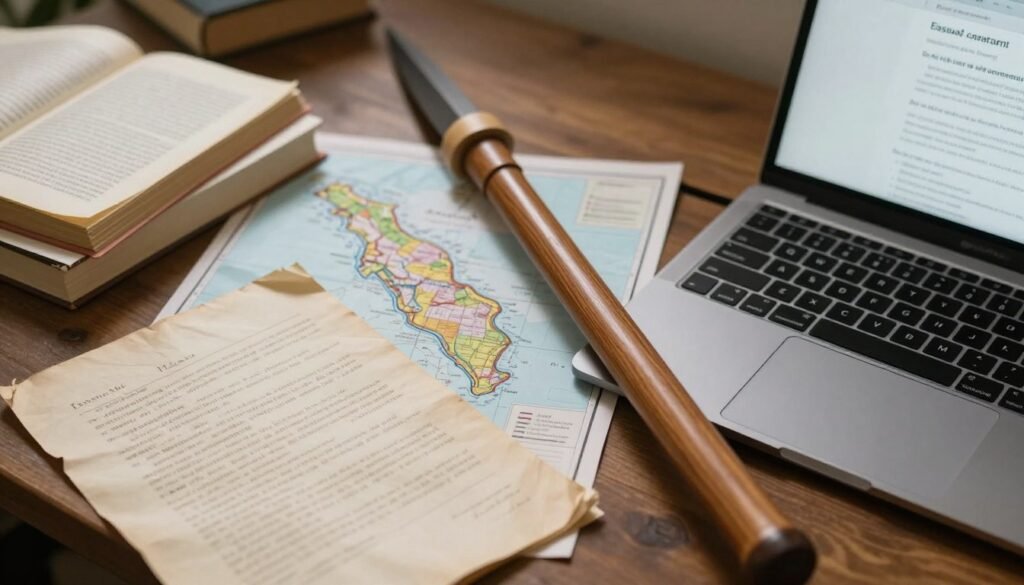
Colonial documents add another layer. They may record weapons, rebellion, disarmament, or legal restrictions, but they often describe local people through the priorities of colonial administration. Modern scholarship compares such records with literature, language, material evidence, and living practice rather than accepting one source as complete.
Source principle: A tradition can be culturally meaningful without being independently verified as a literal event. Strong historical writing labels evidence, interpretation, memory, and mythology separately.
2. Mythological Roots: Parasurama and the Sacred Lore
The Legend of Sage Parasurama and the Reclaiming of Kerala
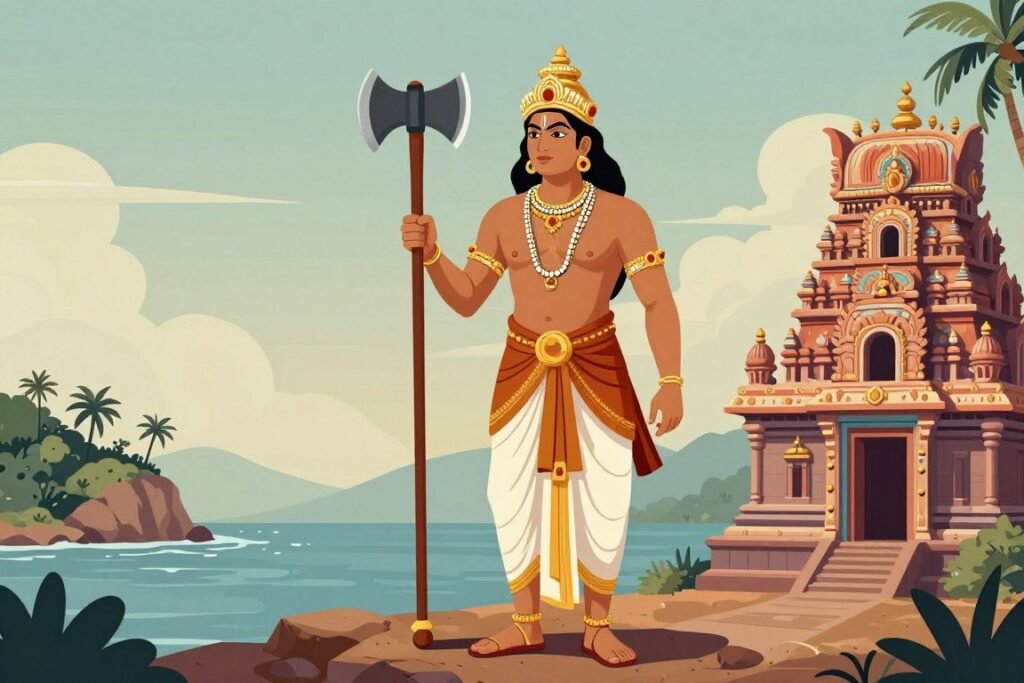
The Parasurama tradition says that the warrior sage reclaimed Kerala from the sea by throwing his axe. In some versions, he then established settlements, temples, and sacred institutions across the new land. The story places Kerala within a cosmic history and gives martial authority a religious foundation.
Later accounts connect Parasurama with the creation or distribution of kalaris. This connection helps explain why some lineages describe their practice as ancient, sacred, and linked to the protection of the land. It also ties the physical art to a larger Indian martial and religious imagination.
There is no archaeological proof that Parasurama founded the historical system known today as Kalaripayattu. The story belongs to cultural mythology and sacred lore, not to a verified biography. Its value lies in what it reveals about Kerala’s understanding of land, duty, lineage, and martial identity.
Separating myth from history does not require dismissing the story. Myths can shape institutions for centuries, influence teacher authority, and explain why a training ground is treated as a place of respect. The key is to avoid presenting symbolic time as a precise date.
The 108 Kalaris: Mythic Lineage vs. Architectural Reality
The number 108 carries strong religious and cultural meaning across South Asia. References to 108 kalaris may therefore express completeness, sacred order, or lineage prestige rather than a census of all historical training sites. Different communities may use the number in different ways.
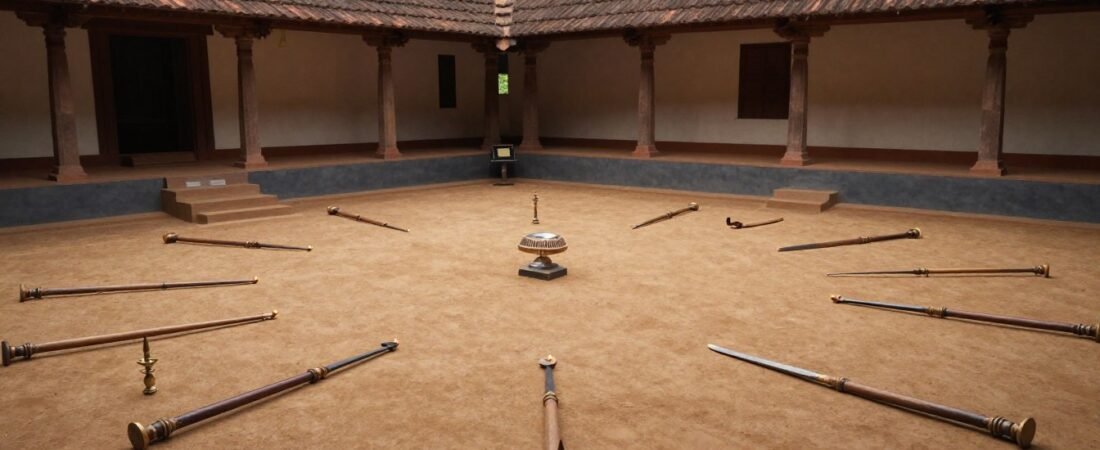
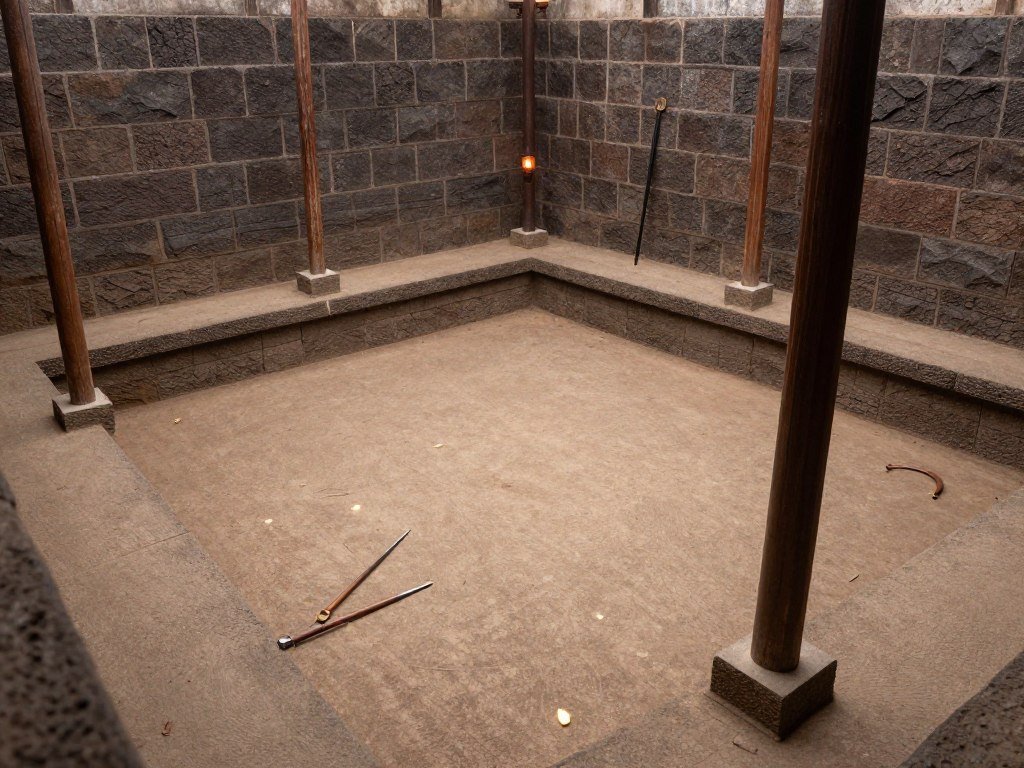
A kalari was not necessarily a single standardized institution in every region or period. The word can refer to a training place, while its design, depth, entrance, shrine, and relationship to a household or community could vary. The Kuzhi Kalari, often described as a sunken practice space, is especially associated with Northern traditions.
Architecture can support historical analysis, but it cannot answer every question. A surviving ground may have been rebuilt, relocated, or adapted for modern teaching. Its present form should not automatically be treated as an unchanged survival from the ancient world.
3. Historical Origins & Early Developments (3rd Century BCE–12th Century CE)
Sangam Literature Context: Combat Culture in Ancient South India
Sangam literature provides important evidence for combat culture in ancient South India. Its poems describe kings, warriors, raids, cattle conflicts, weapons, honor, death, and the emotional cost of war. These sources show that organized fighting and warrior values were central to many communities. They do not, however, offer a complete manual of the later Kalaripayattu system. Literary references to spears, swords, shields, bows, wrestling, or battlefield skill indicate a broad South Indian martial culture. They do not prove that Meithari, Ankathari, or a later sequence of lessons already existed in its modern form.
The distinction matters because historical systems are usually assembled over time. A society may have military instruction without possessing one named martial art. Skills can circulate among soldiers, hunters, bodyguards, temple communities, and local specialists before they become organized into a formal teaching tradition.
The Chola-Chera War Era: The Birth of Systematic Kalari Training
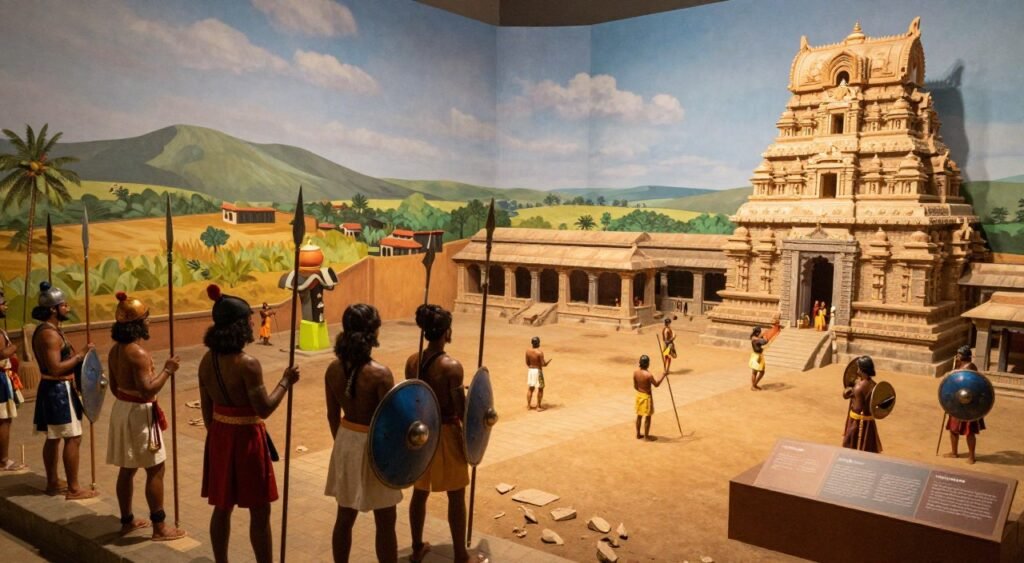
The Chola-Chera wars formed part of a wider political environment in which rulers competed for territory, trade routes, tribute, and prestige. Conflict created demand for armed specialists and for systems that could transmit fighting skills across generations. This context may have encouraged more systematic instruction in parts of South India.
Still, a direct line from a particular war to the birth of the complete Kalaripayattu curriculum cannot be demonstrated with confidence. The surviving evidence is uneven, and later traditions often organize the past into a smooth story. Political conflict may explain why martial institutions mattered without identifying the exact year or place where one system began.
Terms used today can also have changing meanings. Meithari commonly refers to foundational body conditioning, movement, balance, flexibility, and control. Ankathari concerns weapons training in many Northern lineages, but neither term should be placed automatically into every earlier period without evidence. A training ground could serve several functions at once. It might prepare guards, teach young people, preserve ritual practices, and support local authority. The development of a recognizable martial art form was probably gradual, regional, and shaped by teachers rather than created by one documented founder.
Medieval Ballads: The Vadakkan Pattukal and Legendary Heroes
The Vadakkan Pattukal, or Northern Ballads, preserve stories of fighters, family honor, revenge, loyalty, and social obligation. They are central to the cultural memory of Northern Kerala. Their poems and performances offer clues about the ideals attached to combat, even when their dates and historical layers remain difficult to establish.
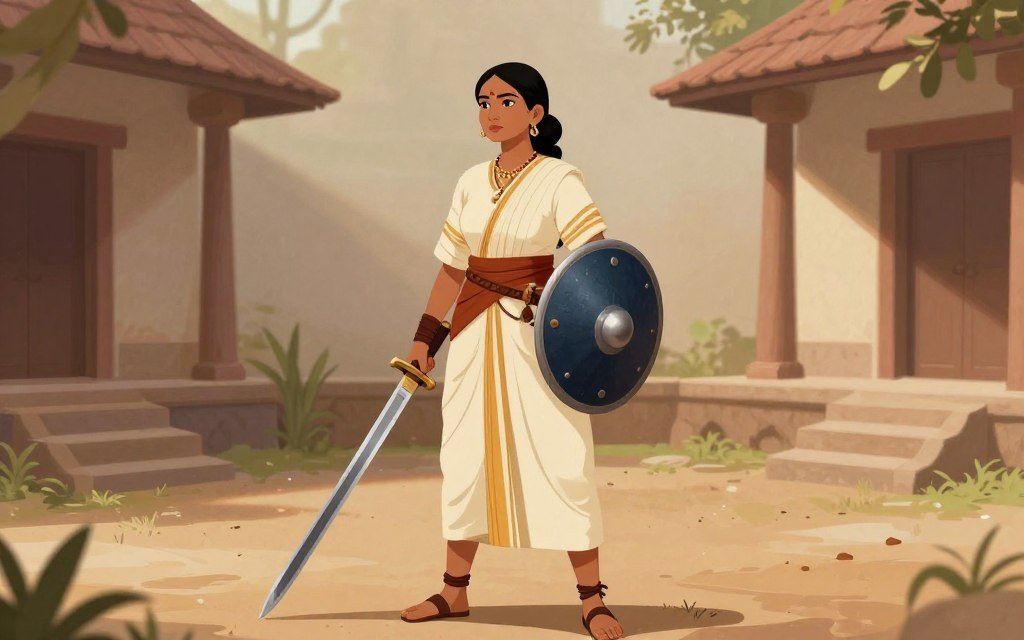
Unniyarcha is remembered as a skilled and courageous woman associated with the Chekavar world. Aromal Chekavar is portrayed as a celebrated fighter whose life involves honor, rivalry, and betrayal. These figures are culturally significant, but the ballads should not be read as simple biographies with independently verified details.
The stories may preserve fragments of social history. They suggest that martial expertise could be linked to family, status, regional politics, and professional combat service. They also show that women could occupy an important place in martial memory, even though the literary presence of a woman does not prove the exact details of her training or life.
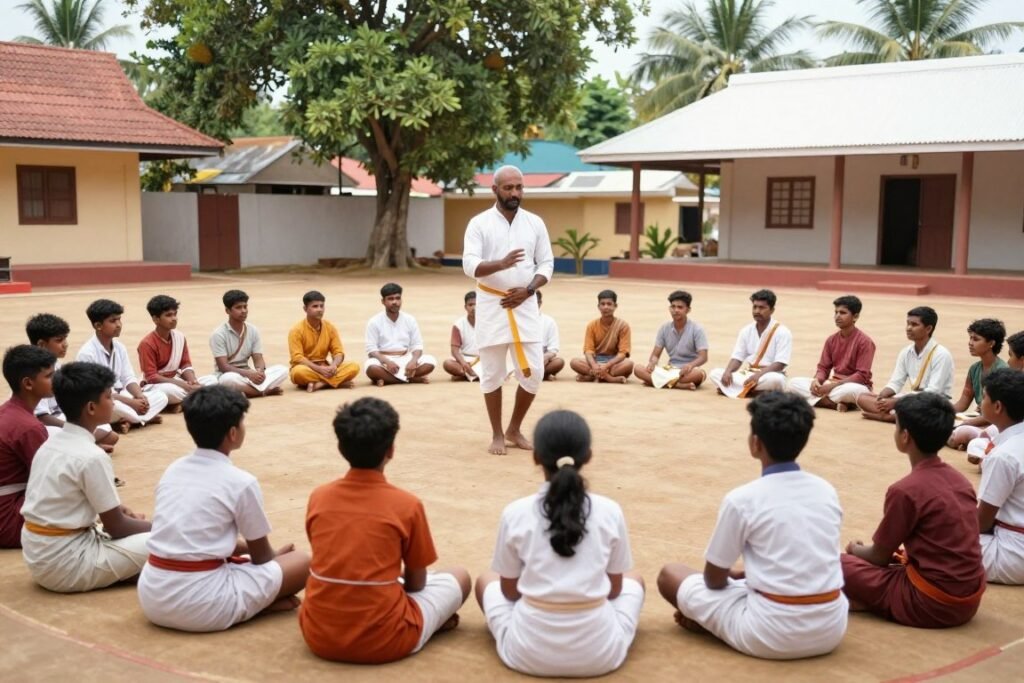
The Gurukkal tradition places the teacher at the center of instruction, discipline, healing knowledge, and lineage. In practice, authority could be inherited, earned, or connected with a local household. The ballads help explain why teacher lineages became powerful symbols of authenticity, but they do not establish every later training rule.
Key Features of Modern Kalaripayattu Kerala Lineages
4. The Bodhidharma Connection: Myth, Monks, and Shaolin
The Common Narrative: A Kalari Master Traveling to China
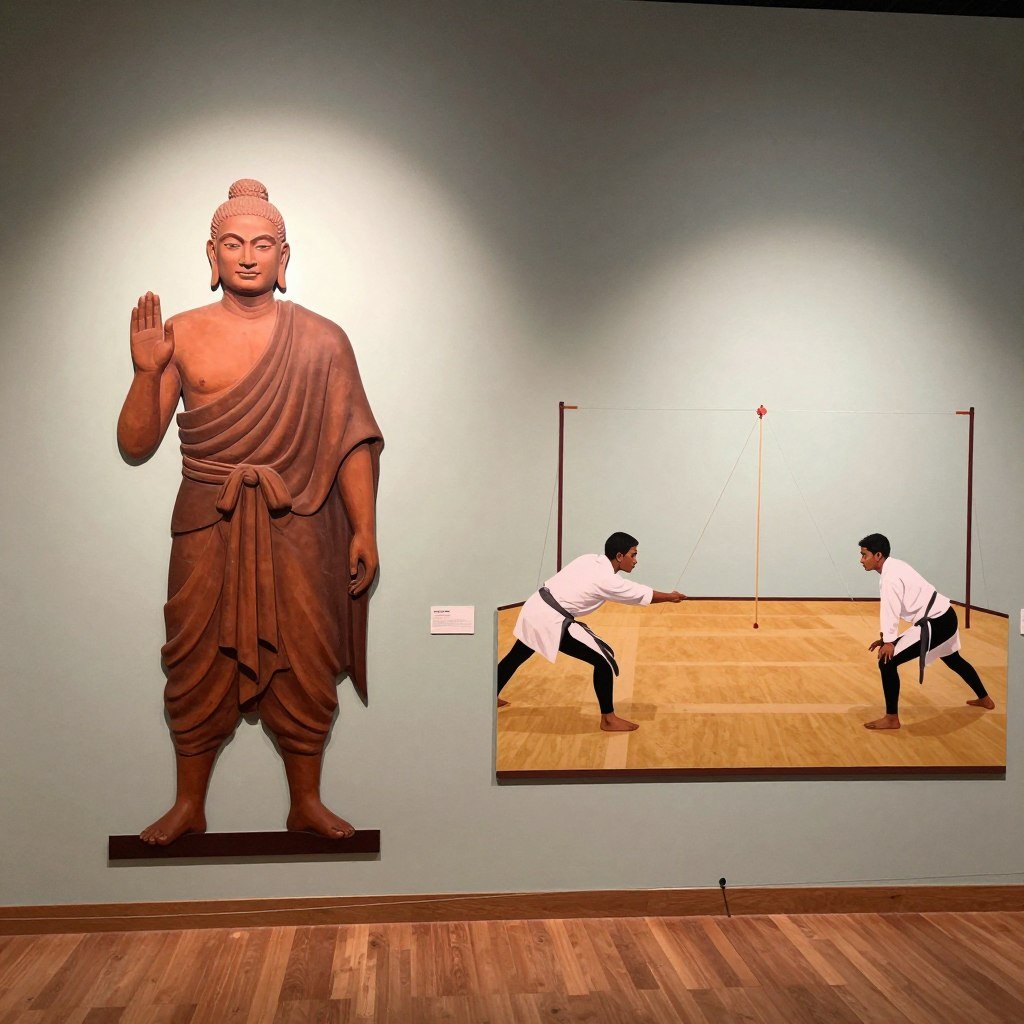
A popular narrative says that Bodhidharma came from South India, traveled to China, and taught martial exercises to monks at Shaolin. Some versions identify him directly as a Kalaripayattu master. The story is attractive because it links an ancient Indian martial art with one of the most famous traditions in Asian styles.
The narrative also fits a familiar pattern. A traveling teacher carries knowledge across borders, a monastery preserves it, and later generations develop it into new fighting techniques. Such movement was possible in the connected world of merchants, monks, and pilgrims, but possibility is not evidence of a specific transmission.
Bodhidharma is better documented as a Buddhist teacher associated with Chan traditions than as a confirmed Kalaripayattu instructor. His biography developed through texts written at different times, and later stories added details that cannot always be traced to early evidence. The martial connection became especially popular in modern writing, film, tourism, and heritage promotion.
The Bodhidharma story should be described as a popular and culturally influential tradition. It should not be presented as proven evidence that Kalaripayattu created Shaolin fighting styles.
What Historical Evidence Actually Says About Bodhidharma and Shaolin
Historical evidence concerning Bodhidharma is limited and layered. Early Buddhist sources discuss his teachings and encounters, while later biographies expand his origins, travels, and personal qualities. These sources do not provide a clear technical curriculum that can be identified as Kalaripayattu.
Shaolin also has a complex institutional history. Monks may have practiced physical conditioning, staff skills, and forms of armed defense at different times, especially when monasteries held land and faced political danger. The development of Chinese martial arts involved many local and regional processes rather than one universally accepted founder.
Direct evidence linking Bodhidharma to a Kerala kalari is weak or unverified. There is no conclusive early document showing that he taught a named South Indian system at Shaolin. Similarities between body conditioning, meditation, breath work, posture, and movement can support comparative study, but they cannot prove a direct line of descent.
This caution does not make comparison useless. Researchers can ask how movement systems change when they cross languages, institutions, and political borders. They can also study why modern communities value the Bodhidharma connection and how it contributes to the global image of Indian martial arts.
Popular Myth vs. Documented History
| Popular Myth | Documented History | Evidence Assessment |
| Bodhidharma was a Kalaripayattu master who brought the art to China. | Bodhidharma is associated with early Chan Buddhism, but his martial curriculum is not securely documented. | Direct transmission remains unproven. |
| Shaolin martial arts began with Bodhidharma’s exercises. | Shaolin combat practices developed through changing monastic, military, and regional conditions. | The single-founder account is a later simplification. |
| Shared movements prove that Indian and Chinese systems share one lineage. | Body mechanics can converge through similar training needs and human anatomy. | Similarity alone cannot establish borrowing. |
| Every Asian martial art descends from an ancient Indian source. | Asian martial arts have multiple local histories, teachers, institutions, and periods of development. | The claim is too broad for the available evidence. |
Shared Principles: Comparing Kalari Biomechanics with Eastern Martial Traditions
Kalaripayattu and other Asian martial arts may share attention to posture, balance, flexibility, breath control, and disciplined repetition. A practitioner may learn to coordinate the feet, hips, spine, hands, and gaze as one connected structure. These principles improve control and efficiency, but they are not unique to one region.
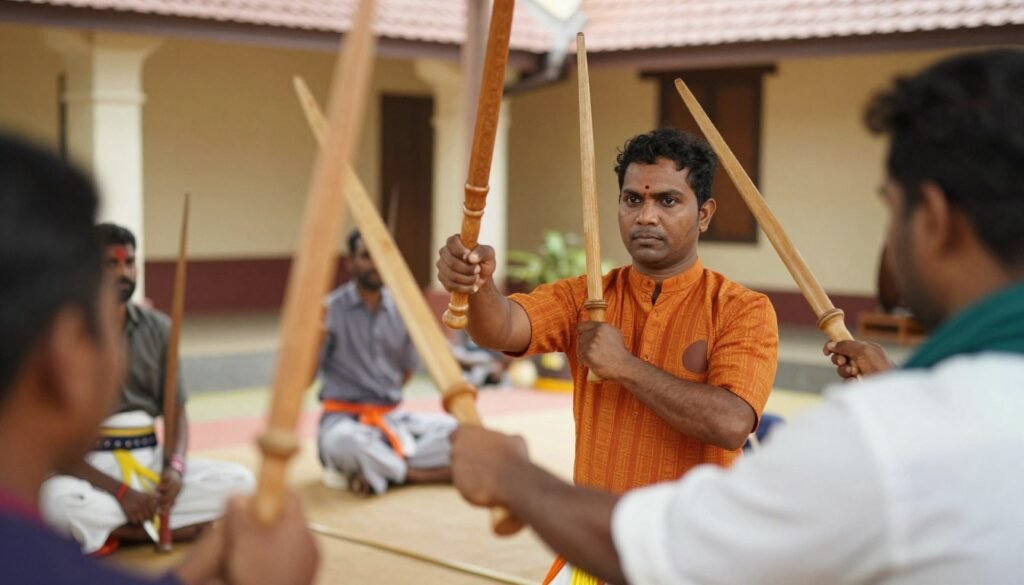
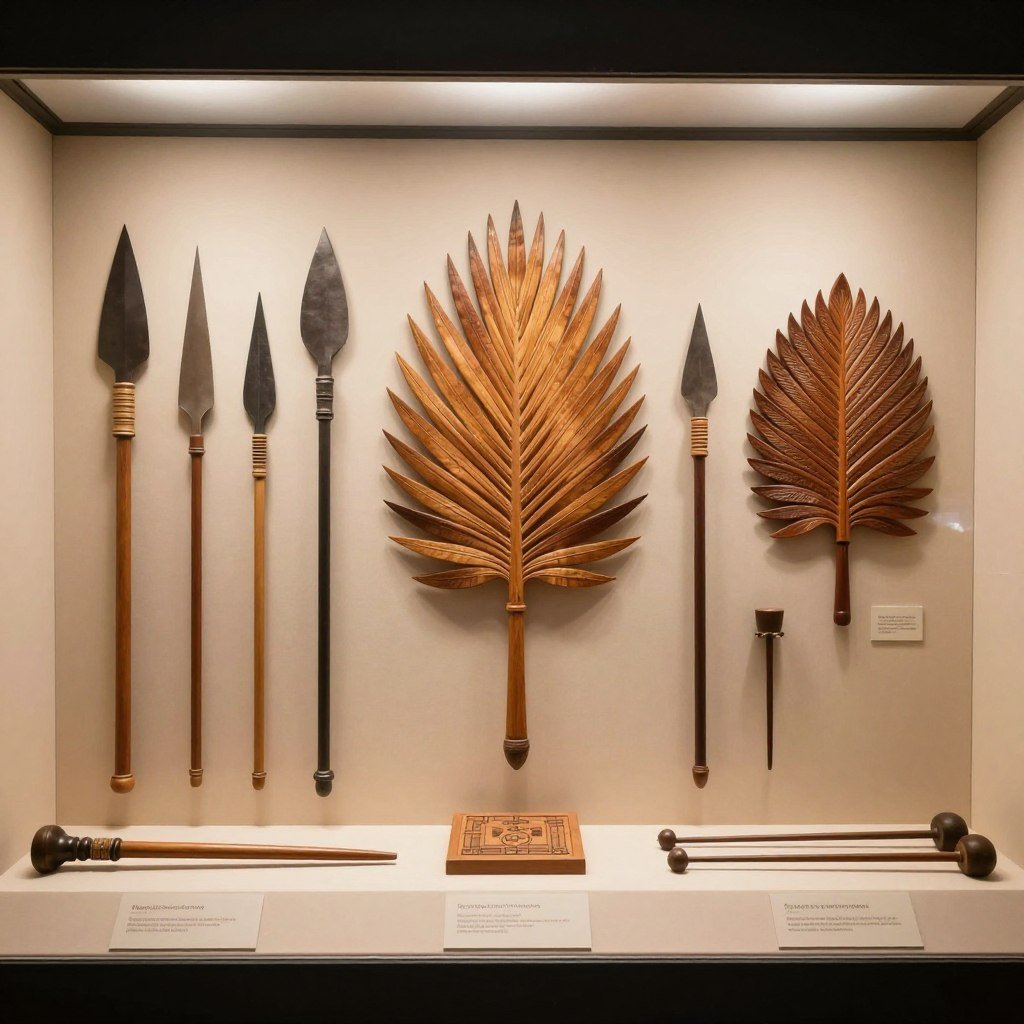
Kalari training can include body conditioning, animal-inspired movements, empty-hand techniques, weapons, and staged sequences. The exact combination varies by lineage and style. A Northern curriculum may emphasize Meithari before Ankathari, while Southern traditions may use different terminology and place greater emphasis on close combat, bodywork, and regional practice.
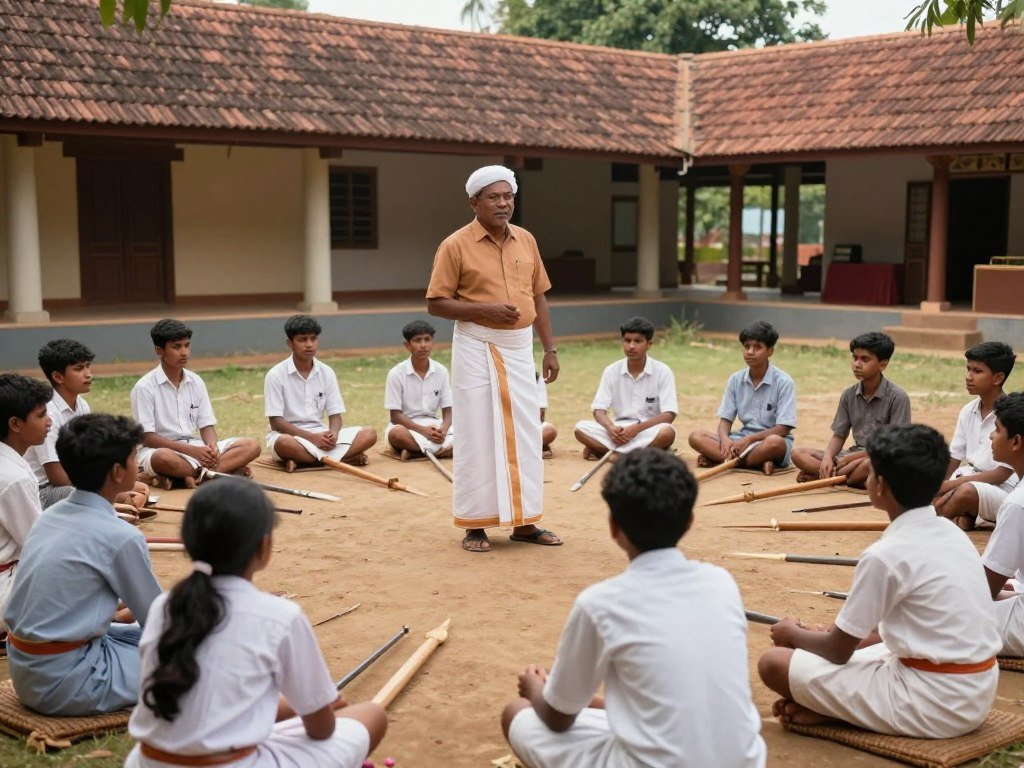
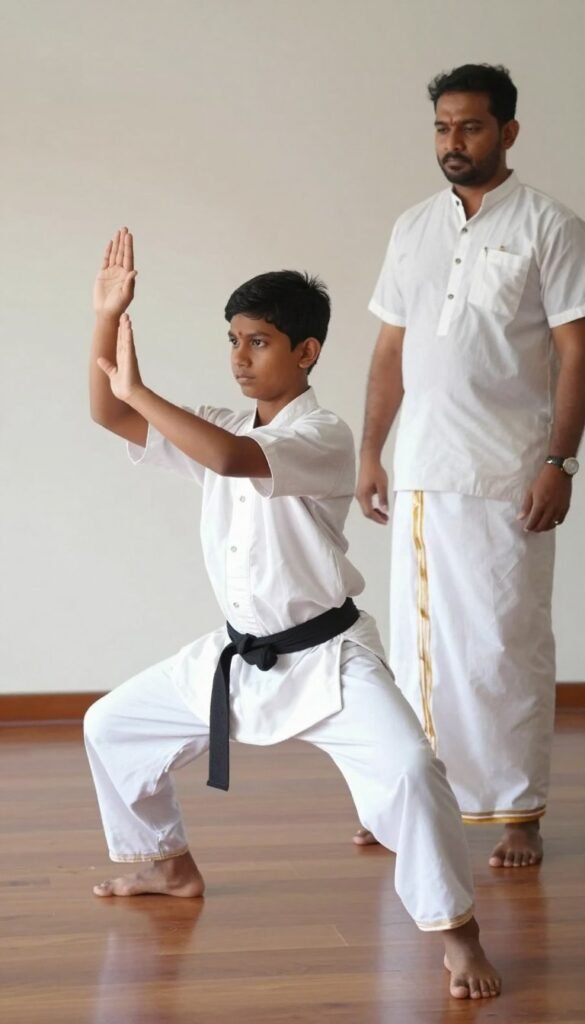
Teacher-student transmission is another shared feature. A Gurukkal may correct posture, regulate training intensity, explain weapon handling, and pass on ethical expectations. Similar relationships appear in many martial art form traditions, from South Asia to East Asia.
Comparative study becomes strongest when it identifies dates, texts, routes, technical terms, and institutional links. It becomes weak when it treats resemblance as proof. The history of martial arts should allow both exchange and independent development.
5. Suppression and Survival: The British Ban of 1804
The Kottayathu War and Colonial Fear of Kalari Warriors
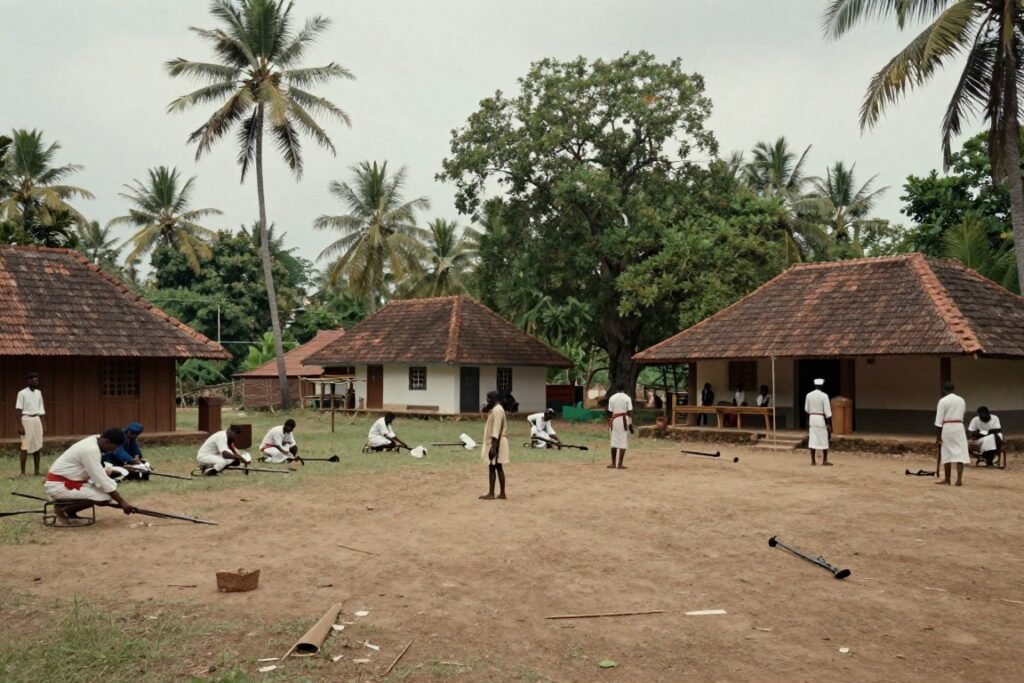
The Kottayathu War formed part of the resistance to expanding British power in Malabar and nearby regions. Local rulers, armed communities, forest groups, and martial specialists opposed new systems of taxation, authority, and disarmament. Pazhassi Raja became a major symbol of this resistance, although the wider conflict involved many people and interests.
Colonial administrations viewed weapons training and mobile armed networks as political risks. Restrictions could target weapons, gatherings, travel, or the authority of local leaders. This context helps explain later references to the “1804 British ban,” but the phrase should not be treated as proof of one identical legal order across all Kerala.
Records may differ by district, official, date, and type of restriction. Some accounts describe disarmament or suppression, while later heritage narratives may compress several policies into one memorable event. A careful history distinguishes a formal law from regional enforcement and from retrospective community memory.
Underground Preservation: How Lineages Kept the Art Alive Secretly
When public martial training became risky or less useful, knowledge could move into families, private courtyards, rural communities, and teacher lineages. Practice might be reduced, adapted, or combined with healing and physical conditioning. Such changes can preserve movement principles while altering the original social purpose.
Stories of secret practice are difficult to verify because secrecy limits documentation. A lineage may accurately remember that instruction continued, yet later accounts may add dramatic details. The safest approach is to describe underground preservation as a plausible pattern supported by social conditions, not to accept every story as a documented event.
The Gurukkal could serve as teacher, guardian of equipment, interpreter of custom, and practitioner of traditional body care. Authority depended on relationships with families and communities. The survival of a martial art therefore involved more than techniques; it required trust, space, money, memory, and a reason to continue.
The 20th-Century Cultural Renaissance and Global Reemergence
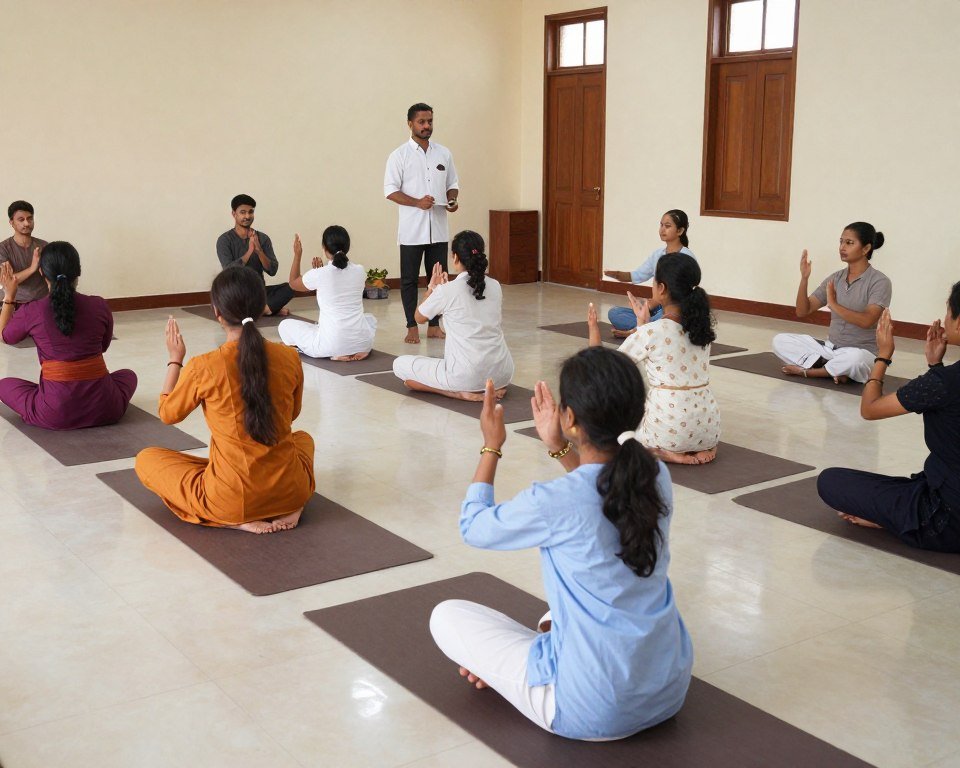
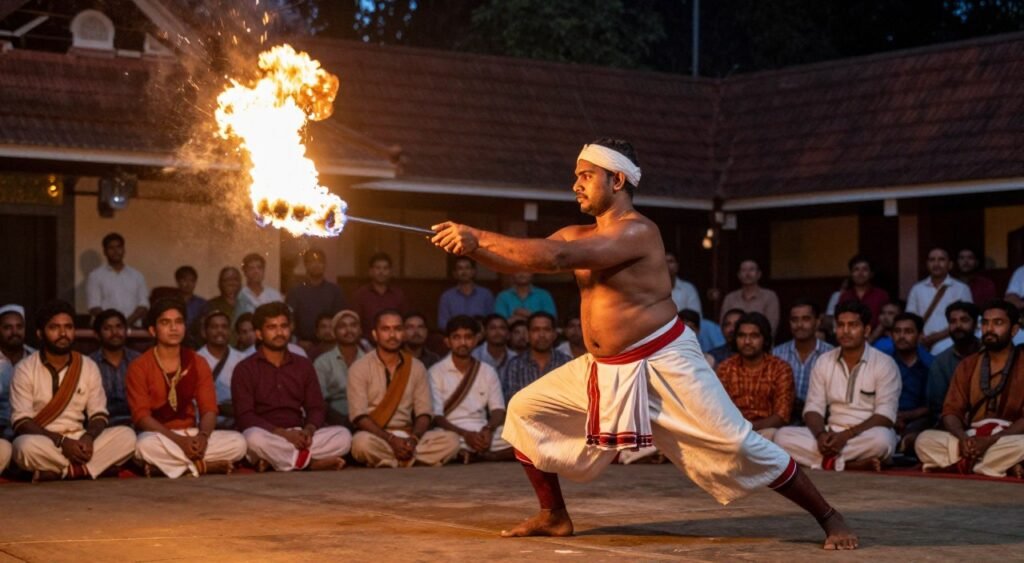
During the twentieth century, Kalaripayattu entered a new public phase. Teachers, cultural organizations, performers, researchers, and state institutions helped present the art on stages, in schools, and in international programs. Demonstrations often emphasized visual forms, weapons, agility, and historical identity.
This public form did not simply restore an untouched past. It selected, organized, and sometimes standardized material for modern audiences. Training in the martial art kalaripayattu today can serve different goals, including combat education, fitness, performance, cultural study, therapy, or personal discipline.
Northern and Southern styles remain useful categories, but they should not be treated as rigid boxes. Northern traditions are often associated with the Kuzhi Kalari, Meithari, Ankathari, long weapons, and lineage-based instruction. Southern traditions are associated with different regional histories, bodywork, and fighting techniques, although actual practice varies among teachers.
The global spread of this ancient art has created both opportunities and challenges. International students can support teachers, archives, and cultural exchange. At the same time, simplified claims about age, universal influence, or secret powers can replace careful history with marketing.
6. Frequently Asked Questions (FAQs)
How old is Kalaripayattu according to verified historical records?
South India has a long history of combat, weapons, warrior groups, and military training. Sangam literature provides valuable evidence for that wider culture, but it does not describe the complete modern system of Kalaripayattu. Reliable evidence for organized kalari institutions and recognizable curricula becomes clearer through later regional traditions, literary memory, architecture, and colonial-era references.
Did Bodhidharma bring Kalaripayattu to China?
No conclusive historical evidence proves that Bodhidharma brought Kalaripayattu to China or founded Shaolin martial arts. The connection remains influential because it links Buddhist travel, Indian martial traditions, and Asian martial arts in one compelling legend. Similar techniques may reflect common training needs, later exchange, or independent development rather than a proven lineage.
What role did women play in historical Kalaripayattu?
Women appear in regional martial memory, ballads, family traditions, and modern training. Unniyarcha is the best-known example, and her story presents a woman as skilled, courageous, and socially significant. Because the Vadakkan Pattukal combine history, legend, and performance, they show cultural ideals more securely than they establish every detail of an independently verified biography.
How does Kalaripayattu history differ between Northern and Southern styles?
Northern traditions are often associated with Kerala’s Vadakkan region, the Kuzhi Kalari, Meithari, Ankathari, weapons instruction, and the Gurukkal lineage. Southern traditions developed in different areas and may emphasize close combat, bodywork, regional weapons, and distinct teaching terms. These are useful broad patterns, but each lineage has its own history, and modern teachers may combine or reinterpret elements.
7. Conclusion: Respecting Lore While Honoring History
Can Kalaripayattu responsibly be called the “mother of all martial arts”? Not as a proven statement of universal descent. It is more accurate to call it a major Indian martial art tradition with deep roots in Kerala’s cultural history, a rich body of movement and weapons practice, and a powerful network of stories about teachers, warriors, sacred places, and community identity.
The Parasurama legend explains sacred belonging rather than a verifiable founding date. Sangam literature shows that ancient South Indian combat culture was complex, but it does not document the entire later curriculum. The Chola-Chera wars provide a plausible political setting for systematic training, while the Vadakkan Pattukal preserve ideals of martial honor through figures such as Unniyarcha and Aromal Chekavar.
The Bodhidharma connection remains a valuable subject for cultural comparison, not proof of direct transmission to Shaolin. The 1804 British ban should be discussed through the more precise history of colonial disarmament, regional enforcement, and resistance associated with figures such as Pazhassi Raja. Later lineages and the twentieth-century revival show how traditions survive by adapting to new social conditions.
Historical care does not reduce the value of this system. It gives the art a stronger foundation by distinguishing cultural continuity from provable transmission. Readers can respect mythology, study ancient Indian art, compare Indian martial and Asian martial practices, and still ask for evidence before accepting claims about age, origin, or universal influence.