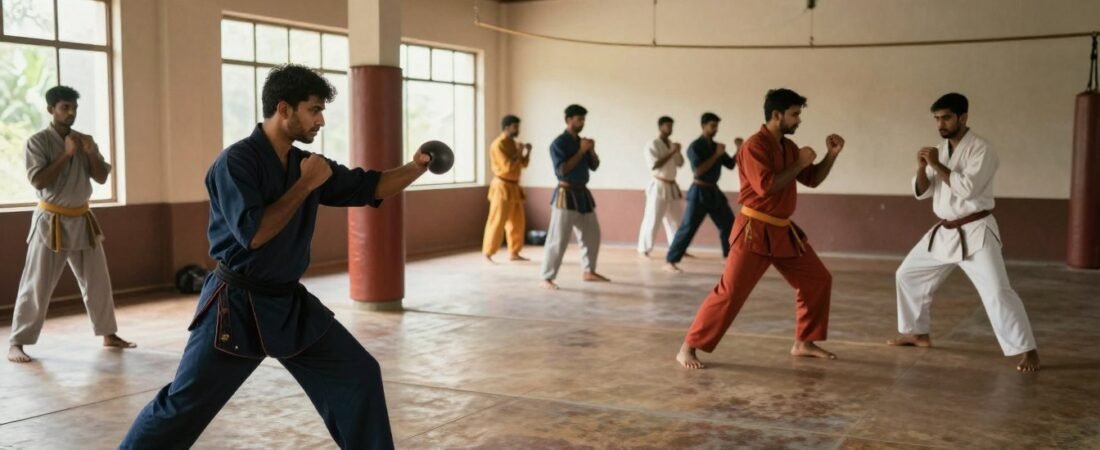
A visual introduction to the different scopes of Musti Yuddha and Kalaripayattu.
Musti Yuddha vs Kalaripayattu: The Short Answer
Musti Yuddha focuses mainly on hand-based striking and close-range unarmed combat. The word musti is commonly associated with the fist. Historical references and living practices may vary, so the term should not be treated as a single globally standardized syllabus.
Kalaripayattu is a wider system associated with Kerala in southern India. Its practice can include body preparation, movement patterns, unarmed combat, weapons training, partner drills, and traditions connected with healing and recovery.
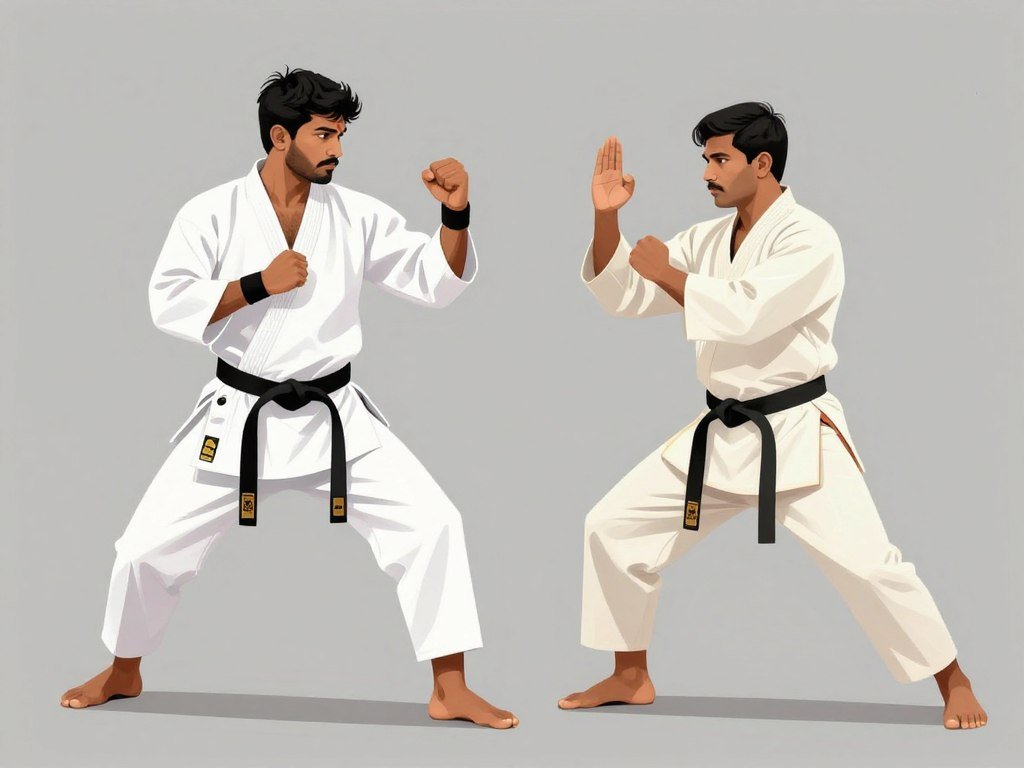
The central difference is scope: focused striking practice versus a broader martial curriculum.
What Is Musti Yuddha?
Musti Yuddha is generally described as a traditional Indian boxing or fist-fighting practice. It belongs within the wider history of indian martial traditions in which unarmed combat, wrestling, striking, and weapons skills developed in different regions.
Its core image is the trained hand. Practitioners may study punches, defensive movements, footwork, distance, timing, and controlled fighting drills. The exact form can depend on local teachers, family traditions, historical interpretation, and the way the practice is presented today.
Musti Yuddha as a focused martial art
It is more accurate to describe Musti Yuddha as a focused combat discipline than as a complete replacement for every other Indian martial system. Its emphasis on the hand gives it a clear identity, but that does not mean every school uses an identical set of techniques.
- Primary emphasis on fist-based striking and boxing skills.
- Close attention to distance, balance, timing, and defense.
- Potential use of conditioning drills and partner practice.
- Variation between regions, teachers, and modern demonstrations.
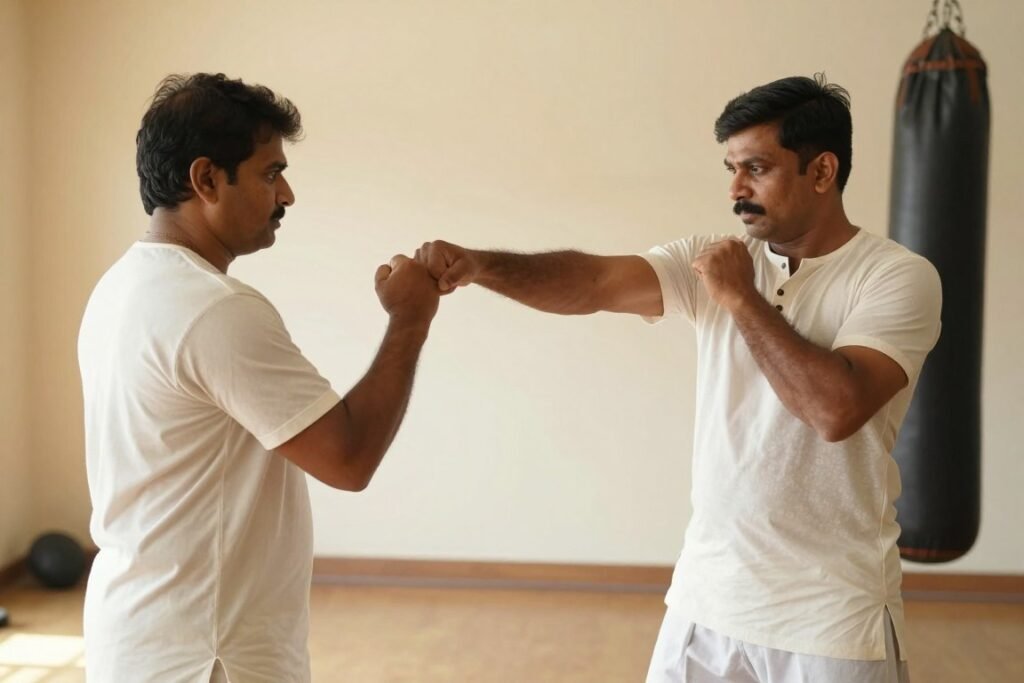
Hand skill, balance, and controlled striking are central to the usual description of Musti Yuddha.
What Is Kalaripayattu?
Kalaripayattu is a martial art associated with Kerala. Training traditionally takes place in a kalari, a dedicated practice space where students learn movement, conditioning, unarmed combat, and, depending on the lineage, weapons and healing-related knowledge.
The term covers a broad family of practices rather than one fixed modern syllabus. Northern and southern lineages may differ in emphasis, sequence, weapons, body methods, and teaching language. A careful article should acknowledge this variation.
Kalaripayattu as a complete training system
The art may include preliminary body exercises, flexible movement, low stances, kicks, hand techniques, weapon forms, partner drills, and controlled sparring. Some lineages also connect training with massage, rehabilitation, or traditional medical knowledge.
- Regional identity linked strongly with Kerala.
- Training in a dedicated kalari environment.
- Unarmed techniques combined with weapons in many lineages.
- Strong attention to conditioning, mobility, discipline, and form.
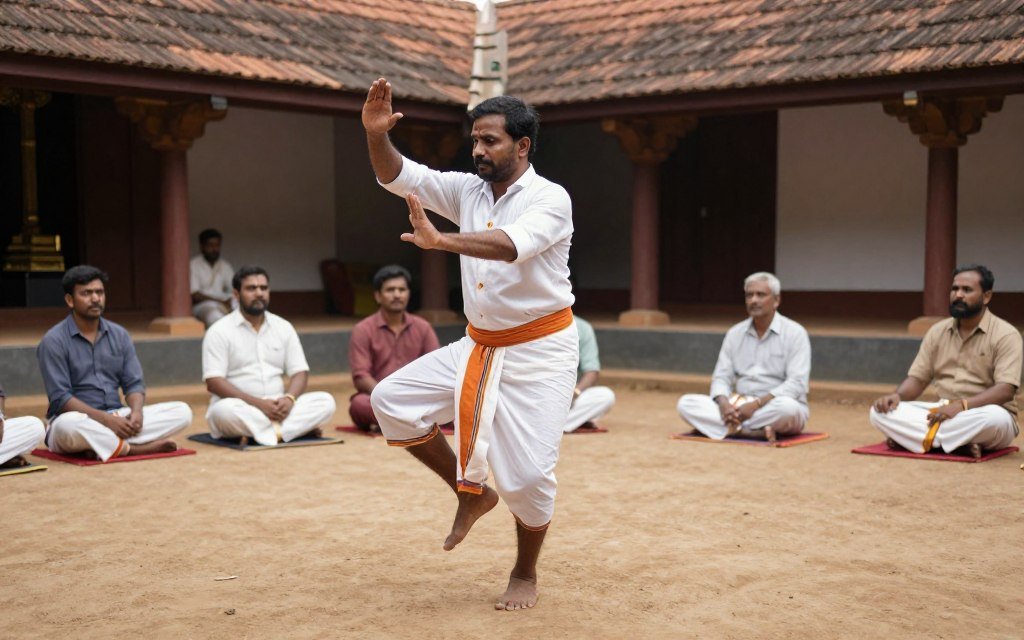
The kalari provides a structured setting for several parts of Kalaripayattu training.
Origins and Historical Development
The history of indian martial arts is not a single straight line. Fighting systems developed through military service, local defense, wrestling communities, temple culture, court traditions, physical education, and oral instruction. Names may appear in texts, stories, regional records, and modern teaching systems with different meanings.
Musti Yuddha is linked by name and description to fist fighting. However, broad claims about one uninterrupted ancient syllabus should be treated with care. Surviving evidence does not always tell us how a historical practice was taught in every region.
Kalaripayattu has a strong association with Kerala and a well-known institutional setting in the kalari. Its development also reflects regional history, local weapons, teacher lineages, performance traditions, and changing social conditions.
Historical caution: “Ancient” does not automatically mean unchanged. Both the names and the training methods connected with these arts may have developed over many years.
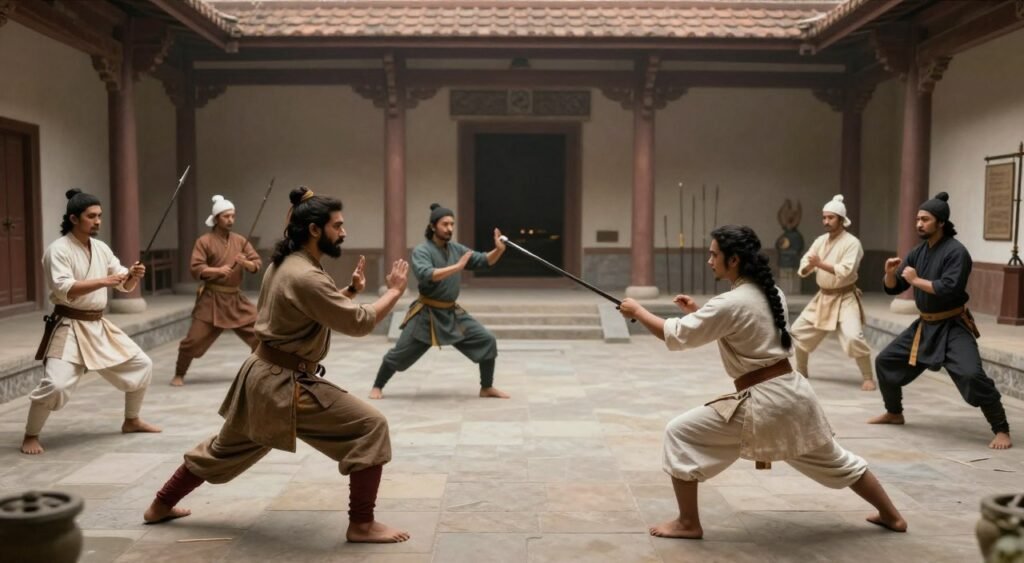
Historical interpretation should separate documented evidence from later reconstruction.
Regional Identity and Cultural Context
Regional identity is one of the clearest ways to separate these styles. Kalaripayattu is closely connected with Kerala, its language communities, its kalari spaces, and local traditions of instruction. Musti Yuddha is better discussed as a broader Indian boxing concept whose exact regional expressions may differ.
That difference matters for students. A class using the name Musti Yuddha may teach a focused boxing curriculum. A Kalaripayattu class may present a wider sequence that includes body preparation, forms, unarmed techniques, and weapons.
Why names need local context
Indian martial terminology can shift across languages and regions. A word translated as “fight,” “wrestling,” “boxing,” or “martial art” may not map neatly onto a modern sports category. Ask an instructor how the school defines the art and which lineage supports the curriculum.

Place, language, and teacher lineage help explain how a martial art is practiced.
Musti Yuddha vs Kalaripayattu: Comparison Table
The table below provides a practical overview. It is a guide for orientation, not a claim that every school follows the same pattern.
| Feature | Musti Yuddha | Kalaripayattu |
| Main identity | Traditional Indian boxing and unarmed combat | Broader martial art associated with Kerala |
| Technical focus | Fists, punches, defense, distance, and close combat | Movement, kicks, unarmed combat, forms, and weapons |
| Training setting | Varies by teacher and region | Traditionally structured around the kalari |
| Weapons | Not the defining focus | Included in many lineages |
| Best fit | Learners interested in boxing and unarmed strikes | Learners seeking a broad traditional curriculum |
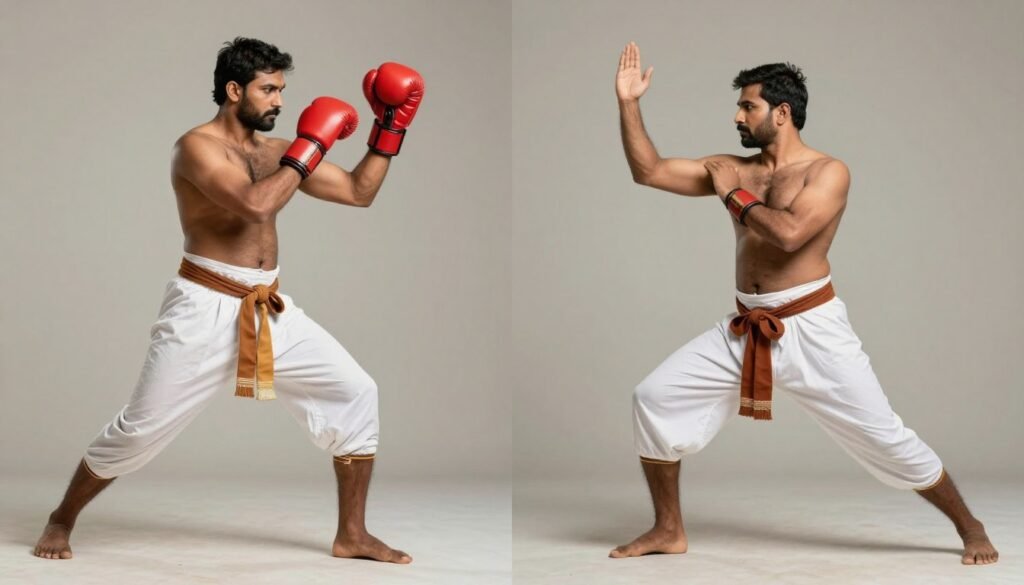
A comparison is useful only when it respects the different scope of each art.
Training Methods and Class Structure
Musti Yuddha training may center on stance, guard position, hand conditioning, punches, defensive movements, footwork, and partner exercises. A responsible teacher should also include warm-up work, safe contact rules, recovery, and clear control during sparring.
Kalaripayattu training often begins with body preparation. Students may work on mobility, balance, strength, flexibility, jumps, low positions, and movement sequences before progressing to more complex forms or weapons. The order differs between schools.
Form and function
Forms can preserve movement patterns, timing, posture, and technical memory. They are not automatically proof of how a historical fight happened. Free practice and controlled sparring may test different skills from formal sequences.
- Ask whether beginners start with conditioning or direct combat drills.
- Check how the instructor manages contact and protective equipment.
- Learn whether weapons are introduced only after basic control.
- Observe whether students receive individual corrections.
Good training balances technical detail, physical preparation, and safe partner work.
Techniques, Strikes, Kicks, and Movement
Musti Yuddha is commonly associated with punches and hand strikes. The technical questions include how the fist is formed, how power is transferred from the ground, how the shoulder and hip move, and how the practitioner protects the head and body.
Kalaripayattu may include hand strikes as well as kicks, evasions, low movements, jumps, turns, and flowing transitions. Some schools place strong value on flexibility and range. Others may stress practical partner work or weapon forms.
Why technique names are not enough
Two schools may use different words for similar movements. The same word may also describe different actions in separate lineages. Watch the full movement, not only the label.
Musti Yuddha strengths for some learners
- Clear emphasis on hand striking.
- Direct connection with boxing practice.
- Useful focus on timing and close distance.
- Simple starting point for unarmed combat study.
Possible limits for some learners
- May offer less weapons work than Kalaripayattu.
- Curriculum can vary by instructor.
- Historical sources may be difficult to interpret.
- Not every school will provide the same sparring format.
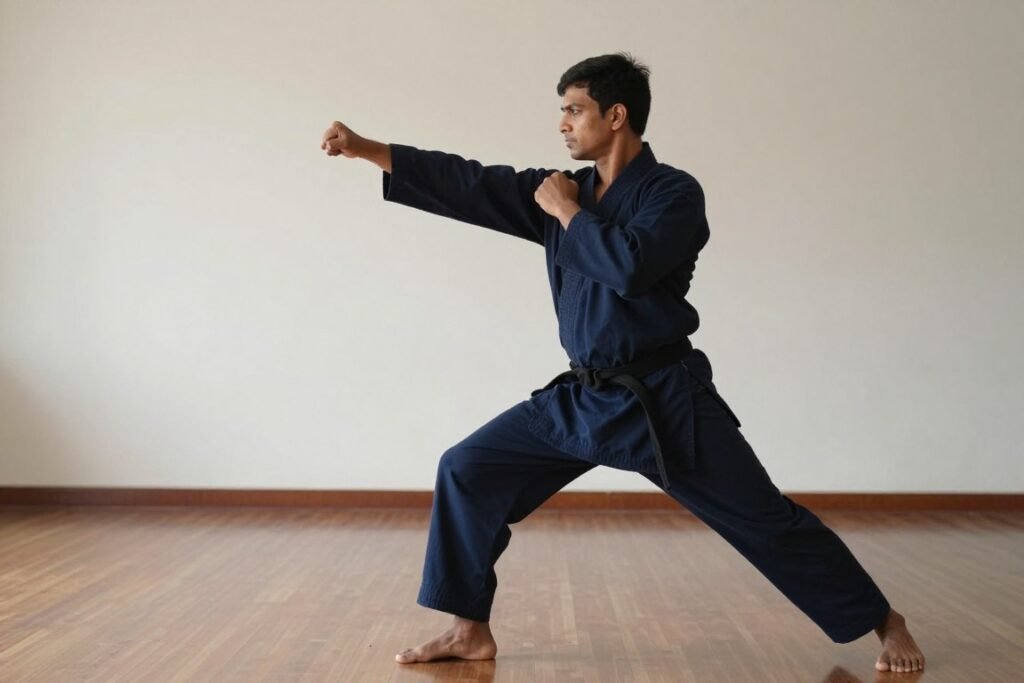
Striking skill depends on timing, structure, distance, and controlled repetition.
Weapons Training and Its Role
Weapons are not the defining feature of Musti Yuddha as a boxing-oriented system. A teacher may discuss broader Indian combat traditions, but readers should not assume that every Musti Yuddha class contains a formal weapons syllabus.
Weapons are a major part of many Kalaripayattu lineages. Training may include wooden weapons before students study more advanced tools. The exact order, names, forms, and safety rules depend on the school and its tradition.
Weapons require a higher safety standard
Weapons training should never begin as a dramatic performance alone. Students need space awareness, controlled speed, clear commands, equipment checks, and an instructor who can stop the drill quickly.
Do not copy weapon demonstrations from a video without qualified supervision. The risk of injury increases when speed, distance, and handling are misunderstood.
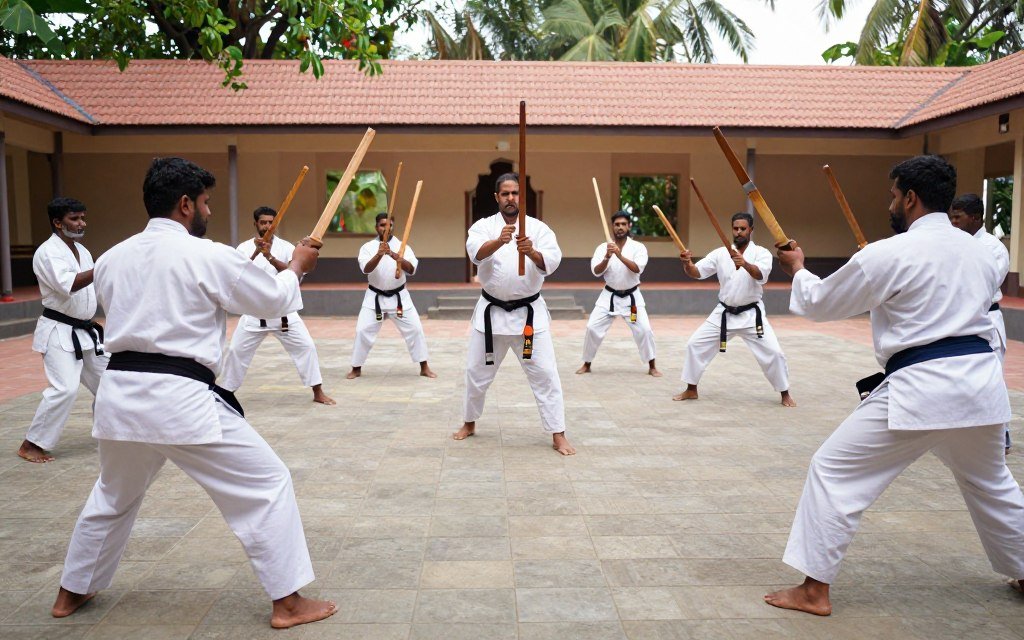
Weapons practice should progress gradually under direct supervision.
Body Conditioning, Strength, and Flexibility
Both arts require physical preparation, but the exercises may look different. Musti Yuddha conditioning can support punching, guard position, balance, impact tolerance, and repeated movement. Kalaripayattu conditioning may place more visible emphasis on flexibility, lower-body mobility, jumps, balance, and full-body coordination.
Neither approach is automatically better for every body. A beginner with limited mobility may need a slower progression. Someone seeking boxing fitness may prefer hand-focused drills. Another student may enjoy the broader movements of a Kerala martial art.
Strength
Strength supports posture, control, and repeated practice. It should build gradually rather than rely on painful conditioning.
Mobility
Mobility helps students perform kicks, low movements, turns, and defensive actions with better control.
Recovery
Rest, sleep, hydration, and sensible training volume help reduce avoidable injuries.
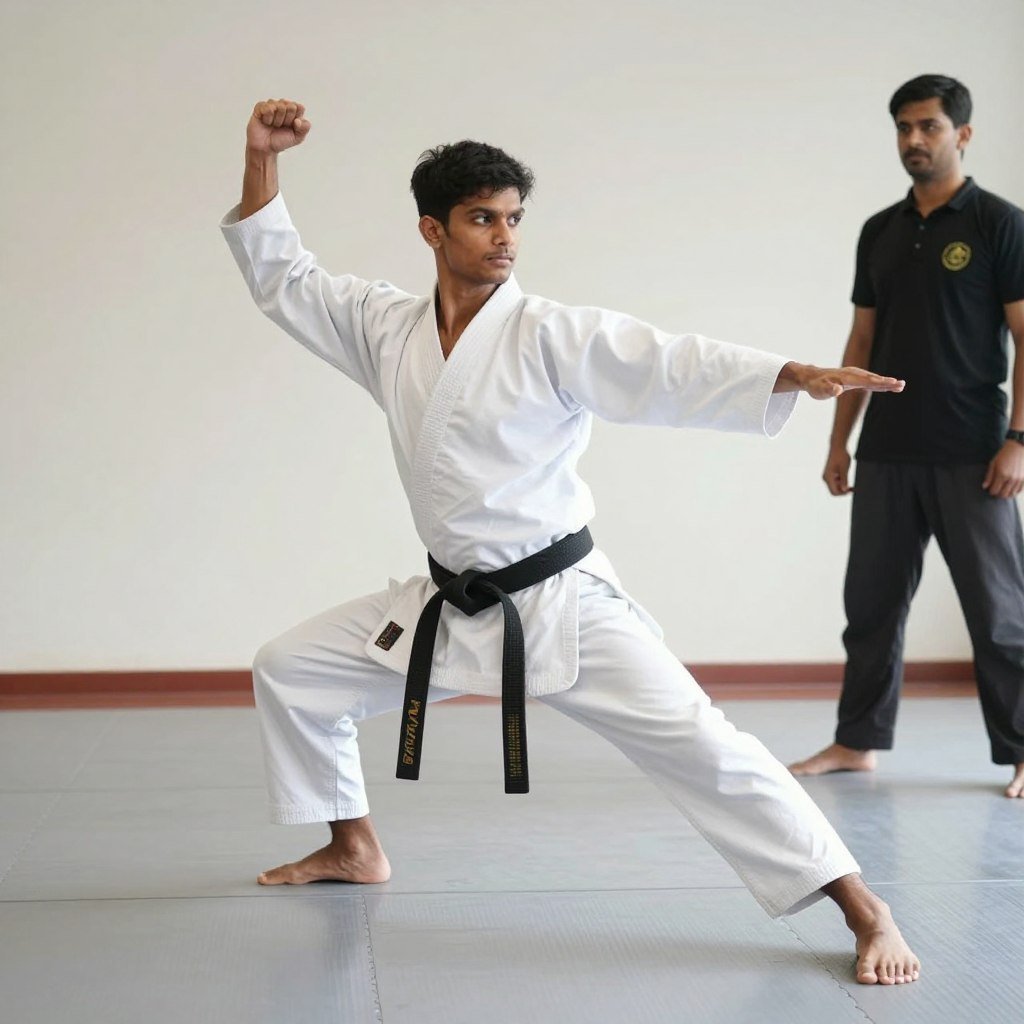
Conditioning should support technique rather than replace it.
Discipline, Philosophy, and Instruction
Traditional martial arts are more than collections of punches, kicks, or weapons. They often teach discipline, attention, respect for the instructor, care for training partners, and patience with long-term development.
It is important not to force one universal philosophy onto every school. A modern academy may teach fitness and self-defense. A traditional lineage may place greater focus on ritual, language, teacher-student duties, and cultural practice.
Teacher-student relationships
Both arts depend heavily on instruction. A book can explain a stance, but it cannot correct every detail of balance, breathing, timing, or partner safety. Direct feedback remains important.
“The name of a martial art tells only part of the story. The teacher, lineage, training culture, and safety standards shape the experience.”
Instruction and training culture influence the quality of practice.
Sparring, Practical Combat, and Safety
Forms develop memory and coordination, while sparring introduces uncertainty, pressure, distance changes, and the need to respond to an opponent. These are related but different skills.
Musti Yuddha students may use boxing-style partner drills or controlled sparring if the school includes them. Kalaripayattu students may practice partner sequences, weapon forms, or unarmed combat drills. Full-contact fighting is not required to make a traditional class valuable.
Questions to ask before joining
- How are new students introduced to contact?
- What protective equipment is required?
- How does the instructor handle injuries or unsafe behavior?
- Are weapons restricted to supervised practice?
- Can the school explain its lineage and curriculum clearly?
Safe sparring depends on control, communication, and suitable progression.
Healing Traditions and Recovery Practices
Kalaripayattu is often discussed alongside traditional healing knowledge, body massage, and recovery practices. The connection can be important within particular lineages, but it should not be treated as a substitute for modern medical care.
Musti Yuddha classes may also include conditioning and recovery advice, yet the presence of formal healing instruction depends on the school. Ask what is actually taught rather than assuming that every traditional class provides therapeutic services.
Seek a licensed medical professional for diagnosis or treatment of an injury. Traditional recovery practices should be presented with clear limits and informed consent.
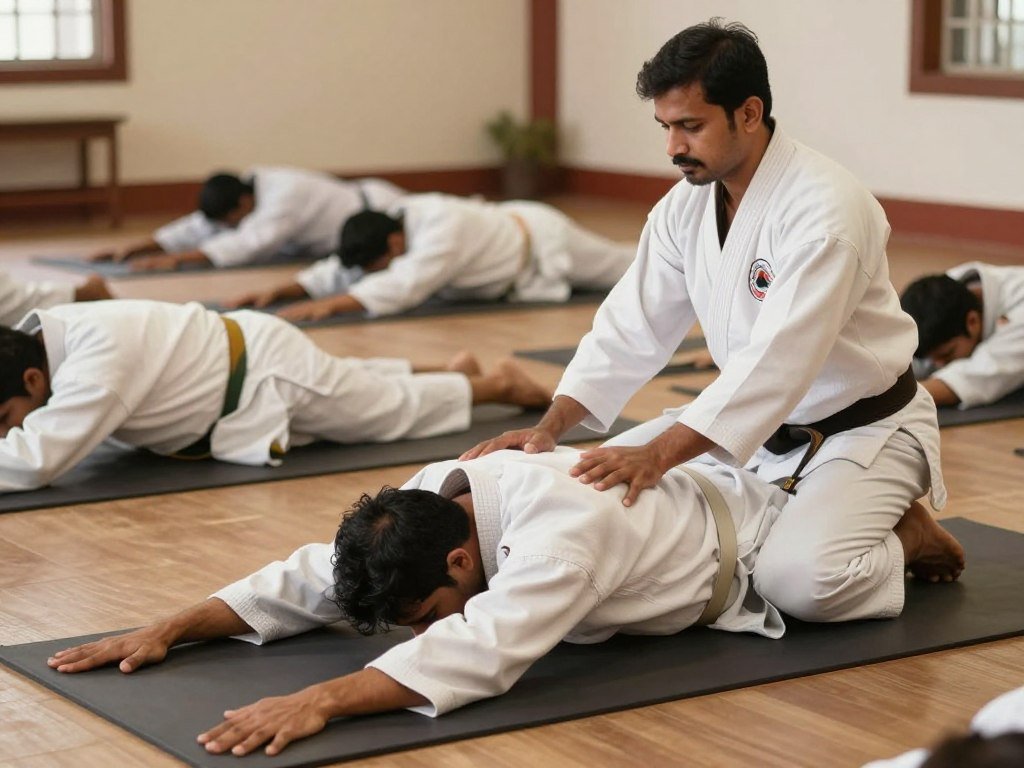
Recovery practices should be explained carefully and used alongside appropriate medical guidance.
How These Arts Are Practiced Today
Modern practitioners study these arts for many reasons. Some want cultural education. Others seek fitness, performance, self-defense, flexibility, competition, or a connection with traditional instruction.
Today’s classes may adapt schedules, clothing, equipment, and teaching methods for urban students. Some schools focus on heritage demonstrations. Others provide demanding physical training. Neither format should be judged without understanding its stated goal.
Online material and in-person learning
Videos can show movements and historical context, but they cannot provide real-time correction. Online content is best used for research, terminology, and school discovery. Physical techniques, weapons, and contact drills require qualified guidance.
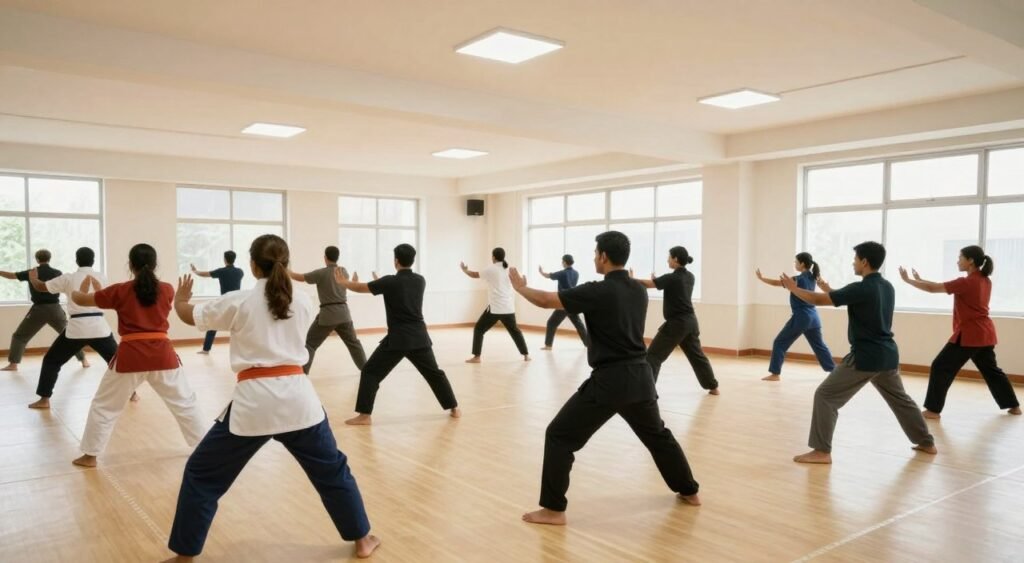
Modern practice can preserve tradition while adapting to current safety and access needs.
Similarities Between Musti Yuddha and Kalaripayattu
Although their scope differs, the two arts share important features. Both can demand regular practice, physical discipline, attention to movement, and respect for an instructor or lineage.
- Both involve traditional Indian martial knowledge.
- Both can include unarmed combat and partner drills.
- Both require balance, timing, strength, and body control.
- Both may use forms to organize technical learning.
- Both can carry cultural meaning beyond fighting.
- Both vary according to region, teacher, and modern setting.
These similarities explain why readers compare them. They also show why the comparison should remain balanced. Shared discipline does not erase the difference between a focused boxing practice and a wider martial system.
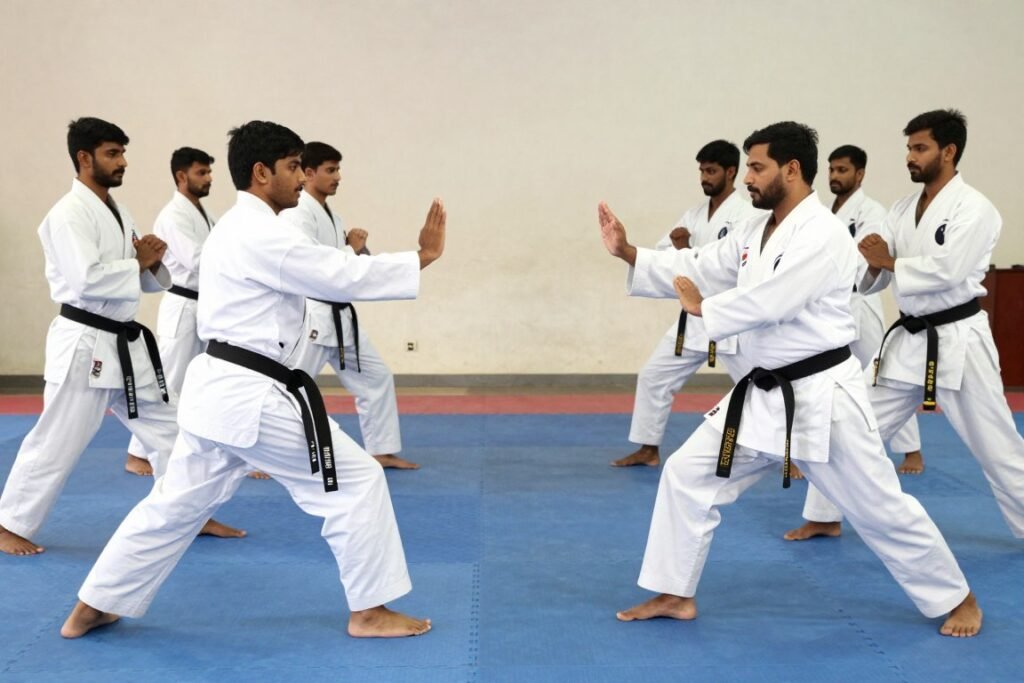
Shared values make comparison useful, but they do not make the arts interchangeable.
Key Differences in Scope, Region, and Combat Focus
The largest difference is scope. Musti Yuddha is usually framed around boxing, fists, and unarmed fighting. Kalaripayattu offers a broader curriculum that may include body conditioning, unarmed techniques, kicks, forms, weapons, and healing traditions.
The second difference is regional identity. Kalaripayattu has a clear connection with Kerala. Musti Yuddha is discussed more broadly within Indian martial history, and its modern presentation may vary more widely.
Musti Yuddha
- Focused boxing and fist-based combat.
- Strong interest in punches and hand defense.
- Usually less centered on weapons.
- Useful for learners seeking a direct striking focus.
Kalaripayattu
- Broad Kerala martial arts curriculum.
- May include kicks, forms, weapons, and mobility work.
- Traditionally connected with the kalari.
- Useful for learners seeking a wider training system.
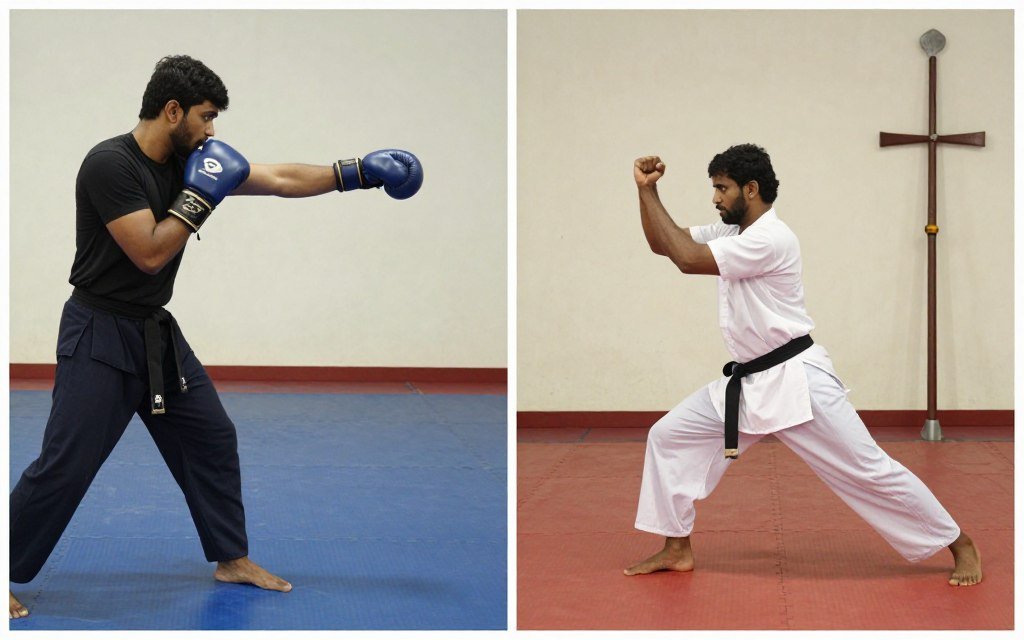
The difference is not simply “better” or “worse”; it is a difference in purpose and curriculum.
Which Art May Suit Different Learners?
Choose Musti Yuddha if your main interest is traditional boxing, hand strikes, close-range movement, and unarmed combat. It may suit a learner who wants a focused curriculum and enjoys the rhythm of boxing practice.
Choose Kalaripayattu if you want a broader martial art with body conditioning, kicks, forms, weapons, and a strong Kerala cultural setting. It may suit a learner who enjoys variety and long-term technical progression.
Neither choice should be made from online claims about superiority. Visit a class, observe the teaching, ask about safety, and consider whether the instructor’s approach matches your goal.
Choose Musti Yuddha for
- Boxing-oriented practice.
- Hand strikes and close distance.
- Focused unarmed training.
Choose Kalaripayattu for
- Broader traditional training.
- Weapons and movement forms.
- Kerala cultural context.
Choose either for
- Discipline and fitness.
- Long-term technical study.
- Respectful martial arts practice.
The best choice depends on goals, access, safety, and the quality of local instruction.
Frequently Asked Questions
Is Musti Yuddha the same as Kalaripayattu?
No. Musti Yuddha is generally described as a traditional Indian boxing and unarmed combat practice. Kalaripayattu is a broader Kerala martial art that may include unarmed techniques, weapons, conditioning, forms, and healing traditions.
Which art uses more weapons?
Kalaripayattu generally has a stronger weapons component in many lineages. Musti Yuddha is mainly associated with fists and unarmed fighting, although regional teaching contexts may vary.
Which art is better for fitness?
Both can improve fitness when taught and practiced consistently. Musti Yuddha may emphasize boxing-style effort and repeated hand movements. Kalaripayattu may provide more varied mobility, balance, kicks, and full-body conditioning.
Can a beginner learn either art?
Yes, but beginners should start with a qualified instructor. The class should offer gradual progression, safe partner work, and clear explanations of contact and recovery.
Are all Kalaripayattu schools the same?
No. Lineage, region, teacher, curriculum, training space, and modern goals can create meaningful differences between schools.
Can online videos replace instruction?
Videos can support background research, but they cannot replace real-time correction. This is especially important for sparring, weapons, stretching, and high-speed movements.
Further Reading and Source Context
Readers who want a wider background can begin with the following pages. Each source serves a different purpose, so none should be treated as the only authority on every historical or technical question.
- Wikipedia overview of Indian martial arts for broad orientation and related terms.
- PREPP notes on Musti Yuddha for an educational and culture-focused summary.
- Martial Arts Stack Exchange discussion of Kalaripayattu for community perspectives and questions.
For serious study, compare these summaries with books, regional scholarship, museum material, and instruction from a transparent lineage. Oral practice can contain knowledge that is not fully represented in short web articles.

A strong comparison uses multiple kinds of evidence and clearly marks uncertainty.
Conclusion: Two Related but Distinct Traditions
Musti Yuddha and Kalaripayattu share discipline, physical preparation, traditional instruction, and practical combat skills. Their differences are just as important. Musti Yuddha is best understood as a focused Indian boxing and unarmed combat tradition. Kalaripayattu is a broader Kerala martial art that may combine unarmed techniques, weapons, body conditioning, healing traditions, and kalari-based instruction.
Choose based on your goals rather than on claims of superiority. Musti Yuddha may suit learners who want hand strikes, boxing, and close-range practice. Kalaripayattu may suit learners who want a wider curriculum with forms, kicks, weapons, movement, and regional culture.
In either case, look for qualified teaching, respectful presentation, safe progression, and honest discussion of lineage. That approach gives the comparison practical value while honoring the diversity of indian martial arts
The strongest choice is the one that matches the learner’s aims and respects the tradition.