At the same time, its history must be read with care. Some details come from recorded traditions, while others survive as myth, legend, or modern report. This guide separates those layers while explaining how Musti Yuddha developed, how its four styles are understood, and why the art remains difficult to regulate today.
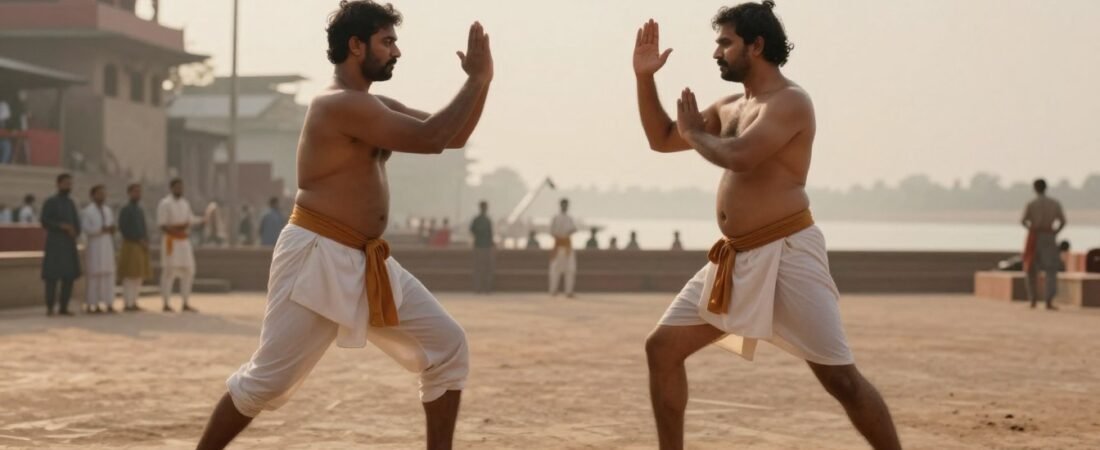
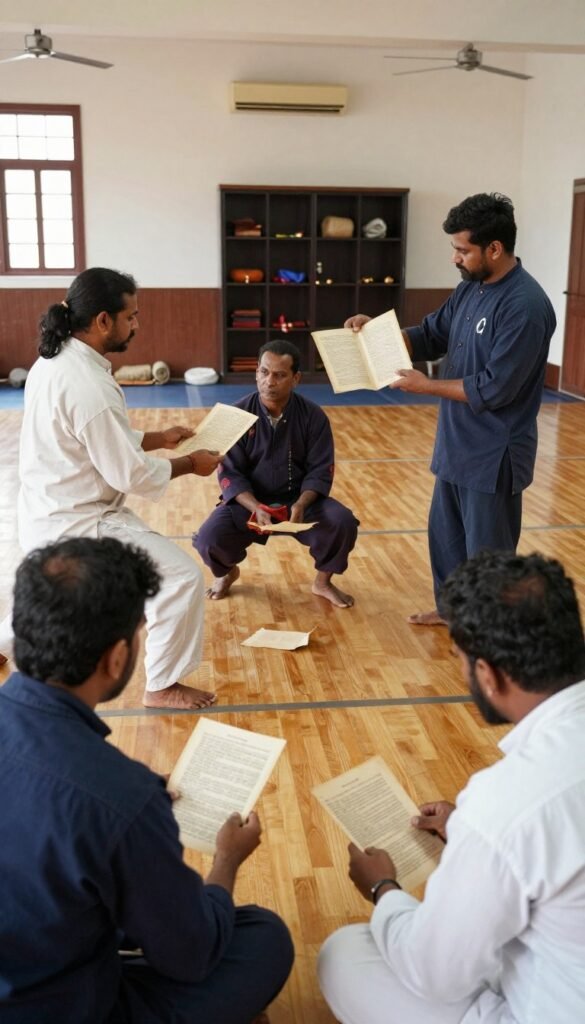
A respectful visual interpretation of Musti Yuddha training in an Akhada setting.
What Is Musti Yuddha?
Musti Yuddha, also called Muki Boxing, is an ancient unarmed full-contact striking art from the Indian subcontinent. The name comes from the Sanskrit words muṣṭi, meaning “fist,” and yuddha, meaning “combat,” “battle,” or “fight.” In simple terms, the name points to fist combat.
Boxing existed in many parts of ancient India. However, modern references to Musti Yuddha usually describe the bare-knuckle style associated with Varanasi, also called Benares, in Uttar Pradesh. This geographic connection is important because it distinguishes the named tradition from every historical form of Indian fighting.
Historical Identity and Cultural Setting
Traditional accounts connect the art with Akhadas, or training grounds where physical exercise, wrestling, combat practice, and personal discipline were combined. Training was not only about winning a fight. It also involved endurance, control, routine, and respect for the teacher and training space.
Musti Yuddha is often discussed beside other martial arts India has produced. Yet it should not be treated as a modern standardized sport. There is no widely recognized global rulebook, unified governing body, or stable competition system that defines every school today.
The term also appears in different spellings and descriptions. Some sources use Mukki Boxing, while others emphasize fist fighting or traditional Indian boxing. These labels can overlap, but they do not always prove that every described technique belongs to one continuous system.
Evidence note: References to epic combat, public festivals, and regional traditions may preserve valuable cultural memory. They should not automatically be read as proof of one unchanged martial art surviving across every period.
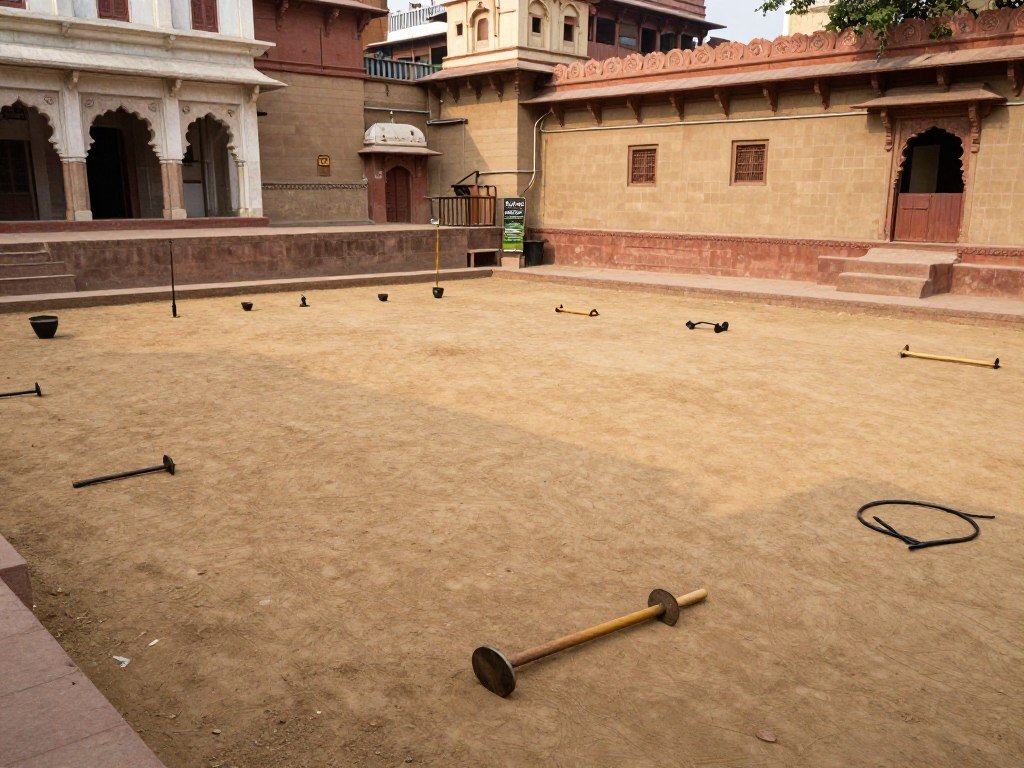
Varanasi is the modern geographic hub most closely associated with Musti Yuddha.
The Four Combat Styles of Musti Yuddha
Traditional descriptions divide Musti Yuddha into four primary styles. Each style is linked with a figure from Hindu epic tradition. These figures represent qualities that a fighter might develop, rather than four modern competitive divisions with universally fixed rules.
Jambuvanti
Jambuvanti focuses on locks, holds, and control. Its purpose is to immobilize or subdue an opponent. The name connects it with Jambavan, a powerful figure known for strength, patience, and holding ability.
- Control before force
- Holding and immobilization
- Close-range positioning
Hanumanti
Hanumanti emphasizes technical superiority, tactical movement, and skill. It is associated with Hanuman, whose strength is often paired with intelligence, loyalty, speed, and purposeful action.
- Timing and precision
- Tactical maneuvers
- Technical advantage
Bhimaseni
Bhimaseni relies on raw strength, heavy physical power, and forceful strikes. It is linked with Bhima, the epic warrior remembered for tremendous power and direct combat.
- Physical strength
- Heavy punching power
- Pressure through force
Jarasandhi
Jarasandhi is associated with breaking limbs and joints to incapacitate an opponent. Its name refers to Jarasandha, a formidable figure in epic literature. This description reflects the severe nature of historical fist combat, not a recommendation for modern training.
Together, the styles show how martial arts can classify combat by tactical identity. One fighter may seek control, another may rely on technique, a third on power, and another on disabling attacks. The categories also connect physical practice with stories that helped communities explain courage, skill, and danger.
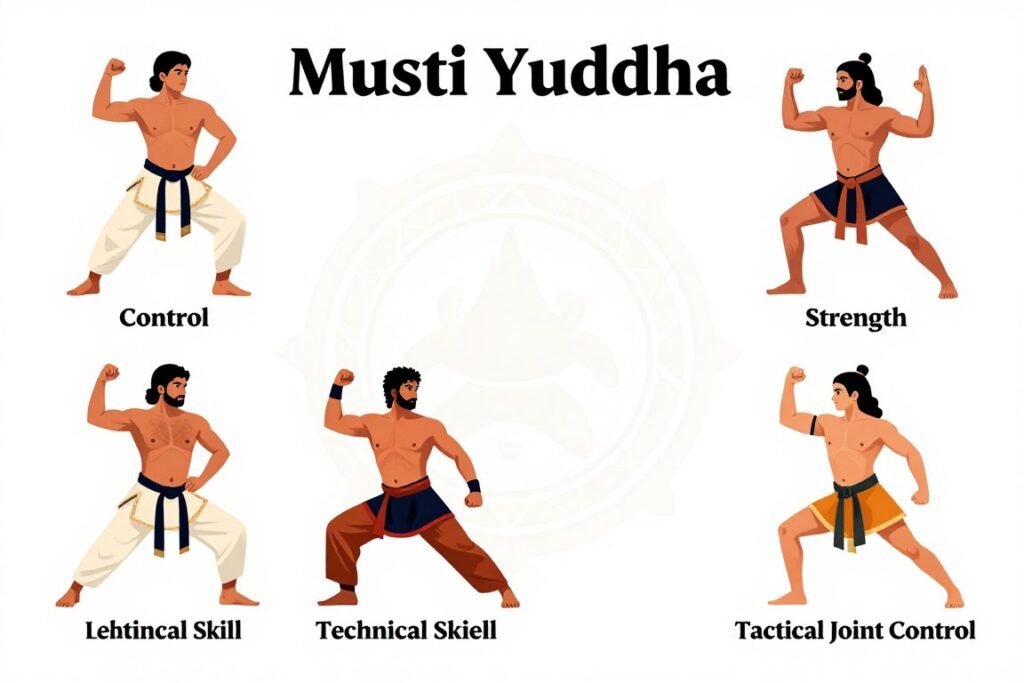
The four styles describe different combat qualities rather than standardized modern divisions.
Rules, Strikes, and Combat Mechanics
Standard descriptions of Musti Yuddha focus on bare-fisted punches and elbow strikes. Kicks, knee strikes, and grappling are generally used less than in many other striking arts. Epic descriptions, especially those connected with the Mahabharata, sometimes include kicks, knee strikes, finger strikes, and headbutts. These accounts describe earlier or legendary variants and should not be confused with a modern competition rulebook.
Targets and Equipment
Bouts are described as taking place without gloves or protective gear. Competitors could strike most parts of the opponent’s body, with the head and chest identified as prime targets. Groin strikes were strictly forbidden. These details indicate a very high-risk form of boxing compared with regulated sports.
Historical accounts also describe different match structures. A bout could involve one fighter against another, one fighter against a group, or one group against another group. Victory could come through knockout, ringout, or submission. In older descriptions, pre-agreed duels called niyuddham were sometimes fought to the death.
What the Sources Do Not Establish
Available descriptions do not establish one reliable arena size, round length, judging system, or referee protocol. They also do not provide enough evidence to define one defensive stance, guard position, or footwork system for every school.
That gap matters. A reader should not assume that a historical description can be safely copied into a modern class. Anyone studying these techniques needs qualified supervision, legal awareness, protective equipment, and medical risk control. Bare-knuckle impact can cause fractures, brain injury, eye damage, and lasting hand problems.
Safety warning: Do not condition the hands by striking stones, bricks, trees, or other hard objects. Historical accounts may describe such practices, but deliberate impact injury is not a safe substitute for supervised conditioning.
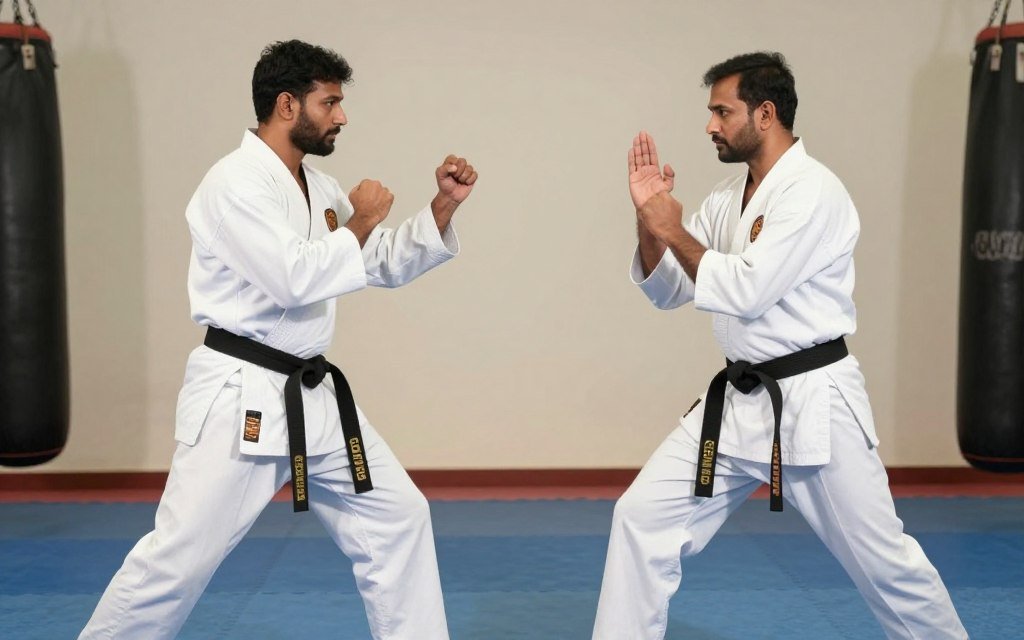
Historical combat descriptions should not be treated as a modern safety standard.
Akhada Training, Conditioning, and Discipline
Traditional training takes place in the Akhada, often on sacred earth called mitti. The system develops the whole body through repeated movement, bodyweight exercises, tools, breath control, and mental discipline. Its purpose is not limited to stronger fists. Balance, stamina, grip, mobility, and concentration are also important.
Hand Conditioning and Impact Claims
Traditional accounts say that practitioners spent years striking abrasive objects such as stones, bricks, palm trees, and coconuts. One explanation claims that repeated impact causes tiny fractures in the knuckles and that the body deposits calcium over time, making the fists hard enough to break rocks or coconuts.
This should be presented as a traditional claim, not as safe medical guidance. Repeated impact can damage bone, nerves, skin, and joints. Modern training should use gradual resistance, technical drills, wraps, appropriate pads, and professional supervision. Pain is not proof of progress.
Desi Bodyweight Exercises
Dand refers to dynamic Indian push-up variations. They develop upper-body strength, shoulder mobility, and explosive movement. The exercise is often performed as a flowing movement rather than a rigid modern push-up.
Baithak involves deep squatting patterns that build leg stamina, hip mobility, and work capacity. Sapate refers to burpee-like movements that combine speed, strength, and full-body conditioning.
Gada, Mudgar, and Pranayama
The gada, or mace, and mudgar, or wooden club, are swung through rotational patterns called parikrama. These tools train grip strength, shoulder resilience, and rotational core power when used correctly.
Physical work is paired with mental practice.Pranayama, or controlled breathing, is used to support focus and stamina. This connection between body and mind helps explain why an Akhada is better understood as a discipline system than as a simple boxing gym.
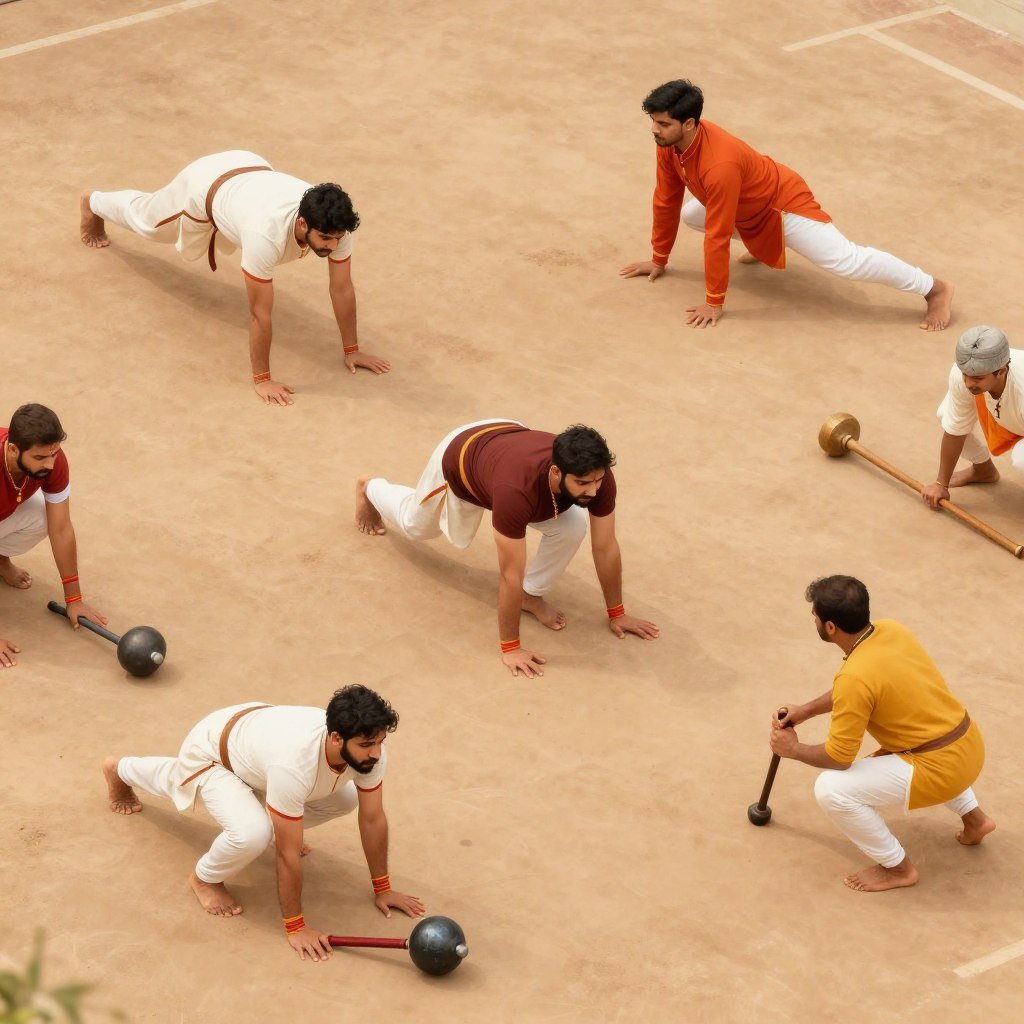
Akhada conditioning combines bodyweight movement, rotational tools, breath, and discipline.
Loh-Musti and the Armed Regional Variant
Loh-Musti is a related armed form associated with Punjab. In traditional practice, a fighter wore an iron ring called a kara on one hand. This changed the danger and purpose of fist combat because the hand became connected with a hard metal striking surface.
In the early nineteenth century, soldiers in Maharaja Ranjit Singh’s Sikh army reportedly used Loh-Musti to settle personal disputes. French General Allard observed and documented the practice. The account places Loh-Musti within the military and social history of northwestern India, rather than treating it as identical to the Varanasi style.
Loh-Musti survives as a traditional art form, but the iron ring is no longer worn during active sparring. This distinction reflects a broader issue in historical martial arts: preservation does not require repeating the most dangerous equipment or customs.
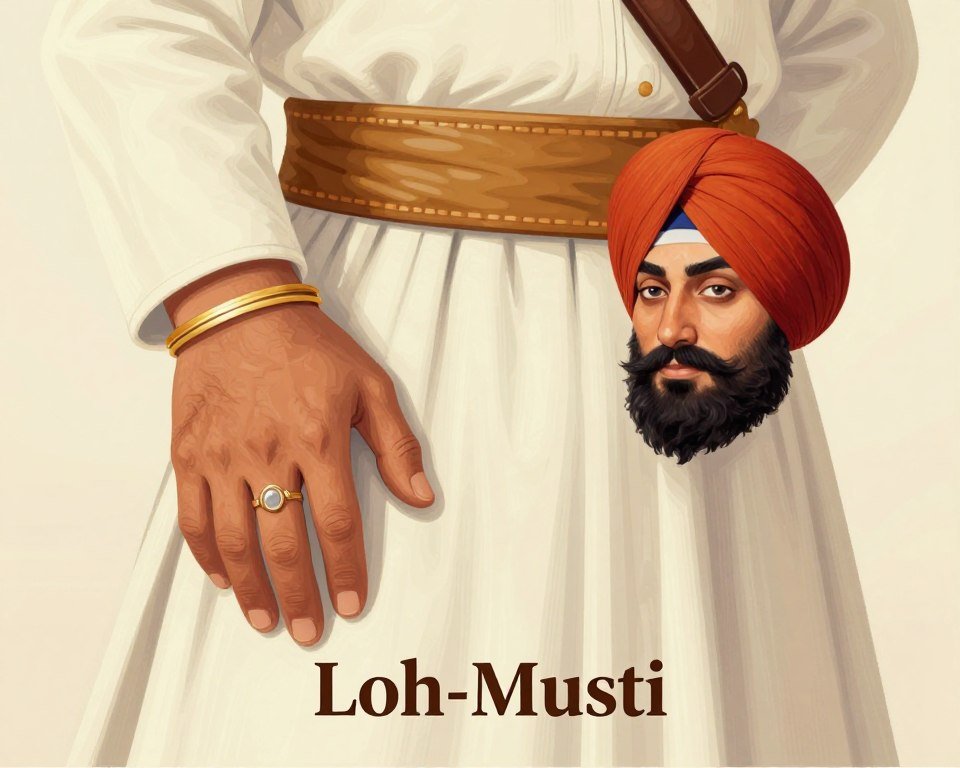
Loh-Musti is linked with Punjab and the historical use of an iron ring.
Musti Yuddha History: From Epic Accounts to the Present
The history of Musti Yuddha is best understood as a sequence of references, traditions, and later claims. The timeline below distinguishes broad historical context from details that remain difficult to verify.
| Period | Historical context |
| Vedic and Epic Period | Early references appear in the Rig Veda, Ramayana, and Mahabharata. Classical duels were called niyuddham. |
| 3rd Century AD | Tradition places formal organization in Varanasi, with a claimed 300-year or longer history of public boxing festivals. |
| Western Satraps | Rudradaman is recorded as a skilled boxer as well as a ruler associated with swordsmanship, horse riding, grammar, and scholarship. |
| 18th–19th Century | The art is referenced in Gurbilas Shemi and connected with troops serving Maharaja Ranjit Singh in northwestern India. |
| 1860s–1890s | British authorities promoted Western boxing and banned native fighting in response to fatal arena casualties and violent spectator disorder. Reports also describe secret bouts in Varanasi. |
| 1960s to today | The tradition was pushed further underground. Claims about unregulated fight clubs in Kolkata remain legend or reported tradition, not verified fact. |
The colonial period appears especially important. The ban affected public practice and may have weakened institutional continuity. Yet the available information does not show one complete chain from ancient boxing to every modern account. Historical survival may include local teaching, family memory, reconstructed practice, and later storytelling.
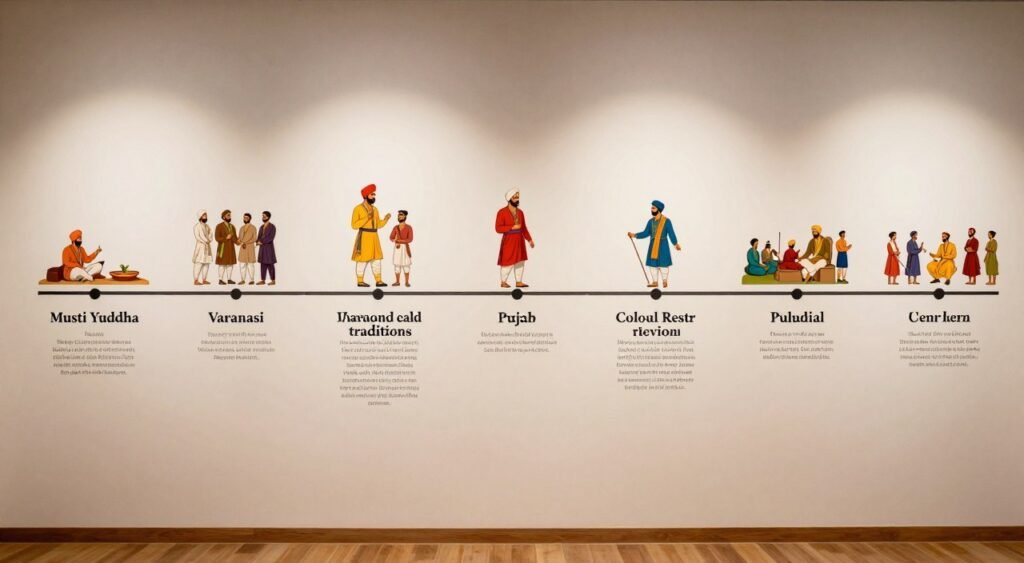
The tradition’s timeline includes epic references, regional practice, colonial disruption, and modern uncertainty.
Important Figures, Related Arts, and Modern Research Gaps
Mythological and Historical Figures
Hanuman represents technical skill, purposeful strength, and agility. Bhima represents brute force and powerful direct attacks. Jambavan represents holding and locking ability, while Jarasandha represents disabling joint and limb attacks. These associations make the four styles easier to remember, but they are mythological exemplars rather than verified teachers of a modern syllabus.
Rudradaman is remembered as a Western Satrap ruler who combined boxing with scholarship, swordsmanship, horse riding, and grammar. Maharaja Ranjit Singh and General Allard are connected with the history and documentation of fist fighting among Sikh troops.
Narayanguru and Lakshmanguru Balambhat Deodhar are remembered as prominent post-independence fighters in Varanasi. Stories describe remarkable strength and the ability to fight several opponents. Such extraordinary accounts should be labeled legends unless supported by independent evidence.
Links with Southeast Asian Martial Arts
Musti Yuddha is often discussed alongside traditional striking arts from the broader Indosphere. These include Muay Thai and Muay Boran in Thailand, Muay Lao in Laos, Pradal Serey in Cambodia, Lethwei in Myanmar, and Bando and Bokator in Myanmar and Cambodia.
These martial arts may share broad features such as bare-hand striking, conditioning, ritual practice, or historical exchange. That does not prove a direct one-to-one origin. Muay Thai Thailand, Muay Lao Laos, and Pradal Serey Cambodia each have their own histories, communities, rules, and modern institutions. Comparisons are useful when they respect those differences.
Shared themes
- Striking techniques
- Body conditioning
- Regional cultural identity
Important differences
- Rules and equipment
- Competition structures
- Modern governing bodies
Research caution
- Avoid simple origin claims
- Separate legend from records
- Compare sources carefully
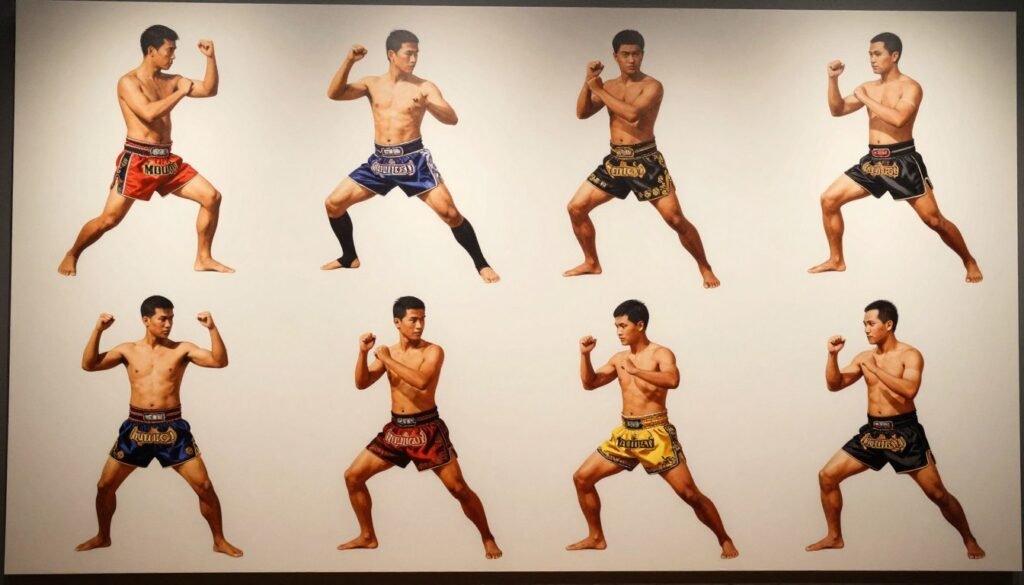
Comparisons with Southeast Asian arts should recognize shared structures without claiming unsupported direct origins.
What Research Still Needs to Explain
Existing material discusses impact conditioning but gives little reliable detail about defensive footwork, guard stances, or evasion. Basic rules mention bare fists and the prohibition on groin strikes, yet arena dimensions, round durations, and refereeing practices remain unclear.
Modern institutional development is another gap. Unlike Muay Thai, which became a global combat sport with recognizable competition systems, Musti Yuddha lacks standardized sanctioning bodies and legal competitive leagues in modern India. This limits safe instruction, athlete protection, records, and consistent preservation.
Frequently Asked Questions About Musti Yuddha
Is Musti Yuddha a form of boxing?
Yes, in the broadest sense. It is traditionally described as an Indian bare-knuckle boxing or fist-fighting system. However, it shouldn’t simply be treated as an ancient version of modern Western boxing because its history, training culture, techniques, and rules are different.
Where does Musti Yuddha come from?
The specific tradition known as Musti Yuddha is particularly associated with Varanasi, Uttar Pradesh, India, although fist fighting and unarmed combat existed throughout the Indian subcontinent.
What does Musti Yuddha mean?
The Sanskrit terms muṣṭi and yuddha mean approximately “fist” and “combat/battle.” Thus, Musti Yuddha can be translated as “fist combat.”
Is Musti Yuddha still practiced?
Traditional forms and related practices survive, although Musti Yuddha does not have the international institutional presence of boxing, Muay Thai, karate, or judo.
Does Musti Yuddha use gloves?
Traditional Musti Yuddha is associated with bare fist, although modern training adaptations may use protective equipment for safety similar to kickboxing.
Does Musti Yuddha use kicks?
Modern descriptions generally emphasize punches and elbows rather than kicks. However, historical descriptions of Indian unarmed combat include kicks, knees, headbutts, and other techniques.
Who are the four legendary figures associated with Musti Yuddha?
They are traditionally associated with:
- Jambavan — holding and locking
- Hanuman — technical skill and strategy
- Bhima — strength and power
- Jarasandha — limb and joint attacks
These figures are better understood as traditional archetypes than as historical founders of four separate fighting systems.
Is Musti Yuddha the same as Indian wrestling?
No.
Musti Yuddha is primarily associated with striking, while Indian wrestling or kushti focuses primarily on grappling. However, both have strong connections to traditional akhada culture and share conditioning methods.
What is Loh-Musti?
Loh-Musti is an armed variation associated particularly with Punjab in which a fighter traditionally used an iron ring or similar iron implement on the hand during fights.
Did Musti Yuddha fighters really punch rocks?
Traditional accounts describe impact conditioning involving hard objects such as stones, bricks, trees, and coconuts. However, claims about fighters literally developing fists capable of routinely breaking rocks should be treated cautiously. Historical martial-arts accounts often combine real practices with exaggeration and legend.
Conclusion: A Tradition That Needs Careful Preservation
Musti Yuddha combines fist combat, Akhada training, mythology, regional history, and spiritual discipline. Its four styles offer a memorable way to discuss control, skill, strength, and disabling tactics. Its rules describe a severe form of boxing in which bare fists, elbows, head targets, and dangerous victory conditions created serious risks.
The tradition deserves respect, but respect does not require accepting every story as fact or repeating every harmful method. A responsible modern approach should distinguish historical evidence from legend, protect practitioners from unnecessary injury, and support research into the art’s regional forms.
For today’s readers, the most useful CTA is not a push toward underground fighting or unsupervised hand conditioning. It is an invitation to study, compare, document, and preserve Musti Yuddha with cultural care and modern safety standards.
Responsible preservation balances cultural respect, historical caution, and practitioner safety.