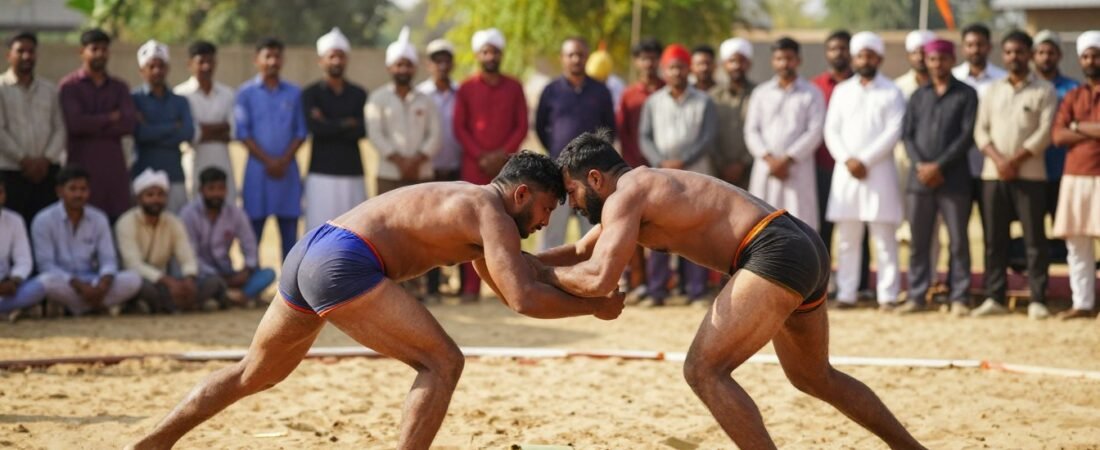
An akhada is a traditional Indian training community where physical instruction and spiritual values coexist. These spaces are deeply connected to the practice of wrestling, which is often seen as a way of life for many. In an akhada, people gather to learn, train, and share experiences under the guidance of a guru.
Historically, akharas have served as places for lodging, food, and discipline. They follow the Guru-shishya system, where the guru imparts techniques and values to their students. This close-knit community thrives on shared meals, rituals, and a commitment to celibacy, creating a unique lifestyle.
Locations like Varanasi along the Ganges and Delhi by the Yamuna are prime examples of where these traditions continue. Here, wrestling is more than just a sport; it embodies a rich heritage and a way of life that has persisted through time.
Key Takeaways
- An akhada is a community focused on physical training and spiritual growth.
- Wrestling is the primary activity associated with these traditional spaces.
- The guru plays a vital role in teaching techniques and values.
- Life in an akhada includes communal meals and strict routines.
- Varanasi and Delhi are notable locations where these traditions thrive.
Introduction: The World of Akhadas
Akhadas embody a unique blend of physical training and cultural heritage. These spaces serve as vital institutions where wrestlers learn under the guidance of a guru. Unlike a gurukul, members of an akhada do not necessarily live in their teacher’s household. Instead, they come together to train, fostering a sense of community and shared identity.
Historically, akhadas have provided more than just training; they also offered lodging, food, and moral education. This structure created a lifestyle centered around discipline and routine. Different akhadas may belong to various lineages, such as Vaishnava, Shaivite, or Dashanami, which contribute to their unique customs and traditions.
In recent years, modern akhadas have expanded their reach, welcoming women and other learners into their fold. This evolution showcases the adaptability of these communities while preserving the essence of their ancient training methods. As one observer noted, “Akhadas are not just about wrestling; they are about shaping character and identity through rigorous training and community bonds.”
Exploring The Akhada in Wrestling Culture
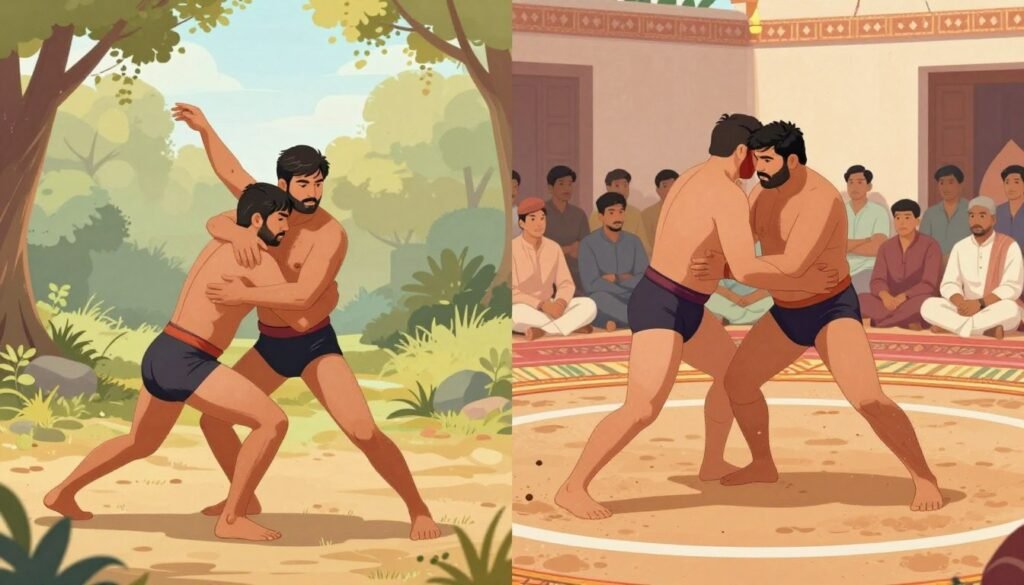
Wrestling culture thrives within the confines of an akhada, where training and tradition intertwine. These spaces serve as schools and arenas for wrestlers to learn kushti, the traditional form of wrestling. Here, athletes prepare physically and mentally, honing their skills through rigorous practice and controlled competition.
The role of the guru is pivotal in this journey. They set the technical and ethical standards that guide a wrestler’s development, ensuring a strong foundation from beginner practice to competitive performance. An excellent example is the akhara founded by Guru Hanuman in Maujpur in 1925, which connects traditional instruction with modern wrestling culture.
Moreover, the establishment of Chandgi Ram’s akhara in 1975 marked a significant milestone, as it became India’s first women’s wrestling akhara. This development opened doors for women, providing greater access to training and competition.
In the context of akhadas, a dangal refers to an organized wrestling competition or sparring event. This format allows wrestlers to showcase their skills and test their abilities against others. While some akhadas focus solely on wrestling, others may teach broader combat systems, highlighting the diversity within these traditional training grounds.
| Akhara Name | Founded By | Year | Significance |
|---|---|---|---|
| Maujpur Akhara | Guru Hanuman | 1925 | Traditional instruction in kushti |
| Chandgi Ram Akhara | Chandgi Ram | 1975 | First women’s wrestling akhara |
| Various Akhadas | Multiple Gurus | Various | Training in diverse combat forms |
Historical Origins and Traditional Practices
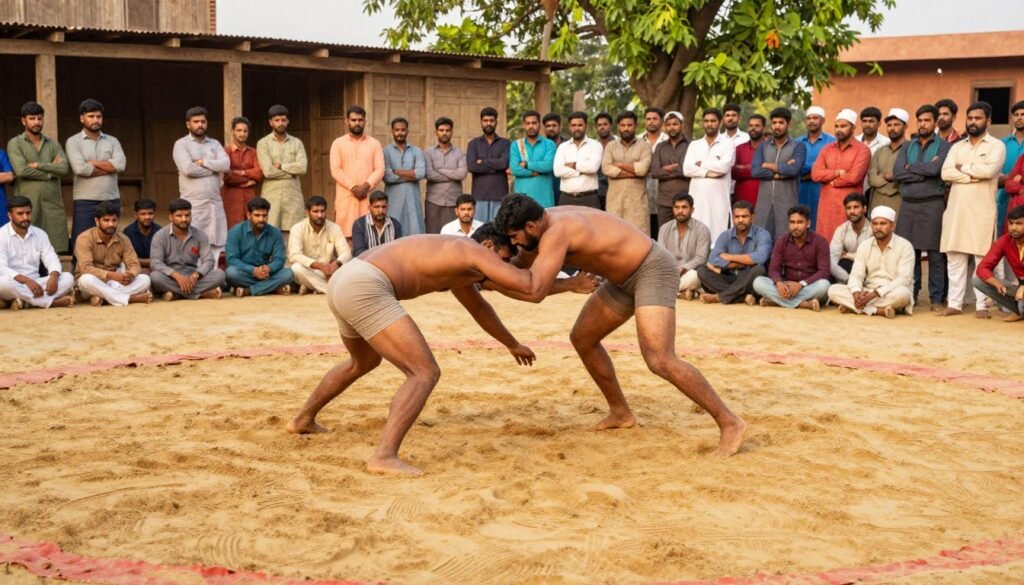
Wrestling has deep roots in Indian culture, with akhadas serving as essential training grounds. The earliest mention of a training hall appears in the Mahabharata, which references Jarasandha’s Akhara at Rajgir, dating back to around 400 BCE. This connection illustrates the long-standing tradition of wrestling in India.
Over the years, various akhadas emerged, each contributing to the evolution of this art. For instance, Avahan Akhara was founded in 547 CE, followed by others like Atal Akhara in 646 CE and Niranjani Akhara in 904 CE. These institutions not only provided training but also lodging and education, forming communities around martial practices.
Adi Shankaracharya, between 788 and 820 CE, categorized ascetics into Shastradhari and Astradhari. This classification helped bridge the gap between intellectual pursuits and martial training, further solidifying the role of akhadas in society.
Traditionally, the wrestling surface, or mitti, was carefully prepared. Wrestlers mixed dirt with water, red ochre, buttermilk, and oil to create a suitable arena. This unique composition enhanced grip and safety during practice, highlighting the importance of environment in training.
Guru-Student Bonds and Daily Discipline
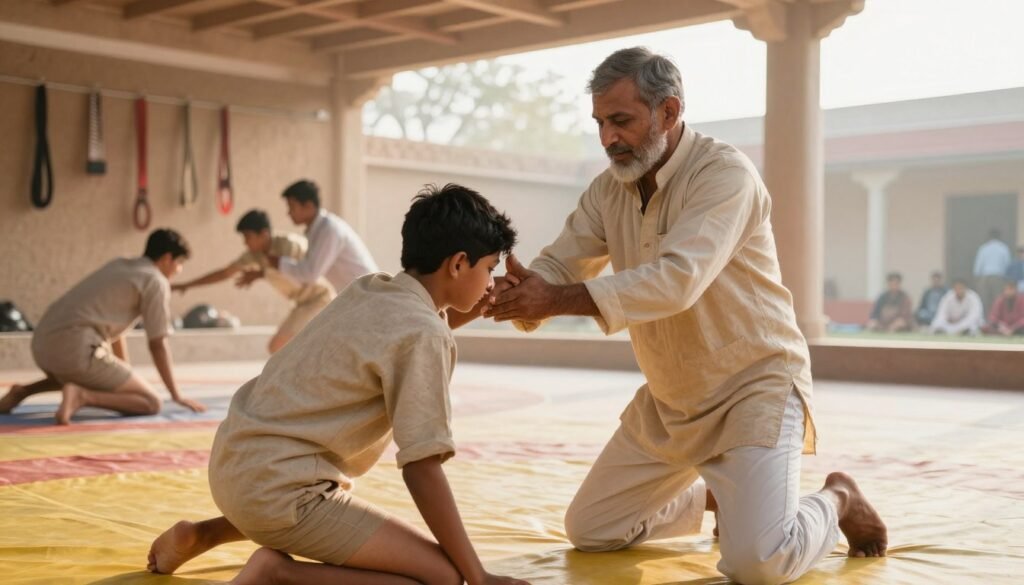
In the heart of traditional training, the bond between guru and student forms the foundation of a wrestler’s journey. This relationship is more than just instructional; it encompasses moral guidance and personal development. The guru acts as a mentor, shaping the wrestler’s character and skills over the years.
Wrestlers live, eat, and train under the watchful eye of their guru. Their daily routine is meticulously structured, incorporating early physical preparation, strength exercises, and sparring sessions. This disciplined lifestyle also emphasizes celibacy, abstaining from smoking and alcohol, and owning minimal possessions.
Nutrition plays a vital role in their training. A typical diet includes milk, ghee, dried nuts, and roti, which provide essential energy. The langot, a traditional loincloth, ensures safety during intense wrestling practice.
As one expert noted, “The rigorous training in an akhada is not just about physical strength; it is about building a strong mind and spirit.” This encapsulates the essence of life in these traditional spaces.
Cultural and Religious Dimensions of Akhadas
Akhadas represent a profound intersection of spirituality and physical training. These spaces often function as religious monasteries, especially within the Guru-shishya traditions. They are not just places for wrestling; they embody a rich cultural and spiritual identity.
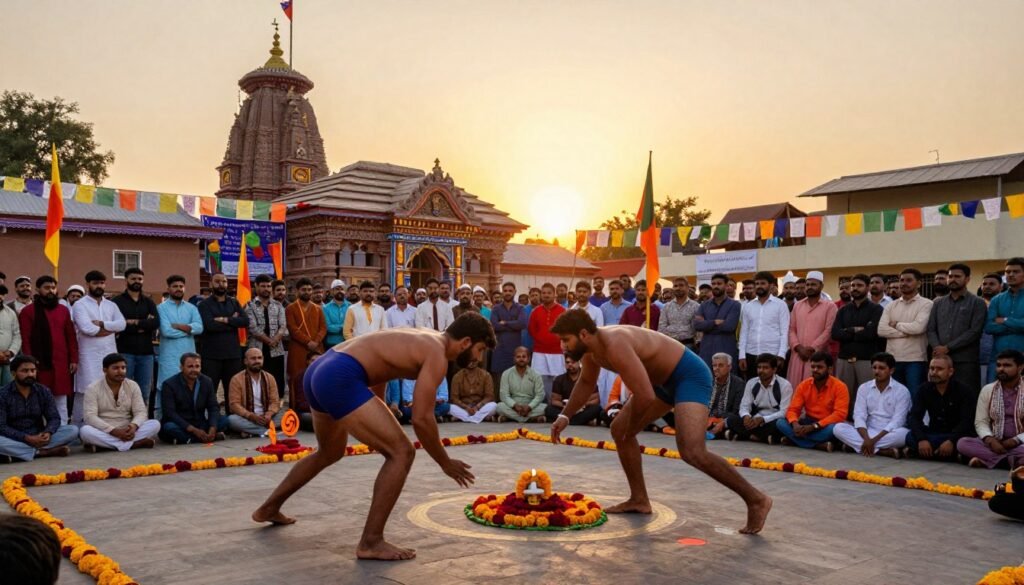
Within the Dashanami akharas, martial and religious practices intertwine, particularly among Naga sadhus. Rituals such as chanting, prayer, and ritual bathing connect physical effort with spiritual self-discipline. This blend enhances the life of participants, fostering a deeper sense of community.
The concept of sampradaya and parampara is crucial, as it transmits beliefs and practices across generations. For instance, the Sri Pancha symbolizes Brahma, Vishnu, Shiva, Shakti, and Ganesha, showcasing the institutional religious symbolism present in certain akhara organizations.
Akhadas have also participated in significant cultural events, such as the Kumbh Mela processions. Notably, the 2001 event at Prayagraj marked a celebration of identity and community. More recently, the establishment of the Kinnar Akhara in 2018 by the hijra community under Juna Akhada highlights the evolving nature of these institutions.
Musti Yuddha and Kushti: A Comparative Insight
Musti Yuddha and kushti reflect the diverse combat traditions that have shaped Indian martial arts. While both practices share a historical context, they focus on different techniques and training methods.
Kushti is primarily a wrestling tradition centered on grips, throws, and pins. It emphasizes physical control and strength rather than sustained punching exchanges. In contrast, Musti Yuddha refers to boxing or unarmed striking, where punches and related combat methods are central.
Historical texts from Vedic and epic traditions mention various forms of military training, including both wrestling and striking. This suggests that training environments could have included both disciplines, showcasing the broad spectrum of combat education.
While Musti Yuddha and kushti are related through a shared martial culture, not every akhada taught both systems identically. Modern akharas often combine wrestling, martial arts, and yoga, reflecting contemporary practice variations influenced by region and lineage.
Conclusion
Training grounds serve as vital spaces where physical prowess and cultural values converge. An akhada is more than just a wrestling institution; it embodies a community steeped in history and tradition. Its roots stretch back to ancient times, with notable examples like Jarasandha’s Akhara at Rajgir.
The relationship between guru and student remains crucial. Through this bond, individuals receive not only technical instruction but also guidance in ethics and discipline. Daily life in an akhada includes rigorous exercise, traditional foods, and a commitment to celibacy.
Religious practices and cultural events, such as Kumbh Mela, highlight the enduring identity of these institutions. Musti Yuddha and kushti represent distinct yet intertwined forms of combat, showcasing the rich diversity of Indian martial arts.