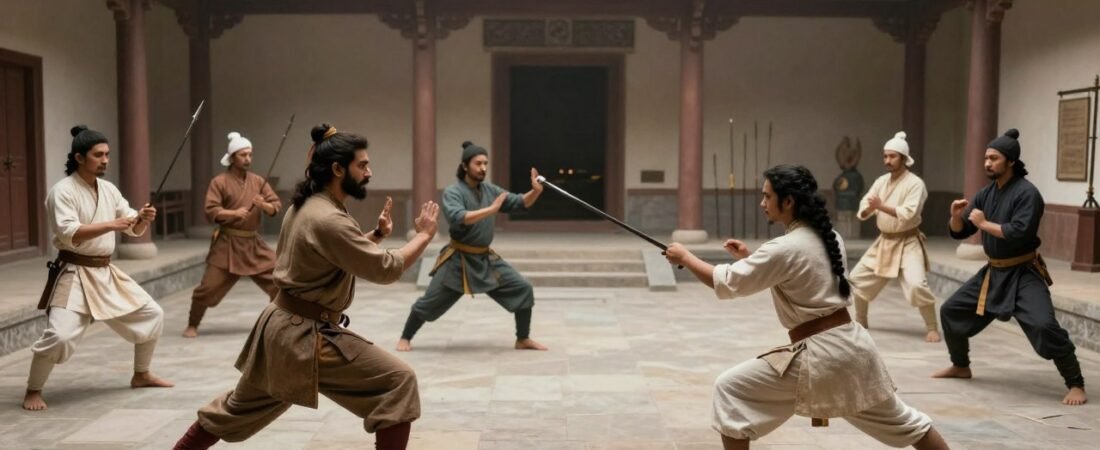
Understanding these differences makes the subject easier to study. It also prevents a common mistake: treating every punch, kick, hold, or movement as part of one uniform system.
Four Styles of Musti Yuddha: An Overview
Musti Yuddha is associated with Indian martial arts and with the wider history of martial arts in India. The word musti is commonly linked with the fist, while yuddha refers to battle or combat. The art is therefore often discussed as an Indian boxing tradition, although its wider practice may include more than hand strikes.
Descriptions of the four forms can vary by source. Some modern articles present them as clear technical categories. Historical evidence is less uniform, so the styles should be explained with care. The points below describe the usual distinctions without claiming that every school used the same training system.
| Style | Main principle | Study focus |
|---|---|---|
| Jambuvanti | Control | Managing movement and position |
| Hanumanti | Technical skill | Timing, footwork, and tactics |
| Bhimaseni | Strength | Power and conditioning |
| Jarasandhi | Joint and limb attacks | Control and grappling implications |
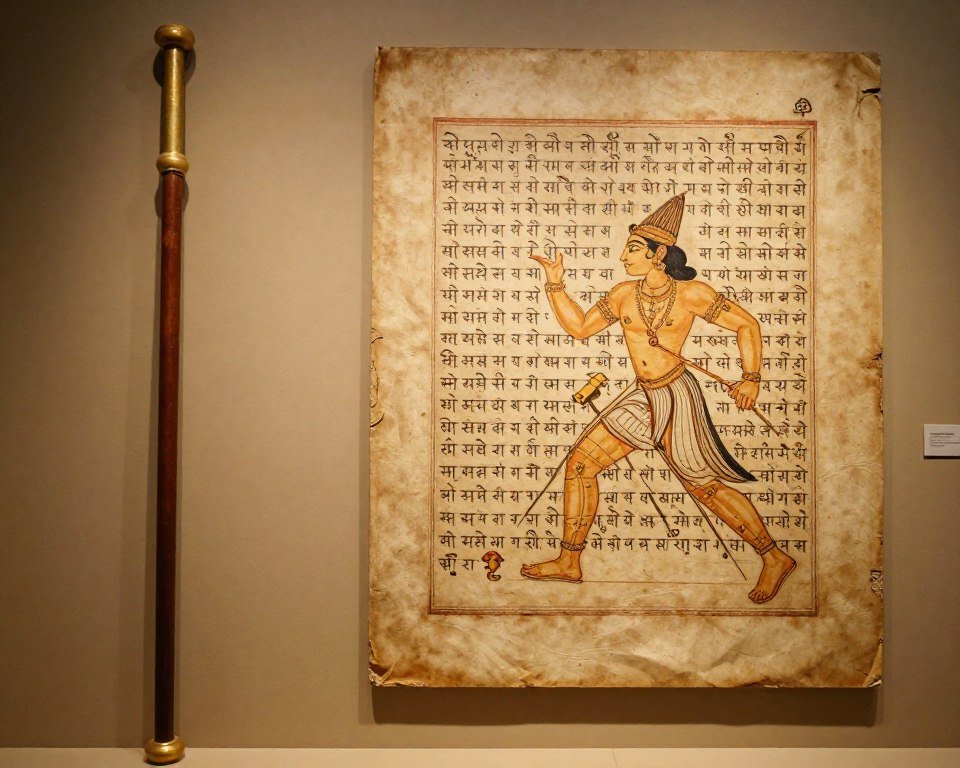
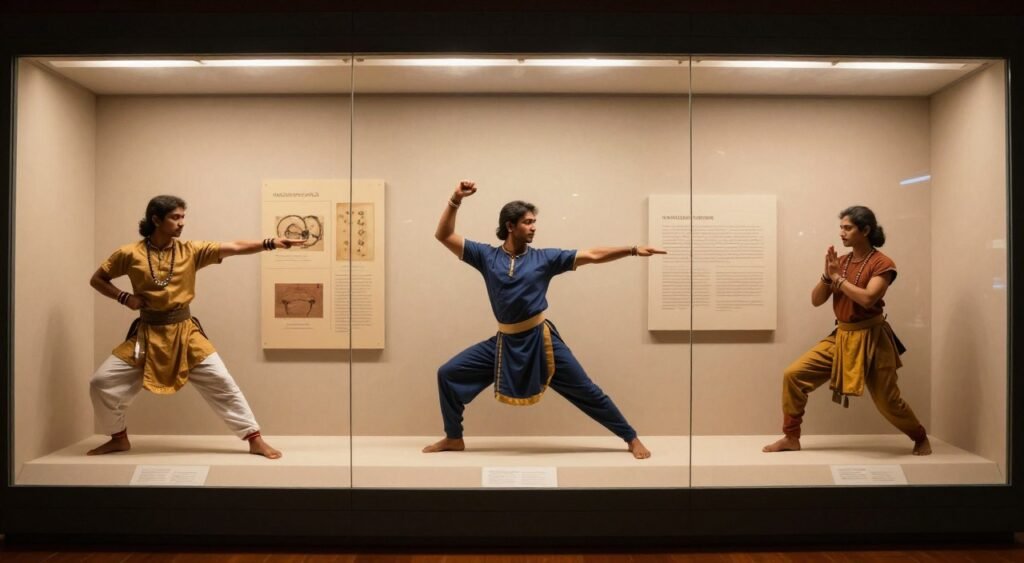
Start with reliable reference material
Read a broad overview before comparing the four styles. This helps separate traditional terms from modern teaching summaries.
Jambuvanti: The Style of Control
Jambuvanti is commonly presented as the style that emphasizes control. Its purpose is not simply to hit harder. Instead, the practitioner seeks to manage distance, balance, posture, and the opponent’s ability to respond.
What it emphasizes
Control can begin before contact. A fighter may use stance, angle, and measured movement to limit the opponent’s options. Once contact occurs, control may involve guiding the body, breaking balance, or stopping an attack before it develops.
Typical techniques
General descriptions may associate this approach with guarded movement, blocks, parries, checks, and controlled grips. These actions are best understood as training concepts rather than a fixed list of techniques. The exact form would depend on the school, teacher, and period.
Why control matters
Control matters because combat is not only a contest of force. A smaller person may improve safety by staying balanced and choosing when to engage. Control also supports restraint, which is important when martial arts are practiced as discipline rather than uncontrolled fighting.
How Jambuvanti differs
Jambuvanti differs from Hanumanti because its central idea is management rather than clever timing. It differs from Bhimaseni because it does not depend mainly on physical power. It differs from Jarasandhi because joint and limb attacks are not its defining feature.
Hanumanti: Technical Skill, Timing, and Tactics
Hanumanti is generally associated with technical skill. The style is often explained through accurate movement, good timing, efficient footwork, and the ability to create misleading openings.
Technical skill
Technical skill means using a movement correctly, not merely performing it quickly. A trained practitioner may work on posture, distance, guard position, and the clean path of a strike. In Indian martial arts, such details can be as important as visible power.
Timing
Timing determines when an action begins. A technically sound strike can fail if it is launched too early or too late. Training may therefore include rhythm changes, reaction drills, and exercises that teach a student to recognize an opening.
Footwork
Footwork allows the fighter to enter, leave, or move around an opponent. Small steps can protect balance while changing the angle of attack. This principle appears in many martial arts, including boxing and other Asian martial arts, but each tradition gives it a different meaning.
Deception and tactics
Deception does not have to mean dishonesty. In combat terms, it can mean hiding intention. A feint, change of rhythm, or false opening may cause an opponent to react too soon. Hanumanti is therefore best understood as a style where the mind and body work together.
Bhimaseni: Strength, Power, and Conditioning
Bhimaseni is usually linked with strength. Its focus is the ability to generate force, maintain physical pressure, and continue working when fatigue appears.
Strength
Strength is not limited to large muscles. A fighter needs stable legs, a strong trunk, resilient shoulders, and controlled breathing. Good strength training supports movement, posture, and the ability to absorb ordinary training stress.
Power
Power is the rapid use of strength. In boxing and other combat sports, power depends on the coordinated movement of the legs, hips, torso, and arms. A hard strike is not created by the arm alone. It comes from timing and whole-body connection.
Conditioning
Conditioning may include endurance, mobility, recovery, and repeated technical practice. A strong athlete who cannot move well may lose effectiveness. For that reason, a responsible training plan should balance resistance work, aerobic exercise, skill drills, and rest.
How strength becomes fighting ability
Bhimaseni translates strength into fighting through structure and control. The practitioner learns to keep a stable base while pushing, striking, or resisting pressure. This does not mean that strength always defeats skill. It means that physical force is the style’s primary lens.
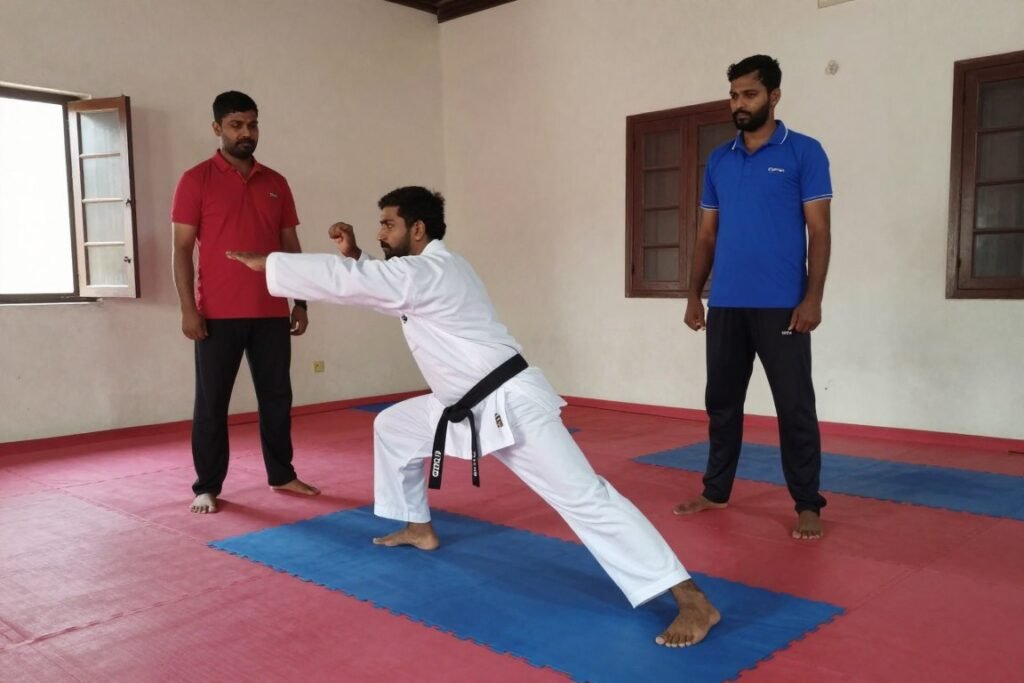
Jarasandhi: Joint and Limb Attacks
Jarasandhi is generally described as the style focused on attacks against joints or limbs. Its emphasis shifts from striking power to mechanical control of the body.
Joint and limb attacks
A joint attack may involve directing pressure toward a vulnerable movement point. In a responsible learning setting, these methods are taught slowly and with clear safety rules. They should never be practiced at full force without qualified supervision.
Control
Control is central because joint-based methods can cause injury when applied carelessly. A practitioner must understand position, leverage, release, and the difference between discomfort and damage. Training partners need trust and communication.
Grappling implications
Jarasandhi has clear grappling implications. The practitioner may seek a grip, disrupt balance, limit a limb, or move toward a restraint. This makes it different from forms of Indian boxing that focus mainly on strikes, kicks, and distance.
It is also useful to avoid direct comparisons with every other combat system. Muay Thai from Thailand, Muay Lao from Laos, and Pradal Serey from Cambodia each have their own history and rules. Similar use of strikes or clinch positions does not make them the same art.
Continue your martial arts study
Use a learner-focused source for revision, cultural notes, and related Indian martial arts topics. Choose a resource that explains its claims clearly.
How the Four Styles Compare
Control
- Jambuvanti manages position and movement.
- Jarasandhi controls limbs and joints.
Skill
- Hanumanti values timing and footwork.
- Deception supports tactical movement.
Strength
- Bhimaseni develops power and conditioning.
- Force is linked with stable structure.
The four styles of Musti Yuddha show that combat can be understood through more than one lens. Jambuvanti represents control, Hanumanti represents technical skill, Bhimaseni represents strength, and Jarasandhi represents joint and limb attacks. Together, they provide a useful framework for studying an important part of Indian martial arts history while leaving room for differences between sources, schools, and periods.