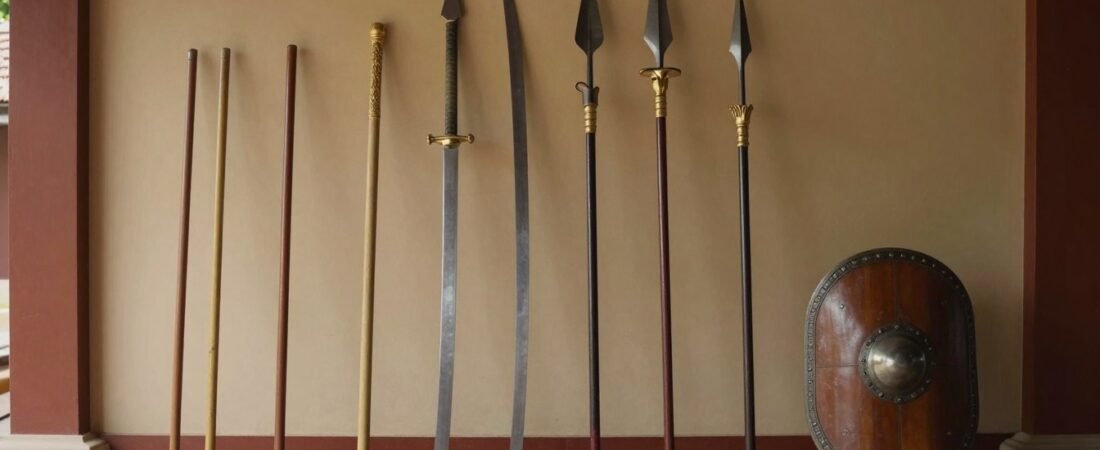
The safest way to study these arms is through a qualified instructor who can explain technique, context, and responsible practice.
What Are Bokator Weapons?
Bokator is a Cambodian martial art with empty-hand and weapon methods. The system includes striking, kicking, throws, locks, ground fighting, evasive footwork, and animal-inspired movements. Weapon work is not a separate subject with no connection to the rest of the art. It helps students understand distance, timing, balance, and controlled movement.
One martial art with many training paths
The word “weapon” can describe a historical arm, a wooden practice tool, or a symbolic object used in a demonstration. These categories should not be treated as identical. A sword used in a ceremony may have a different role from a blunt training sword used in a class.
Modern schools may teach a limited selection of arms. Instruction can vary by teacher, region, lineage, and level. Some schools focus first on body mechanics and empty-hand skills. Others introduce a staff or short stick after students show safe control.
Why the distinction matters
- Historical weapons may be discussed without being suitable for practice.
- Training weapons are designed to reduce risk, but they can still cause serious injury.
- Names and spellings may differ between English and Khmer sources.
- Popular videos may combine Bokator movements with techniques from other martial arts.
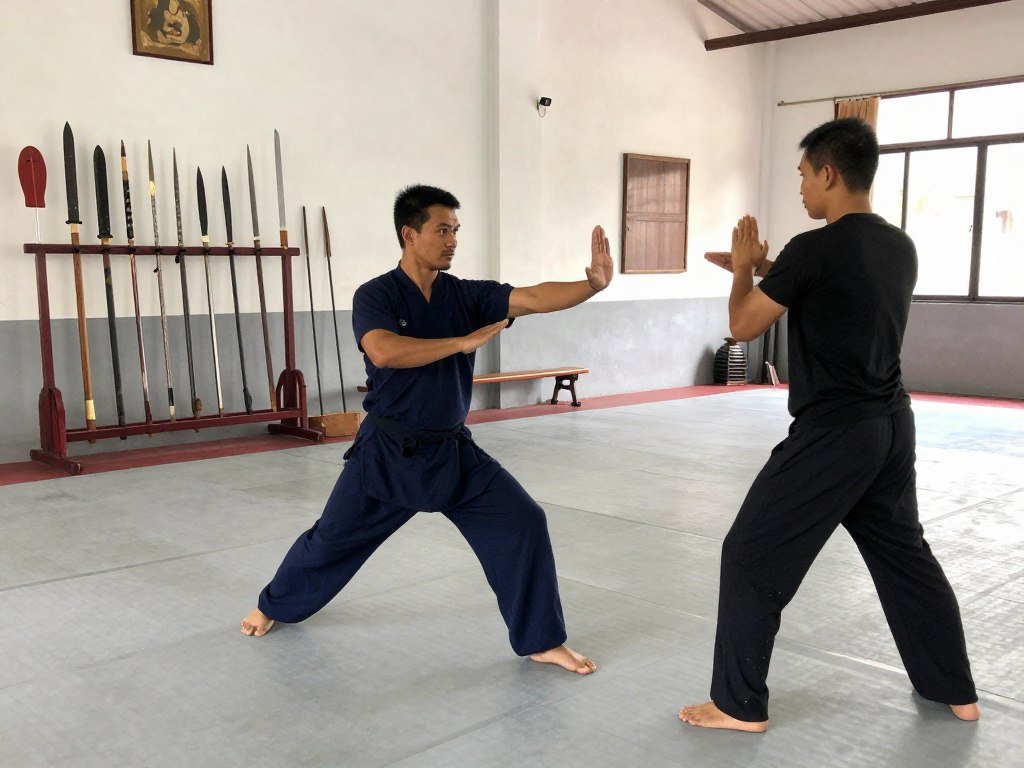
The relationship between weapons and empty-hand practice is central to understanding the larger system.
Historical and Cultural Context in Cambodia
Cambodia has a long history shaped by farming communities, trade, warfare, religion, and royal states. The Angkor period left temples, stone carvings, roads, and reservoirs that continue to influence how people discuss Khmer history. Angkor Wat is the best-known temple complex, but it is only one part of a much wider cultural landscape.
From temple imagery to careful research
Images on temple walls can help researchers study clothing, posture, tools, and social life. They do not automatically prove that every modern technique or weapon was practiced exactly as shown. A responsible article should separate visual evidence from later interpretation.
War, local defense, hunting, and ceremonial life could all shape the use of arms. The exact role of a weapon may change across provinces and years. For that reason, broad claims about “the one original Bokator weapon” should be treated with caution.
Preservation after periods of conflict
The Khmer Rouge period caused severe harm to Cambodian society, including the loss of teachers, artists, records, and community knowledge. Later teachers and organizations helped rebuild martial arts instruction. San Kim Sean is widely associated with the modern revival and international promotion of Bokator, although individual lineages and historical interpretations may differ.
Modern revival does not mean that every current lesson can be traced in an unbroken line to Angkor. It means that Cambodian teachers, artists, researchers, and cultural institutions have worked to preserve and present a living martial art.
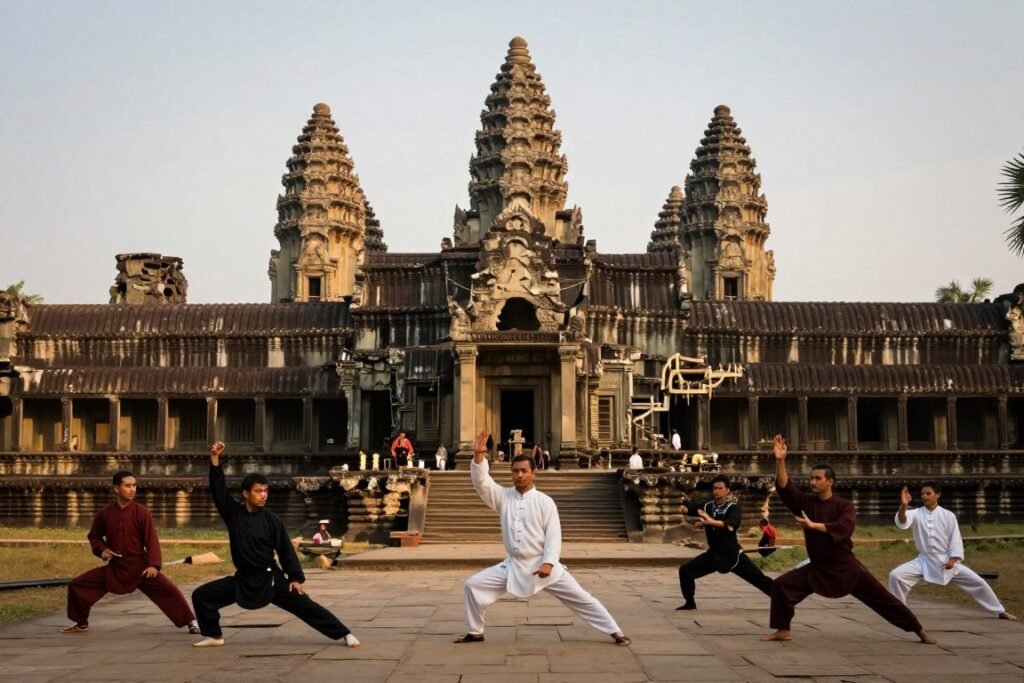
Angkor Wat and other temples provide cultural context, but historical claims still require careful source comparison.
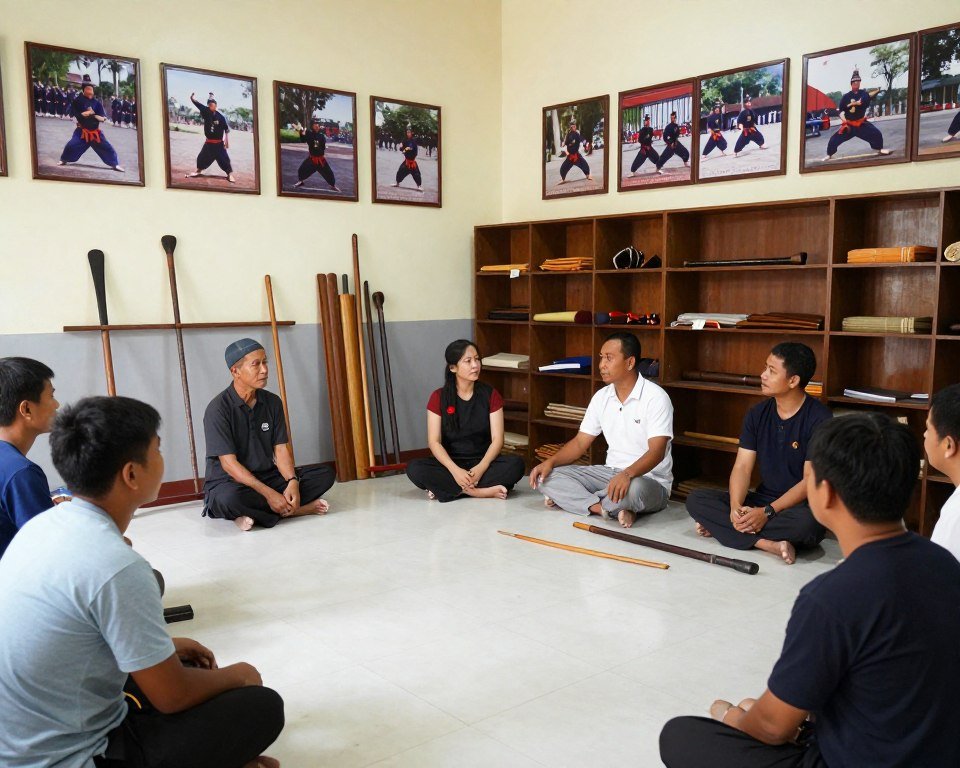
Phnom Penh has been an important center for modern education, cultural work, and public discussion.
Short Sticks and Paired Sticks
Short sticks are practical examples of how a simple object can teach complex martial arts ideas. Their compact length makes them useful for studying grip, angles, hand protection, footwork, and distance. A student can learn to move around an opponent without relying on large swings.
Traditional purpose and characteristics
Short sticks may represent everyday tools, defensive arms, or battlefield weapons depending on their design and historical setting. They are usually easier to carry than a long staff. Paired sticks add another challenge because both hands must coordinate while the body stays balanced.
It is not accurate to assign one universal history to every short stick used in a modern class. Materials, lengths, shapes, and teaching methods can vary. A qualified teacher should explain which tool belongs to the school’s curriculum and which claims remain uncertain.
Use in training
- Practice controlled lines rather than full-force strikes.
- Learn how the feet create space before the hands move.
- Use padded or blunted equipment during early lessons.
- Study defensive movement without treating drills as real fighting.
- Progress only after grip, posture, and stopping control are reliable.
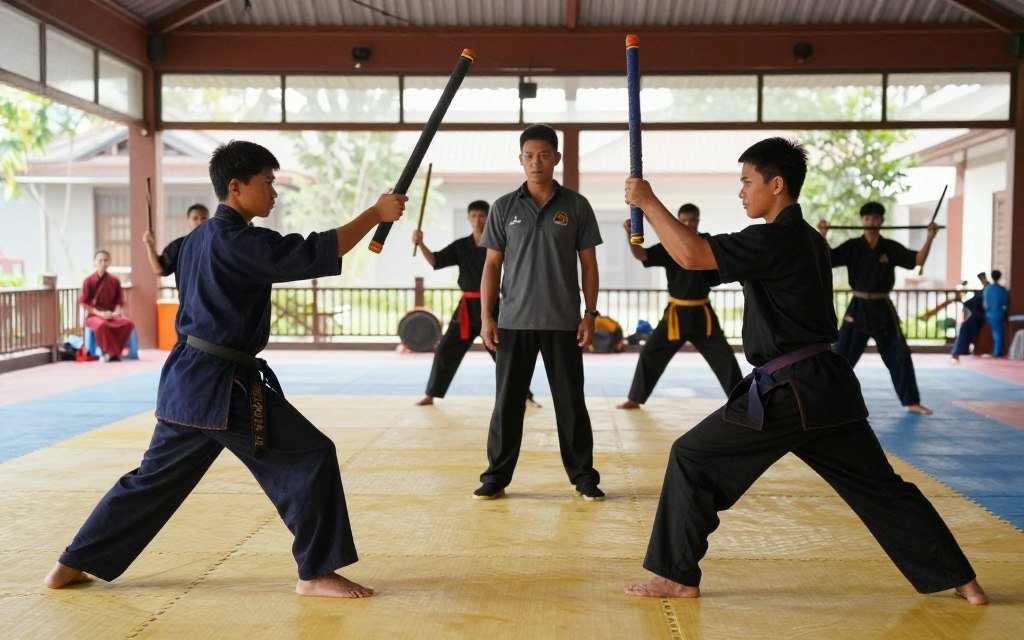
Short-stick drills should develop control and movement, not encourage reckless contact.
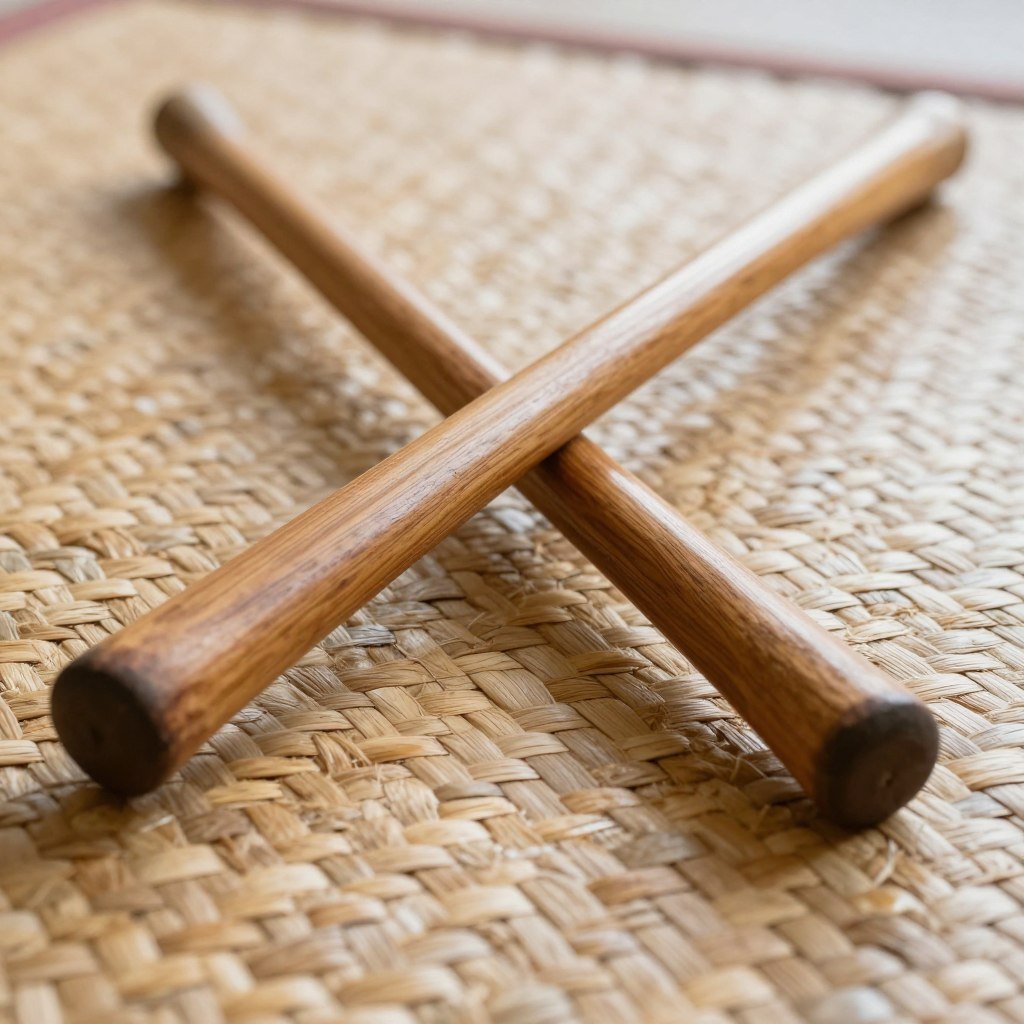
Training equipment should be inspected for cracks, sharp edges, and loose parts before use.
Long Staffs and Pole Weapons
The long staff is one of the clearest tools for teaching range. Its length creates a visible relationship between the hands, the feet, and the training partner. Students must turn the body, manage distance, and avoid crossing their own line of movement.
Characteristics and purpose
A staff may be made from wood or a modern synthetic material. Historical pole weapons could have different ends, fittings, or points. A plain staff used in a modern lesson should not automatically be described as the exact battlefield weapon of an earlier period.
Long weapons were useful because they could keep an opponent farther away. In a historical setting, their value depended on terrain, formation, skill, and the type of weapon used by the other side. A modern class removes many of those conditions and focuses on safe movement.
Training value
Staff practice can improve posture, turning, recovery, and awareness of people around the student. It can also expose poor balance. A student who reaches too far may lose control of the tool or stumble. That is why basic drills should be slow and clearly structured.
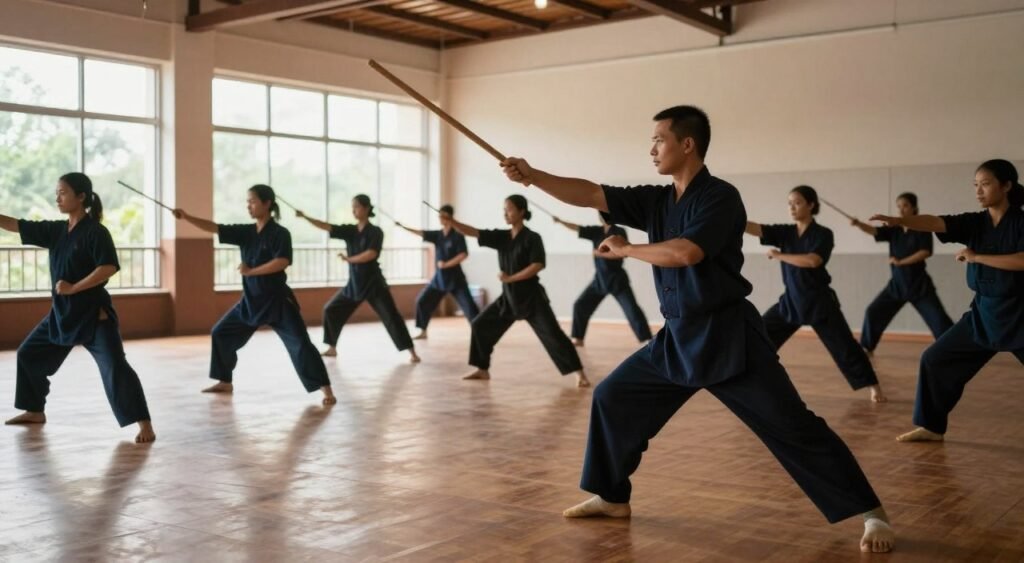
The long staff teaches range, but safe spacing is more important than speed.
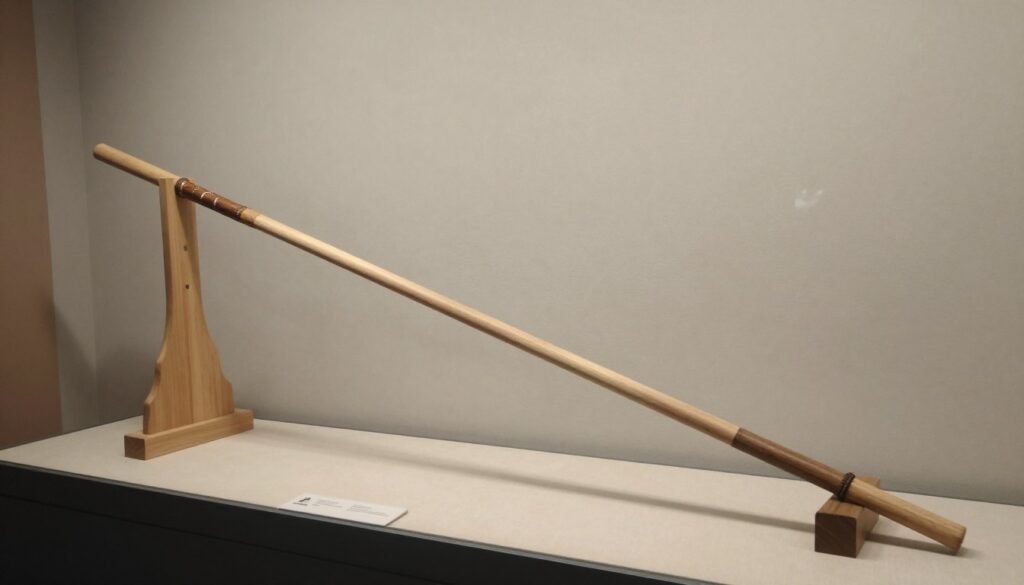
Display objects and practice tools should be labeled clearly so visitors understand their different roles.
Swords in Cambodian Martial Arts Tradition
Swords carry strong cultural meaning across Southeast Asia. In Bokator discussions, they may appear in demonstrations, forms, historical presentations, or advanced training. A sword is not simply a longer stick. It has an edge, a point, a balance, and a serious risk of injury.
Historical role
Bladed weapons could serve military, protective, ceremonial, or status-related functions. Their exact form may differ by period and region. Terms translated as “sword” can also hide differences between a straight blade, a curved blade, a machete-like tool, and a ceremonial replica.
Readers should be cautious when a source presents a modern blade as proof of an unchanged ancient design. Strong historical writing names the source, explains uncertainty, and avoids turning cultural pride into unsupported certainty.
Modern practice
Beginners should not train with sharpened blades. Schools may use wooden, foam, rubber, or blunt replicas for movement practice. Even a harmless-looking replica can cause injury if swung carelessly. Training should include clear lines, controlled speed, partner consent, and a safe stopping distance.
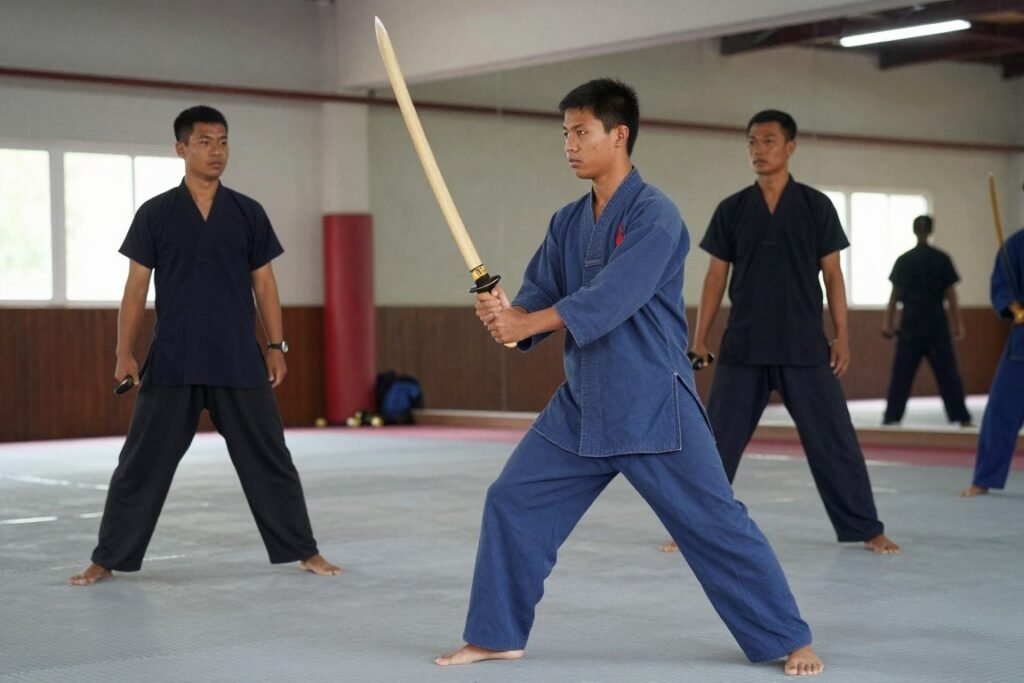
A training replica supports movement study while reducing the danger of a sharpened blade.
Spears, Shields, and Defensive Arms
Spears combine reach with a narrow point and therefore demand careful control. A shield changes the way a student moves the torso, protects space, and manages vision. Together, these tools can introduce ideas about lines of attack and defense, but they should not be treated as simple props.
Spears and pole points
A historical spear could be used in formations, hunting, local defense, or individual combat. Its design would depend on the head, shaft, length, and period. Modern schools may use a padded spear, a staff with a marked tip, or another safe substitute.
Training should begin with posture, distance, and recovery. Thrusting toward a person is not an appropriate beginner drill. Students need a large practice area, clear commands, and an instructor who can stop the exercise immediately.
Shields
Shields can teach body alignment and movement behind a protective surface. Their size and shape influence footwork. A shield may also be used in demonstrations that express historical identity or ceremonial pride. It should not be assumed that one shield design represents all Cambodian history.
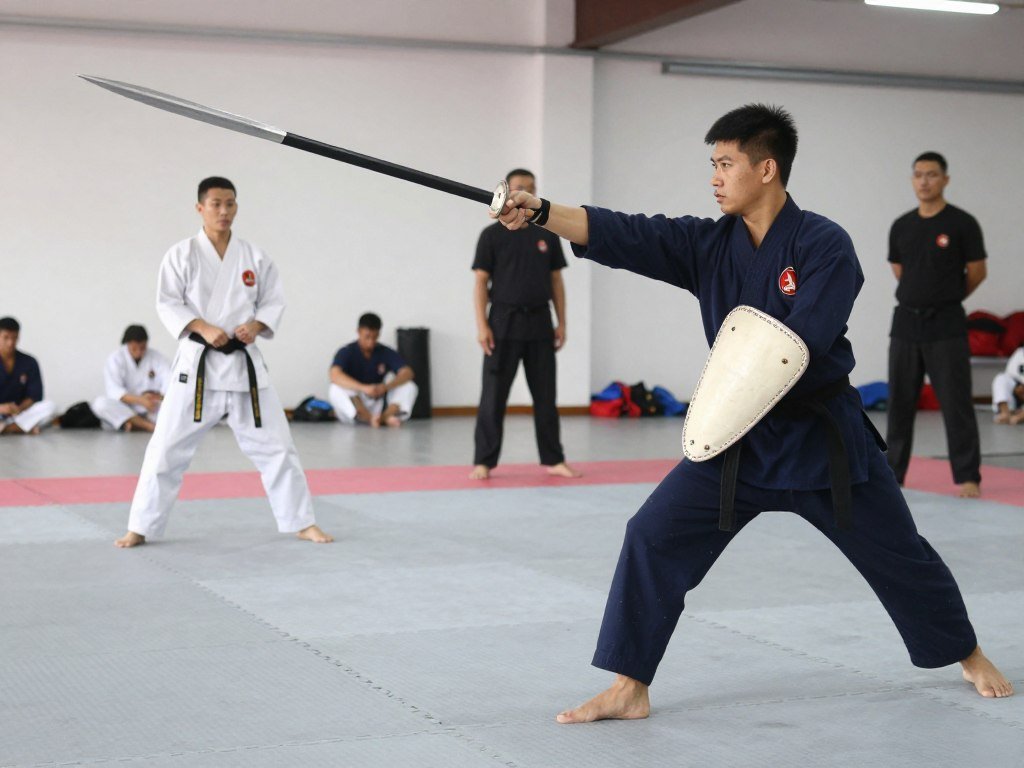
Safe substitutes allow students to study body position without introducing a sharp point or heavy impact.
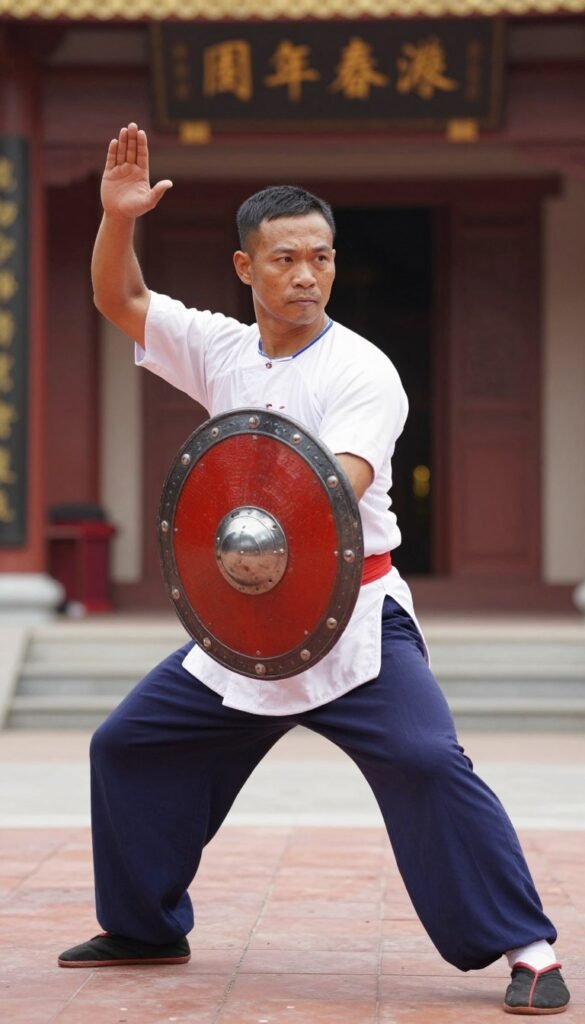
A shield may have practical, ceremonial, and educational meanings at the same time.
Other Training Tools and Battlefield Weapons
Discussions of Bokator may mention knives, machete-like blades, axes, flexible tools, or improvised objects. Some may reflect wider Cambodian fighting traditions rather than a standardized Bokator curriculum. A careful article should not place every Cambodian weapon inside one fixed system without evidence.
Historical arms versus modern equipment
| Category | Typical role | Modern training approach |
| Historical blade | Military, protective, ceremonial, or local use | Use historical study and blunt replicas only under supervision |
| Improvised tool | Context-dependent defense or daily work | Discuss principles without practicing unsafe objects |
| Flexible weapon | Specialized historical or regional use | Require advanced instruction and controlled equipment |
| Foam or wooden tool | Modern education and movement practice | Inspect regularly and use clear training rules |
Why online lists can mislead
Search results often repeat the same list without naming a source. A long list may look authoritative while mixing Cambodian martial arts, neighboring traditions, stage props, and modern sporting equipment. The safest approach is to ask who uses the term, where the evidence comes from, and whether a recognized teacher supports the claim.
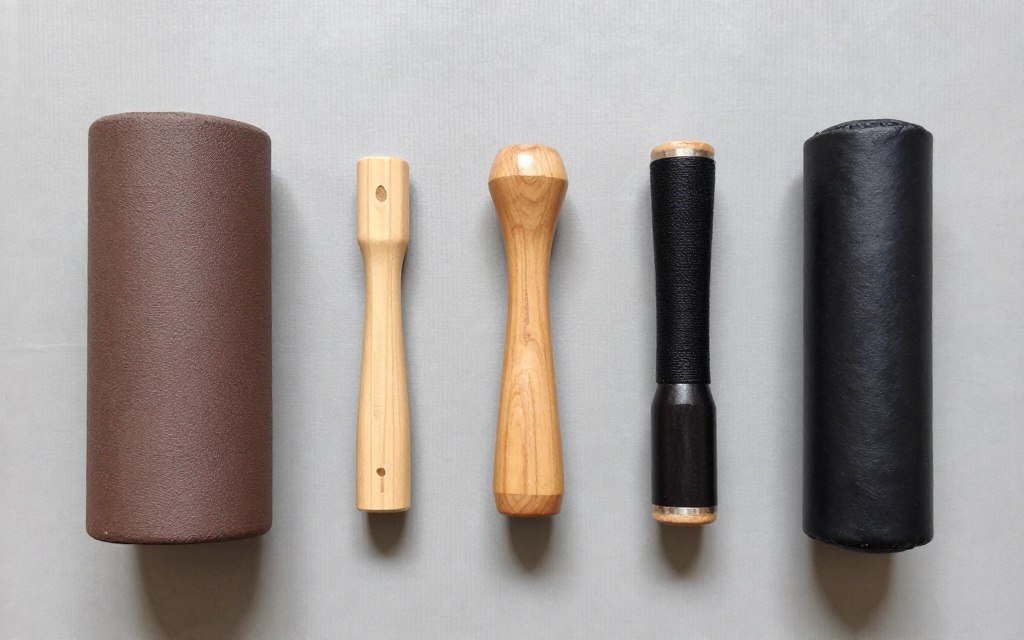
Modern equipment should be identified by its training purpose rather than presented as an ancient artifact.
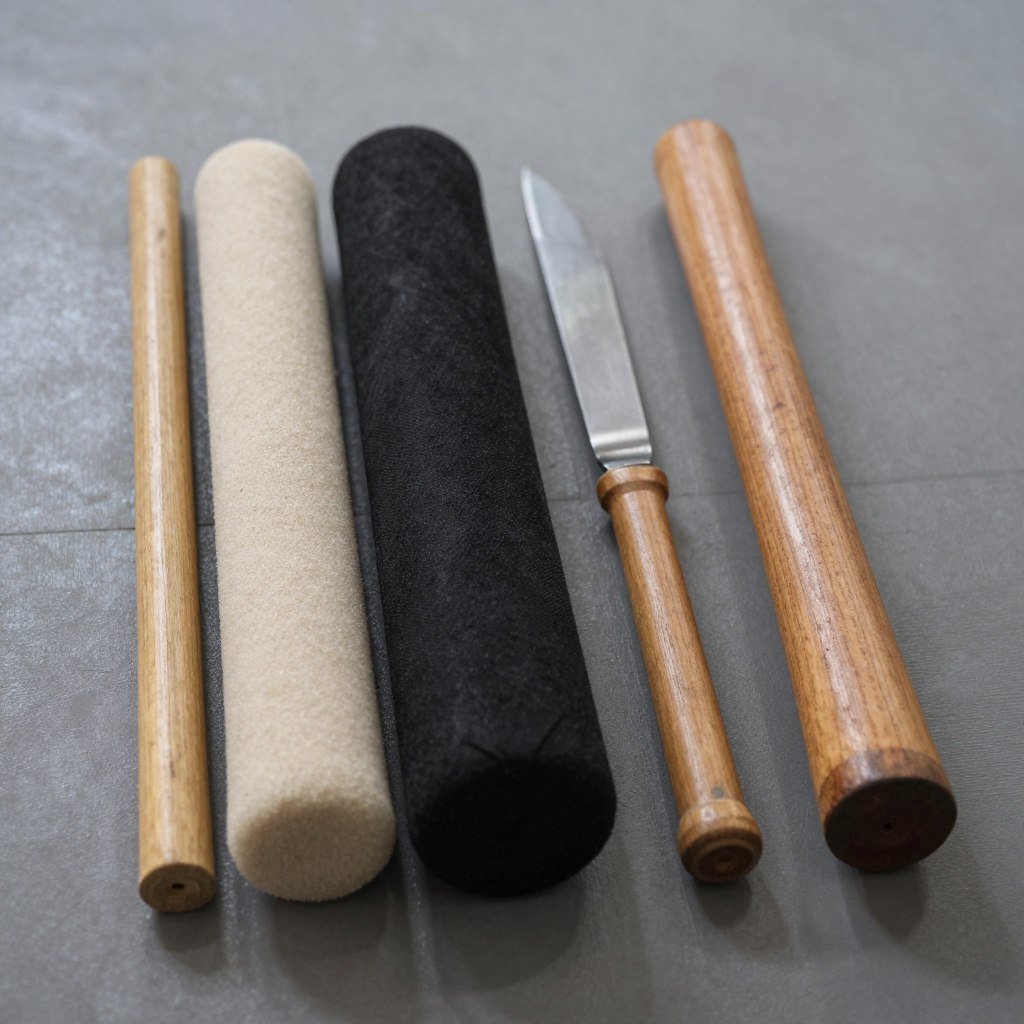
Clear labels help students and readers understand what is historical and what is designed for practice.
How Weapon Training Connects to Empty-Hand Skills
Bokator weapon training can reinforce the same principles found in empty-hand martial arts. Students learn to manage distance, protect balance, read movement, and recover after an action. The tool makes errors easier to see because a small change in angle can affect the whole body.
Shared principles
- Footwork creates the position for a safe and effective action.
- Hip and shoulder movement should support the hands rather than replace control.
- Breathing and posture help the student remain calm under pressure.
- Defensive movement should include awareness of space and surroundings.
- Ground fighting and standing work remain related, even when no weapon is present.
Progression through levels
Some schools organize instruction through levels, belts, scarves, or other signs of progress. These systems are not identical across all teachers or federations. A beginner may spend years learning empty-hand movements before receiving advanced weapon instruction.
The goal is not to collect a number of weapons. It is to develop judgment, control, and responsibility. A student who cannot stop a movement safely is not ready for faster drills or harder equipment.
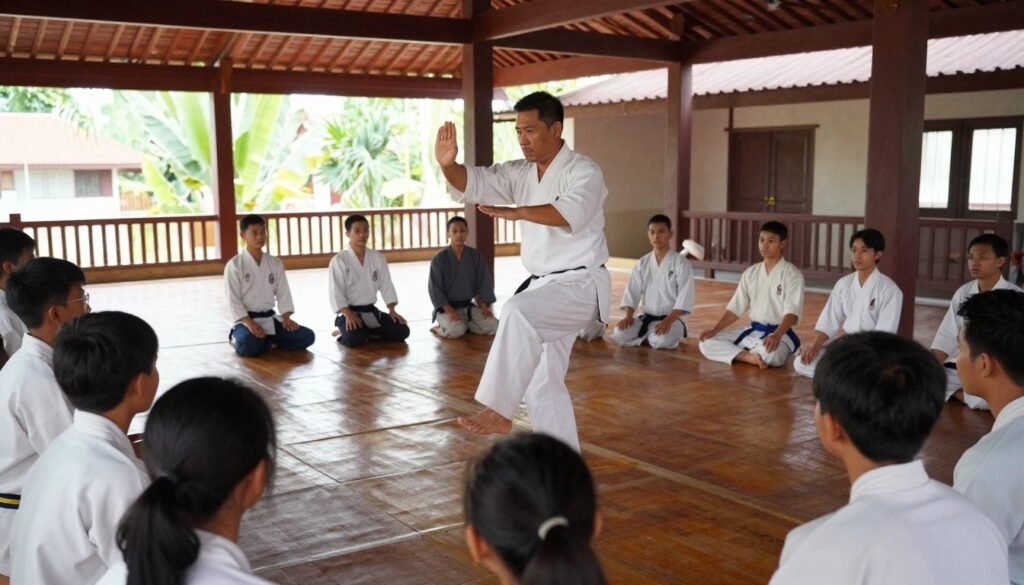
An instructor should explain how a weapon movement relates to the larger martial art.
Safety Rules for Bokator Weapon Practice
Weapon practice should be learned only under qualified supervision. This is not a minor disclaimer. A stick, staff, shield, or replica blade can cause serious harm when used in a crowded room or without clear instruction.
Basic safety standards
- Use equipment suited to the student’s age, size, skill, and training level.
- Inspect wood, foam, straps, handles, and fasteners before each session.
- Keep a clear boundary around every training pair.
- Use protective equipment when the instructor requires it.
- Agree on speed, contact level, and stop signals before a drill.
- Never practice with sharpened weapons in a beginner class.
- Stop immediately when a partner reports pain, fear, or loss of control.
- Follow local laws concerning ownership, transport, and public display.
How to evaluate an instructor
A credible instructor welcomes questions about lineage, qualifications, safety, and progression. They do not promise secret powers or guaranteed survival. They explain limits and correct students without encouraging unnecessary aggression.
Look for a clean training space, clear rules, appropriate equipment, and a culture that respects partners. A school connected to a recognized Bokator federation may offer useful structure, but affiliation should still be checked rather than assumed.
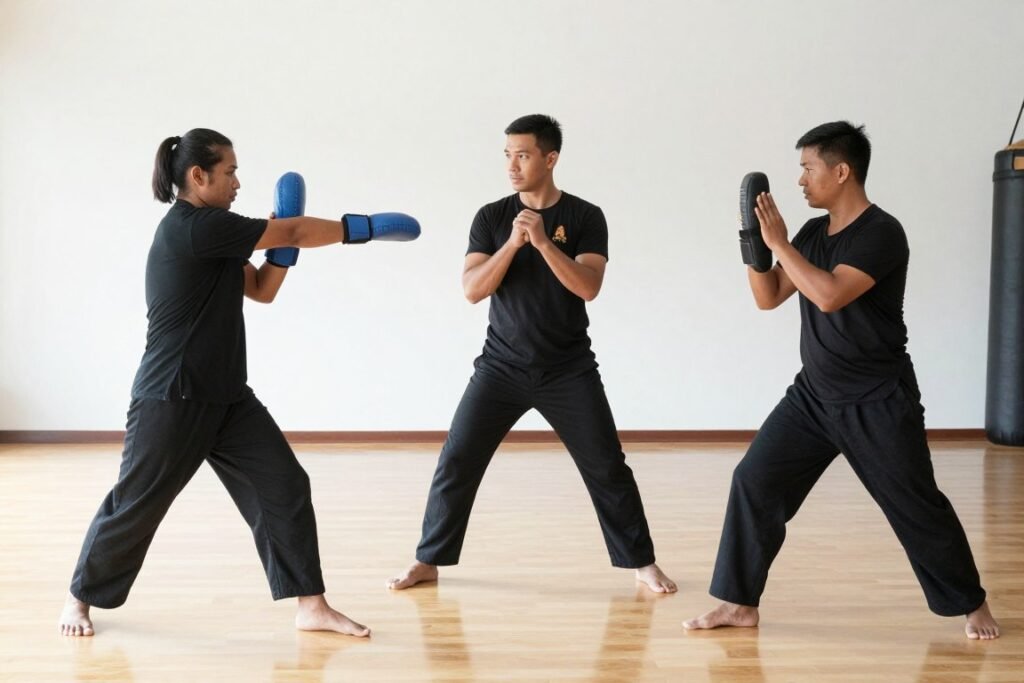
Supervision, spacing, communication, and suitable equipment are essential parts of responsible practice.
Safety note
Do not copy weapon drills from a video without qualified supervision. This article is cultural and educational information, not a substitute for instruction, medical advice, or legal guidance.
Heritage, Organizations, and Modern Preservation
Bokator is often discussed as part of Cambodia’s intangible cultural heritage. The phrase matters because a martial art is not only a set of fighting movements. It includes teachers, language, rituals, values, music, clothing, stories, and communities that keep the art alive.
Living heritage rather than a frozen display
Recognition can support preservation, but it does not end debate about history or ownership. Teachers may emphasize different animals, forms, weapons, or training methods. These differences can exist within a living art without proving that one school alone represents every tradition.
The government, cultural institutions, schools, artists, and martial artists all have roles in preservation. Documentation should respect Cambodian voices and avoid presenting foreign summaries as the final authority.
San Kim Sean and revival narratives
San Kim Sean and Kim Sean are names commonly linked with modern Bokator revival and international teaching. Because transliteration varies, readers may see more than one spelling. A careful article should avoid turning a person’s public role into proof for every historical claim about weapons, temples, or ancient combat.
Readers researching Phnom Penh schools, provincial traditions, or international events should compare several sources. Look for named teachers, dates, training footage with context, and statements from cultural bodies or the Bokator federation.
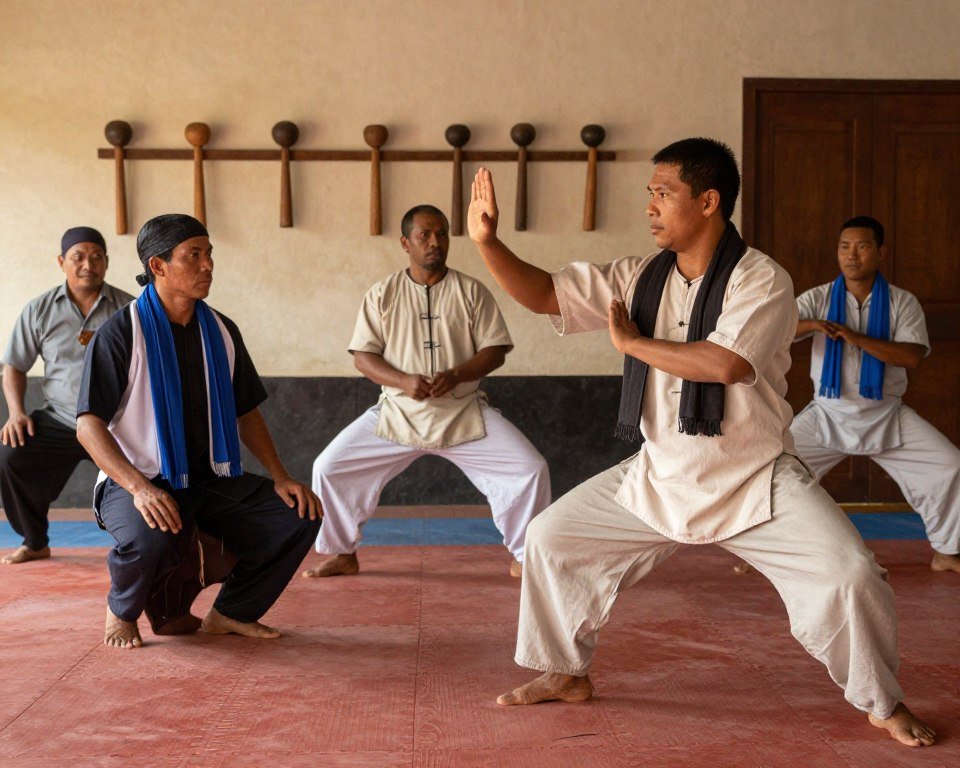
Preservation depends on people and communities, not only on objects kept in a collection.
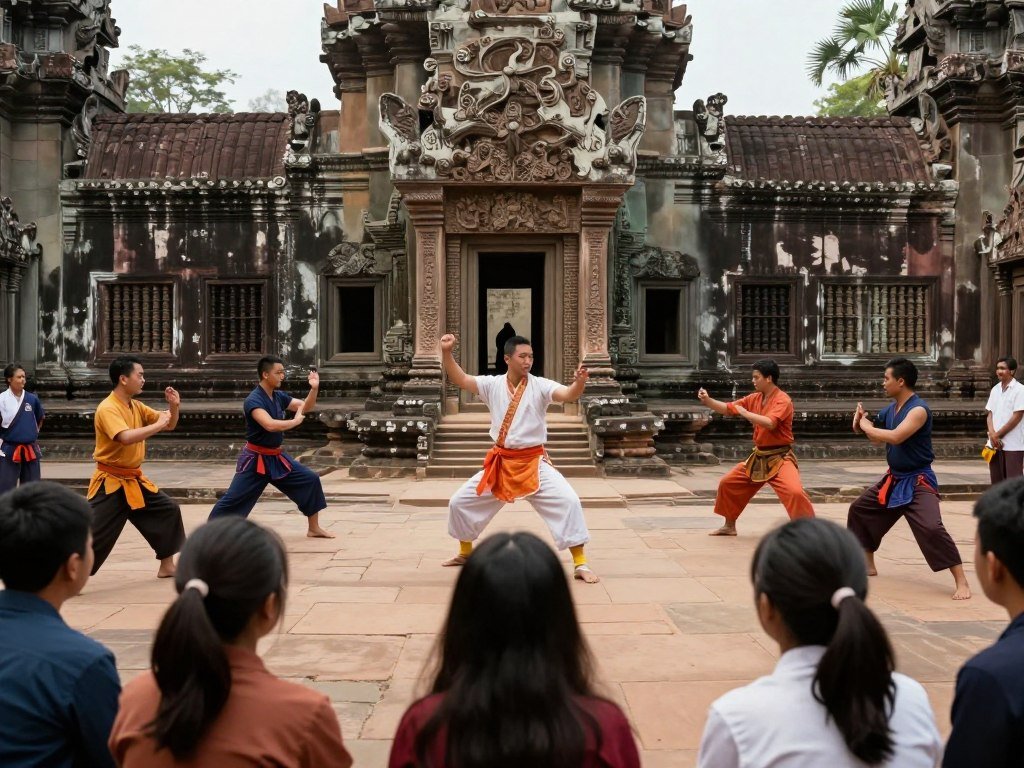
Public education can support heritage while still leaving room for careful research and debate.
How to Research Bokator Weapons Responsibly
Reliable research begins by separating what is documented from what is repeated. Search engines may show the same statement on many pages, but repetition is not evidence. Compare museum material, cultural reporting, martial arts schools, academic work, and statements from Cambodian organizations.
A practical research checklist
- Identify whether the source is a reference page, cultural feature, training guide, school website, or sales page.
- Check whether the writer names a teacher, organization, date, location, or historical source.
- Separate present-day practice equipment from weapons described in historical settings.
- Look for careful wording when evidence is uncertain or regional.
- Compare English terms with Khmer names and different transliterations.
- Read safety guidance before attempting any movement.
Comparison of the ranking-page CTA opportunities
| Page type | Primary goal | Likely audience | CTA opportunity |
| Reference encyclopedia | Inform | Cold readers, researchers, general public | Neutral links to sources and related topics |
| Specialist martial arts guide | Inform and build subject authority | Cold to warm martial arts readers | Further reading or qualified training inquiry |
| Cultural journalism feature | Inform and create cultural interest | Cold readers interested in Cambodia | Read related heritage coverage |
Recommended CTA for this article
The best CTA is a low-pressure next step. Invite readers to review a reliable overview, compare cultural sources, or contact a qualified school after checking its safety standards. Avoid “buy now” language because the query does not show clear commercial intent.

A strong article earns trust by showing where its claims come from and where uncertainty remains.

Readers should be encouraged to investigate, not pressured into an immediate purchase or enrollment.
Frequently asked questions
Are all weapons shown in Bokator videos traditional?
No. Videos may show historical replicas, modern training tools, ceremonial objects, or techniques influenced by other martial arts. Context and source checking are necessary.
Is a sword required to learn Bokator?
No. Many students begin with empty-hand movements, footwork, conditioning, and basic partner exercises. Weapon study depends on the school, teacher, level, and safety standards.
What is the safest weapon for a beginner?
There is no universal answer. A qualified instructor may select a padded or lightweight tool based on the student and the class. Beginners should not choose a weapon alone from an online list.
How do San Kim Sean and Kim Sean relate to Bokator?
San Kim Sean and Kim Sean are variant spellings commonly associated with the modern revival and promotion of Bokator. Transliteration varies, so readers should compare the source and context.
Can temple carvings prove how a weapon was used?
Temple carvings are valuable historical evidence, but an image alone may not explain a complete technique, date, or training system. Interpretation should be supported by additional sources.
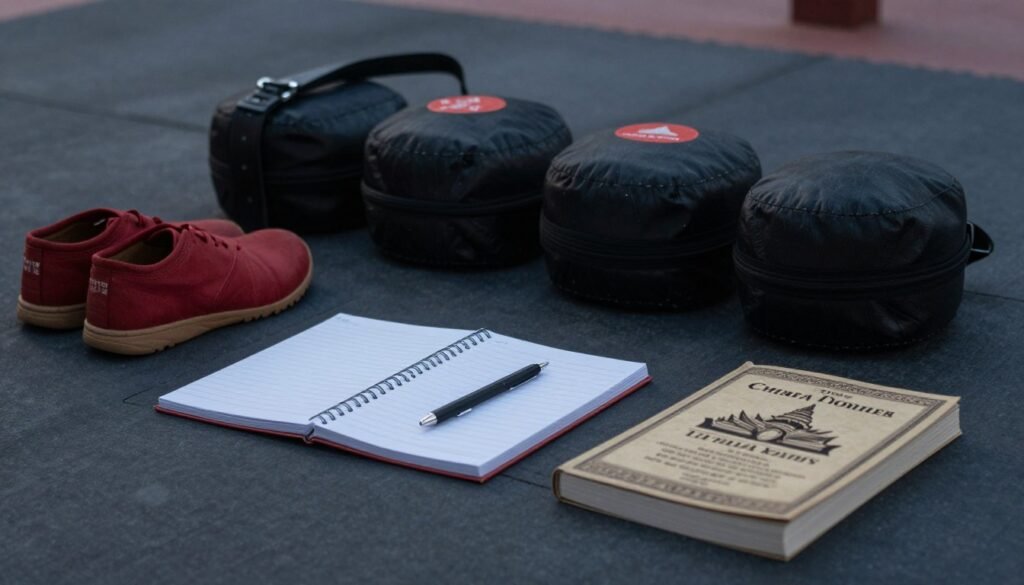
The strongest conclusion connects historical respect with present-day responsibility.
Bokator weapons can include short sticks, long staffs, swords, spears, shields, and other tools, but their meaning depends on time, place, teacher, and purpose. Some belong to history. Some support modern training. All require careful interpretation and responsible handling.